Pool Chlorine Guide: Expert Dosage Tips for Crystal Clear Water
Maintaining proper chlorine levels is one of the most critical aspects of pool ownership, yet many DIYers struggle with understanding how much chlorine to add to their pool. Whether you’re managing a residential backyard oasis or a small community pool, getting the chemistry right protects your investment, ensures water clarity, and most importantly, safeguards the health of everyone who swims in it. Chlorine serves as your pool’s primary sanitizer, destroying harmful bacteria, viruses, and algae that can cause serious health issues.
This comprehensive guide breaks down everything you need to know about chlorine dosing, from understanding different chlorine types to calculating exact quantities for your specific pool size. We’ll cover the science behind chlorine effectiveness, troubleshooting common problems, and industry best practices that professional pool technicians use daily. By the end, you’ll have the confidence to maintain perfectly balanced water chemistry without expensive professional service calls.
Understanding Chlorine Types and Forms
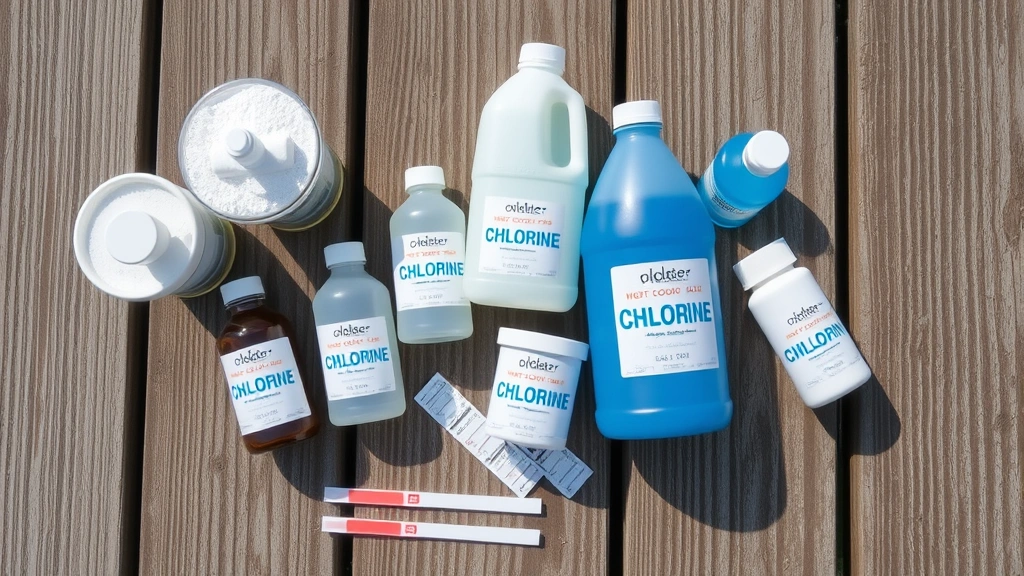
Chlorine comes in three primary forms, each with different potencies, application methods, and effects on your pool chemistry. Understanding these differences is essential for accurate dosing. Calcium hypochlorite, commonly called dry chlorine or powder chlorine, typically contains 65-70% available chlorine and dissolves quickly in water. This form is popular among DIY pool owners because it’s easy to store, relatively affordable, and doesn’t require special equipment for application. However, it does increase your pool’s calcium hardness over time, which can affect water clarity if not managed.
Sodium hypochlorite, known as liquid chlorine, contains only 10-12% available chlorine by volume, making it less concentrated than powder forms. Many commercial pools and some residential installations use liquid chlorine because it doesn’t add calcium to the water, though it does increase sodium levels slightly. The main drawback is shorter shelf life—liquid chlorine degrades over time, especially in warm conditions, so you’ll need fresher supplies more frequently.
Trichlor (trichloro-s-triazinetrione) and dichlor (dichlorisocyanuric acid) are stabilized chlorine products containing 50-55% and 55-60% available chlorine respectively. These compounds include cyanuric acid, which protects chlorine from UV degradation—crucial for outdoor pools. Trichlor comes in tablet form and dissolves slowly, making it ideal for chlorinators. Dichlor dissolves faster and works well for initial shocking. Both forms are excellent for maintaining consistent residual chlorine levels throughout your pool season.
Calculating Your Pool Volume
Before you can determine how much chlorine to add, you must know your pool’s exact volume in gallons. This is the foundation of all dosage calculations. For rectangular pools, multiply length × width × average depth × 7.5 (the conversion factor from cubic feet to gallons). A 20-foot by 10-foot pool with 5-foot average depth contains 7,500 gallons. For circular pools, use the formula: π × radius² × average depth × 7.5. A 15-foot diameter pool with 4-foot depth holds approximately 5,300 gallons.
If your pool has varying depths, calculate the volume in sections. Divide the pool into areas where depth is consistent, calculate each section separately, then add them together. Many pool owners find it helpful to mark their pool’s volume on the equipment shed or in a phone note for quick reference during maintenance. Some pools include volume information in their original documentation or manufacturer specs, which saves calculation time and ensures accuracy.
For irregularly shaped pools or those with complex features, consider hiring a professional to measure and calculate volume, or use pool-specific volume calculators available from pool supply retailers. Accurate volume measurement prevents over-chlorination (which creates unpleasant odors and irritation) and under-chlorination (which allows algae and bacteria growth).
Recommended Chlorine Levels
The CDC recommends maintaining free chlorine levels between 1-3 ppm (parts per million), with 2-3 ppm being optimal for most residential pools. This range effectively kills pathogens while remaining safe for swimmers and minimizing irritation. Free chlorine is the chlorine actively available to sanitize your water, while combined chlorine (also called chloramines) is chlorine that has already reacted with contaminants and is no longer as effective. The difference between free and total chlorine gives you combined chlorine levels.
Total chlorine should never exceed 5 ppm for swimmer comfort and safety. If your total chlorine climbs above this threshold, it’s time for a chlorine shock treatment to break down excess combined chlorine. The Pool Safely initiative emphasizes that proper chlorine maintenance prevents recreational water illnesses affecting thousands annually.
Different pool types may have slightly different requirements. Indoor pools often maintain slightly lower free chlorine (1-2 ppm) because UV light doesn’t degrade chlorine indoors, while outdoor pools benefit from higher levels (2-3 ppm) due to UV exposure. Hot tubs and spas require higher chlorine levels, typically 2-4 ppm, due to warmer water accelerating bacterial growth. Always check your specific pool equipment manufacturer recommendations and local health department guidelines.
Chlorine Dosage Calculator and Charts
The fundamental formula for calculating chlorine dosage is: (Desired ppm – Current ppm) × Pool volume in gallons ÷ 10,000 = Ounces of liquid chlorine needed. For powder chlorine, divide the result by 1.5 to account for higher concentration. Let’s work through a practical example: Your 10,000-gallon pool currently tests at 1.5 ppm free chlorine, and you want to raise it to 2.5 ppm. (2.5 – 1.5) × 10,000 ÷ 10,000 = 1 ounce of liquid chlorine, or approximately 0.67 ounces of powder chlorine.
Here’s a quick reference dosage chart for common pool sizes:
- 5,000-gallon pool: 0.5 oz liquid (0.33 oz powder) raises free chlorine 1 ppm
- 10,000-gallon pool: 1 oz liquid (0.67 oz powder) raises free chlorine 1 ppm
- 15,000-gallon pool: 1.5 oz liquid (1 oz powder) raises free chlorine 1 ppm
- 20,000-gallon pool: 2 oz liquid (1.33 oz powder) raises free chlorine 1 ppm
- 25,000-gallon pool: 2.5 oz liquid (1.67 oz powder) raises free chlorine 1 ppm
When using tablet chlorinators, dosing follows different principles. A standard 3-inch chlorine tablet (trichlor) typically dissolves 1-2 tablets per 10,000 gallons per week, depending on sunlight exposure and water temperature. Tablets provide steady, continuous chlorine release, making them excellent for maintenance dosing but unsuitable for rapid level increases. For pH and alkalinity adjustments alongside chlorine maintenance, review our guide on how much baking soda to raise pH in pool, as these factors affect chlorine effectiveness.
Testing and Monitoring Procedures
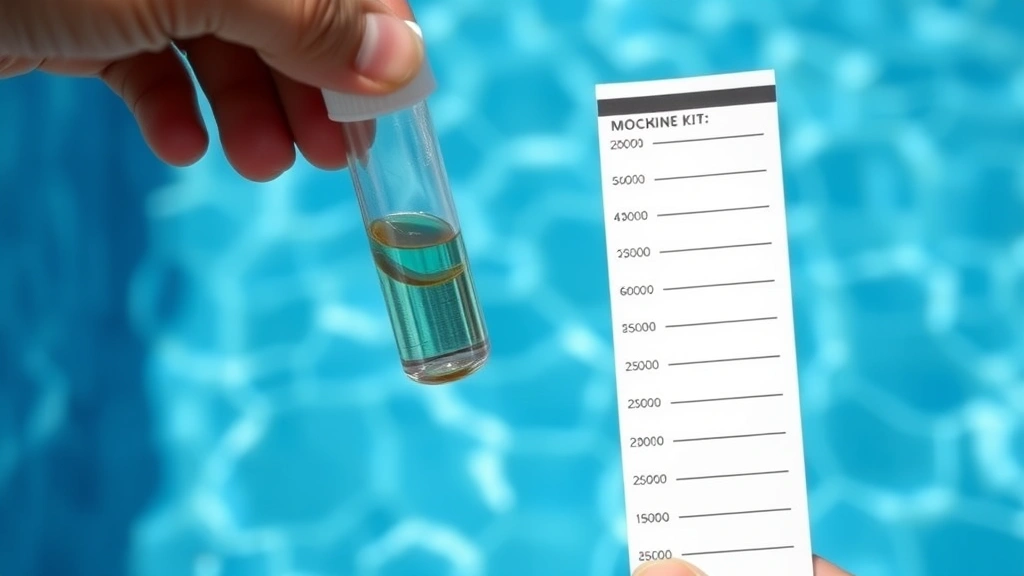
Accurate testing is non-negotiable for proper chlorine dosing. You’ll need a reliable test kit—either liquid test kits (most accurate for DIY use) or test strips (convenient but slightly less precise). Liquid test kits use chemical reactions to produce color changes you compare against a chart, providing separate readings for free chlorine, total chlorine, pH, and alkalinity. Quality test kits from reputable manufacturers cost $20-40 and last for numerous tests.
Test your pool water at least twice weekly during peak season, and daily if you’re adjusting chemicals or experiencing algae issues. The best testing time is early morning before sunlight degrades chlorine. Always test in the deepest part of your pool, away from return jets where fresh chemicals haven’t fully distributed. Take samples 12-18 inches below the surface, as surface water temperature and UV exposure affect readings.
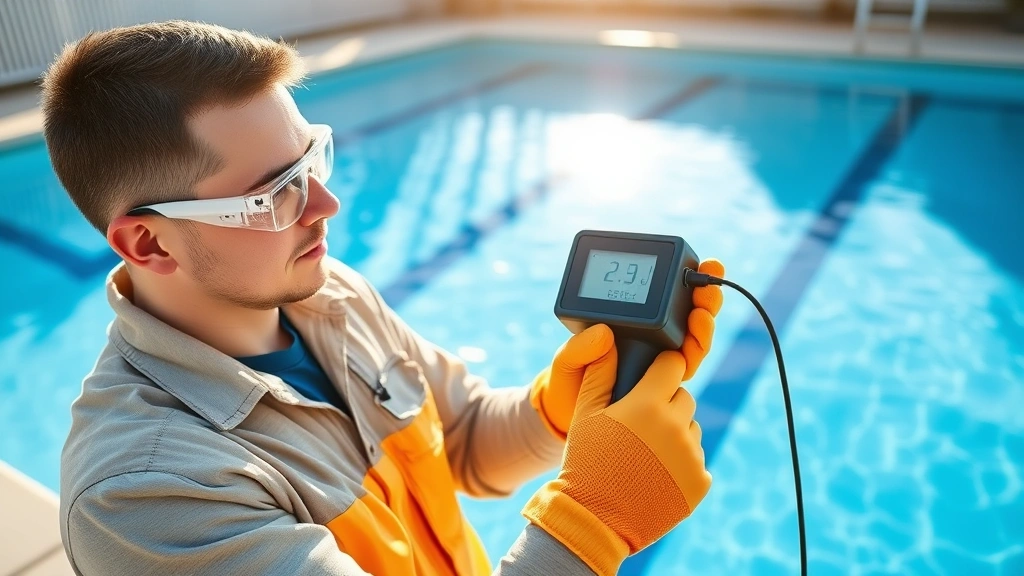
Digital chlorine monitors and automated monitoring systems are increasingly popular for serious pool enthusiasts. These devices continuously measure chlorine levels and can alert you via smartphone when levels drift outside target ranges. While more expensive ($200-1,000+), they eliminate guesswork and help prevent algae outbreaks before they develop. For those managing water quality in other contexts, our article on DIY water filtration covers complementary testing and treatment methods.
Shock Treatment Guidelines
Shock treatment (or superchlorination) involves adding a large dose of chlorine to rapidly increase levels and eliminate combined chlorine (chloramines), which cause red eyes, skin irritation, and that distinctive chlorine smell. Contrary to popular belief, that smell indicates insufficient chlorine, not excessive amounts. Shock treatment is necessary when: total chlorine exceeds free chlorine by more than 0.5 ppm, algae appears, water turns cloudy, or after heavy pool use.
Standard shock dosing requires 2-3 ppm chlorine increase, meaning you’ll add 2-3 times your normal maintenance dose. For a 10,000-gallon pool using powder chlorine shock, you’d add 2-3 ounces of calcium hypochlorite. For liquid chlorine, add 2-3 quarts. Never mix different chlorine types together—this creates dangerous chemical reactions. Always dissolve powder chlorine in a bucket of water before adding to the pool, and add chemicals to water (never water to chemicals).
After shocking, wait 8-24 hours before swimming, depending on chlorine type and how quickly levels drop. Test water every 2-4 hours after shocking to monitor the decline. Once free chlorine drops back to 2-3 ppm and clarity returns, the pool is safe for use. Shock treatments are most effective when pH is between 7.2-7.6, so adjust pH if needed before shocking. For comprehensive home maintenance knowledge, explore our DIY basement finishing guide to understand moisture control that affects pool equipment storage areas.
Safety Precautions and Storage
Chlorine is a powerful oxidizing agent and requires careful handling. Always wear chemical-resistant gloves, safety glasses, and consider a dust mask when handling powder chlorine. Work in well-ventilated areas, never in enclosed spaces where fumes can accumulate. Never allow chlorine products to contact skin or eyes—if exposure occurs, flush immediately with water for 15 minutes and seek medical attention.
Store all chlorine products in cool, dry locations away from direct sunlight and separate from other chemicals, especially acids. Never store chlorine near fuel, fertilizers, or other oxidizers. Keep products in their original labeled containers and away from children and pets. Properly sealed containers prevent degradation—opened containers of liquid chlorine should be used within 2-3 weeks. Powder chlorine, when sealed, remains effective for 5-10 years, though potency decreases over time.
Follow OSHA chemical safety guidelines and review the Safety Data Sheet (SDS) for your specific chlorine product before use. Different manufacturers may have slightly different handling requirements. If you spill chlorine, evacuate the area, increase ventilation, and allow fumes to dissipate before cleanup. For larger spills or ingestion, contact poison control immediately. Many pool supply retailers offer disposal services for expired or unwanted chlorine products—never pour chlorine down drains or into the environment.
Troubleshooting Common Chlorine Issues
Chlorine won’t stay in pool: High chlorine demand indicates contamination, algae growth, or insufficient initial dosing. Test and shock aggressively, then retest every 4 hours. Ensure your pool filter is clean and circulation is optimal. UV exposure in outdoor pools degrades chlorine rapidly—consider adding a stabilizer (cyanuric acid) to extend chlorine life, maintaining 30-50 ppm stabilizer levels.
Cloudy water despite adequate chlorine: This usually indicates pH imbalance, high alkalinity, or poor filtration rather than chlorine deficiency. Test pH (should be 7.2-7.6) and alkalinity (should be 80-120 ppm). Run your filter continuously for 24 hours. If cloudiness persists, perform a shock treatment to eliminate any combined chlorine or algae spores.
Strong chlorine smell and red eyes: Counterintuitively, this indicates low free chlorine with high combined chlorine (chloramines), not excessive chlorine. Shock treat immediately to break down chloramines. After chloramines are eliminated and free chlorine rises, the smell dissipates. This is why maintaining consistent 2-3 ppm free chlorine prevents this problem.
Algae growth despite chlorine: Green, yellow, or black algae can appear when chlorine drops below 1 ppm or when pH is too high. Brush affected areas vigorously to break apart algae cells, then shock treat with 3-4 ppm increase. For severe infestations, use algaecide alongside shock treatment. Ensure circulation is 24/7 until algae clears. Yellow algae especially requires brush treatment plus double-strength shock.
Chlorine taste and irritation: While chlorine is safe at proper levels, excessive amounts (above 5 ppm) cause unpleasant taste and eye/skin irritation. Lower chlorine levels by diluting pool water—drain 10-15% and refill with fresh water. Stop adding chlorine until levels naturally decline to target range. Ensure proper ventilation in indoor pools to allow chlorine gases to escape.
For comprehensive home security while you’re managing pool maintenance, check out our DIY home security guide to protect your property and pool equipment. Regular maintenance routines are easier when you’re confident your home and belongings are secure.
Frequently Asked Questions
How often should I test my pool chlorine levels?
Test your pool at least twice weekly during swimming season, and daily if you’re experiencing issues, adjusting chemicals, or noticing algae. Early morning testing before sun exposure provides the most accurate readings. If you use an automated monitoring system, continuous testing occurs automatically with alerts when levels drift outside target ranges.
Can I use pool chlorine for other purposes?
While chlorine is effective for sanitizing, using pool-grade chlorine for drinking water, food preparation, or other non-pool applications is not recommended without proper testing and treatment. Pool chlorine products often contain additives not approved for human consumption. Always use NSF-certified products for any application beyond pool sanitization.
What’s the difference between chlorine residual and demand?
Chlorine demand is the amount of chlorine your pool needs to reach target levels, calculated as the difference between desired and current ppm. Chlorine residual is the amount of chlorine currently in the water (free chlorine). Understanding both helps you dose accurately—if residual is low and demand is high, you have contamination requiring aggressive treatment.
Is it safe to swim immediately after adding chlorine?
This depends on the amount and type of chlorine added. Maintenance doses (raising levels 0.5-1 ppm) are safe to swim with immediately once chemicals have circulated for 15-30 minutes. Shock treatments (raising levels 2-3+ ppm) require waiting 8-24 hours before swimming, depending on how quickly levels decline back to 3 ppm or below. Always test before allowing swimmers to enter.
How does temperature affect chlorine effectiveness?
Warmer water temperatures increase chlorine demand—a pool at 85°F requires more chlorine than one at 75°F to maintain the same residual level. For every 10°F increase in water temperature, chlorine demand roughly doubles. This is why hot tubs require higher chlorine levels than cool outdoor pools. Monitor more frequently during hot weather and be prepared to increase dosing.
What’s the best chlorine type for beginners?
Powder chlorine (calcium hypochlorite) is ideal for beginners because it’s affordable, easy to apply, and provides rapid level increases. Tablet chlorinators offer set-and-forget convenience but less control over levels. Liquid chlorine requires careful handling and more frequent purchasing. Start with powder chlorine and a basic liquid test kit, then upgrade to more sophisticated systems as your comfort level increases.
Can chlorine levels ever be too low for safety?
Yes—free chlorine below 1 ppm cannot effectively prevent bacterial and viral growth, increasing risk of recreational water illnesses. If your pool’s free chlorine drops below 1 ppm, immediately add chlorine and retest within 1-2 hours. Prevent this by maintaining consistent 2-3 ppm levels through regular testing and maintenance dosing.
How does cyanuric acid (stabilizer) affect chlorine dosing?
Stabilizer protects chlorine from UV degradation, allowing it to persist longer in outdoor pools. However, excessive stabilizer (above 100 ppm) can reduce chlorine effectiveness, requiring higher chlorine levels. Maintain stabilizer at 30-50 ppm for optimal UV protection without reducing chlorine efficiency. Test stabilizer levels monthly and dilute water if levels exceed 100 ppm.


