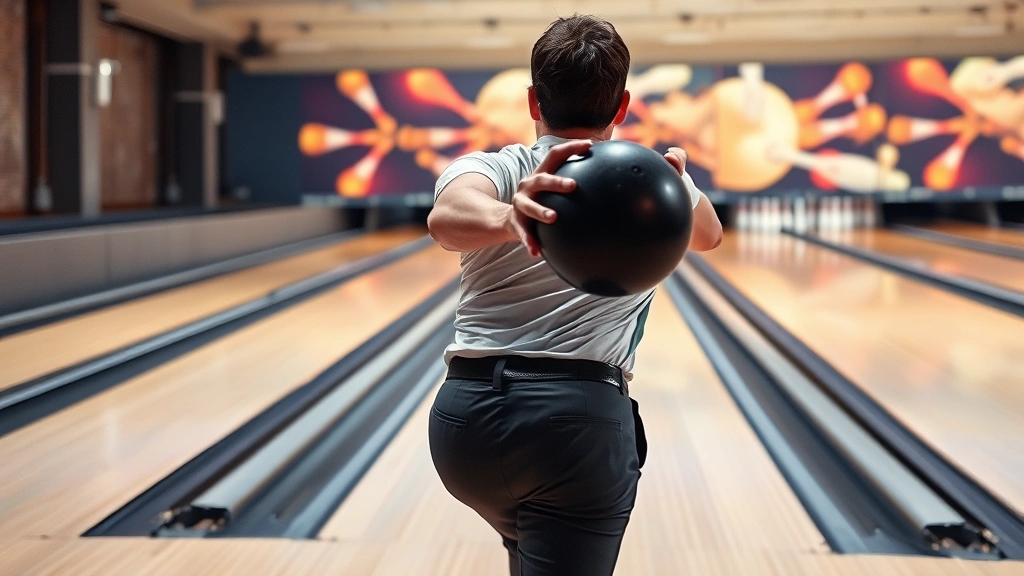
Bowl Like a Pro: DIY Tips from Experts
Bowling is more than just a casual weekend activity—it’s a skill that combines physical technique, mental focus, and proper equipment knowledge. Whether you’re looking to improve your average, master advanced techniques, or simply understand the mechanics behind a perfect strike, this comprehensive guide will transform your game. Many enthusiasts discover that investing time in learning proper form and technique rivals the satisfaction of completing major DIY basement finishing projects—both require planning, practice, and persistence.
The difference between casual bowlers and those who truly excel lies not in natural talent alone, but in understanding the fundamental principles that govern ball motion, lane conditions, and body mechanics. Professional bowlers spend thousands of hours perfecting their craft, and while you may not aspire to tournament play, adopting their methodologies will dramatically elevate your performance. This guide draws from expert insights, biomechanical research, and practical experience to provide you with actionable strategies you can implement immediately.
Understanding Bowling Fundamentals
The foundation of how to bowl better starts with grasping the essential mechanics that govern every successful delivery. Bowling is fundamentally a physics problem: you must apply force to a 6-16 pound ball while maintaining balance and control through a complex series of movements. The sport requires coordination between your legs, torso, arms, and fingers—much like the precision needed when executing detailed DIY beginner woodworking projects.
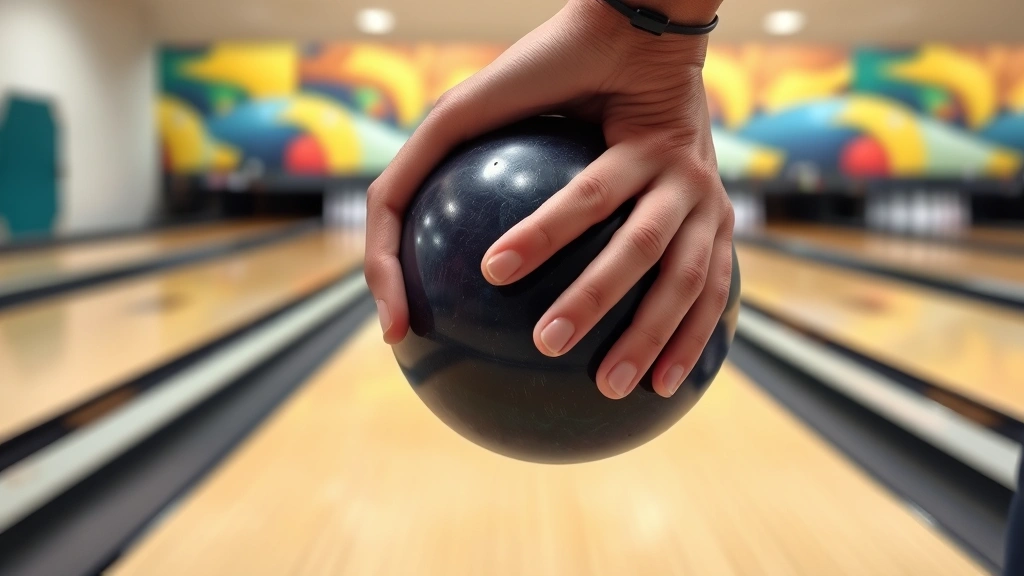
Your stance is the first critical element. Begin by positioning your feet approximately 6-8 inches apart, with your shoulders squared toward your target. Your knees should maintain a slight bend throughout your approach—this isn’t a rigid military stance, but rather an athletic position that allows for smooth weight transfer. The ball should be held at chest height, with your fingers inserted into the holes at approximately the second knuckle. Your thumb should exit the ball first, followed by your fingers, which impart the revolutions necessary for hook and curve.
Understanding the four-step approach is essential for consistency. The first step initiates as your ball hand begins its downswing. The second step occurs as your arm reaches the lowest point of the swing. By the third step, your arm is accelerating upward. The fourth step concludes with your release and follow-through. This timing creates a rhythm that, once internalized, becomes automatic. Many beginners rush their approach, which destabilizes their entire delivery. Slow, controlled movements trump rapid, jerky motions every time.
Mastering Your Approach and Delivery
The approach and delivery comprise the most visible and critical aspects of bowling technique. Proper approach mechanics determine whether your ball travels straight down the lane or curves uncontrollably into the gutter. The five-step approach is preferred by professionals because it provides superior timing and control compared to the four-step method, though both are viable depending on your physical capabilities.
Begin your five-step approach with the ball held at approximately waist height. As your first step forward (typically with your right foot if you’re a right-handed bowler), allow your ball arm to swing backward naturally. Don’t force the swing—gravity should do most of the work. Your arm should form a pendulum, swinging freely from your shoulder joint. Many bowlers make the critical error of bending their elbow excessively, which introduces inconsistency and reduces power.
Your second through fourth steps should maintain a steady walking pace while your arm completes its backswing and begins accelerating forward. By your fourth step, your arm should be coming through the release zone. Your fifth step is crucial: it’s your slide step. Your sliding foot should glide smoothly across the approach, bringing your body into perfect alignment with your target. Your knees should bend deeper during this final step, creating a low center of gravity that provides stability.
Release technique separates amateur bowlers from those who truly bowl like a pro. Your fingers should exit the ball after your thumb, imparting counter-clockwise rotation (for right-handed bowlers) that creates the characteristic hook. Your fingers should remain in the holes until the very last moment, with your hand finishing in a wave motion extending toward your target. Follow-through is not optional—it’s the final component of a complete delivery that determines accuracy and consistency.
Reading Lane Conditions
Professional bowlers understand that lane conditions dramatically affect ball motion. Lanes are oiled differently depending on league specifications, tournament standards, and house preferences. Reading these conditions is analogous to understanding structural requirements when planning major home projects like adding a bathroom—you must assess the existing conditions before implementing your strategy.
Lane oil creates friction that controls your ball’s hook and skid distance. Heavy oil conditions (typically found on championship patterns) cause balls to skid longer before engaging the lane’s friction, resulting in later hook angles. Light oil conditions produce earlier hook angles and more aggressive ball motion. Medium conditions offer balance between these extremes. As you practice at different facilities, pay attention to how your ball reacts at different distances from the pins.
The breakpoint is the specific area where your ball transitions from its skid phase into its hook phase. Identifying your ball’s breakpoint is essential for accurate targeting. Imagine a line from the pins backward through the lane—this is your target line. Now visualize where your ball crosses this line while hooking into the pocket. That crossing point is your breakpoint. Once identified, you can adjust your starting position, target, and ball selection to consistently hit this mark.
Professional bowlers use several techniques to read lanes: they observe how other bowlers’ balls react, they note the condition of the lane surface (newer lanes play different than worn lanes), and they understand how oil patterns change during league play. As the evening progresses and more bowlers throw balls, they distribute oil across the lane, creating track marks that indicate which areas have been heavily used. Adjust your strategy accordingly—use less-hooked balls on heavily tracked areas and more-aggressive equipment on fresh oil.
Equipment Selection and Maintenance
Your equipment significantly influences your ability to improve your bowling performance. While you can bowl casually with house balls, serious improvement requires investing in a properly fitted personal ball. According to the Professional Bowlers Association, equipment represents approximately 30% of your success, with technique and mental approach comprising the remaining 70%.
Selecting the right ball weight is crucial. Your ball should weigh approximately 10% of your body weight, up to a maximum of 16 pounds. A ball that’s too heavy causes fatigue and reduces accuracy; a ball that’s too light provides insufficient momentum and pin action. Finger hole sizing is equally important—holes should fit snugly without requiring excessive force. Poorly fitted holes cause thumb and finger pain while reducing control.
Ball coverstock material determines how your ball interacts with lane oil. Plastic balls are durable and affordable but don’t hook aggressively—they’re ideal for straight bowlers and beginners. Urethane balls offer moderate hook potential and work well on medium oil conditions. Reactive resin balls provide aggressive hook on heavy oil patterns. High-end equipment like particle-enhanced reactive resin balls offer maximum performance for advanced bowlers. Your initial investment should be a quality urethane or entry-level reactive resin ball that matches your current skill level.
Maintenance extends your equipment’s lifespan and ensures consistent performance. Clean your ball after each session using a microfiber towel to remove lane oil and dirt. Periodically deep-clean your ball using specialized bowling ball cleaner—this removes accumulated oil buildup that reduces friction. Store your ball in a climate-controlled environment; extreme temperature fluctuations can cause warping. Have your ball resurfaced professionally if it develops surface nicks or loses its reactive properties, which typically occurs every 60-80 games of heavy use.
Advanced Techniques for Consistency
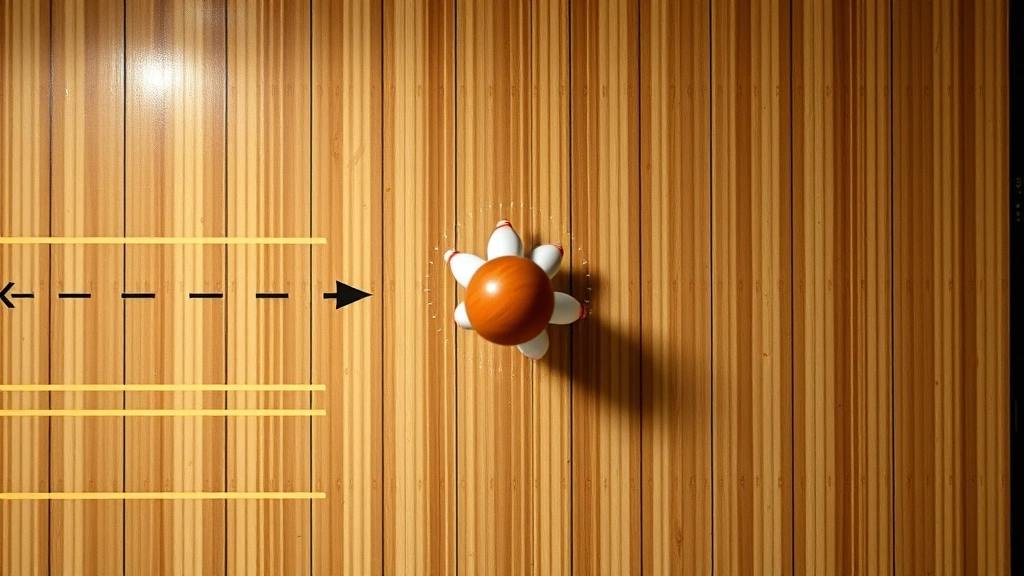
Once you’ve mastered fundamentals, advanced techniques separate you from average bowlers. Targeting systems provide precision that casual bowlers lack. Rather than aiming directly at pins, professionals aim at specific lane targets. The most common system uses the arrows embedded in the lane approximately 15 feet from the foul line. These arrows provide visual references for targeting. Right-handed bowlers typically aim at the 10-board (measuring from the right gutter) to hit the pocket at a 6-degree angle—the optimal angle for strikes.
Adjusting to changing lane conditions requires strategic thinking similar to planning complex DIY home security systems. When your ball starts hitting high (on the 1-pin rather than the 5-pin pocket), move your starting position left while keeping your target the same. Conversely, if you’re hitting low, move right. This adjustment technique maintains your release mechanics while adapting to lane conditions. Some bowlers also adjust their target without moving their feet—this is valid but requires more precise execution.
Spare shooting deserves dedicated practice. Many bowlers excel at strikes but struggle with spares, which comprise approximately 40% of scoring opportunities. Develop a systematic approach: identify your single-pin spares first (10-pin, 7-pin, headpin, etc.), establish specific starting positions and targets for each, and practice until they become automatic. The Bowlers Journal recommends dedicating 20% of practice time to spare shooting.
Ball selection strategy means carrying multiple balls to tournaments and league play. Your arsenal might include a plastic ball for dry lanes, a urethane ball for medium conditions, and a reactive resin ball for heavy oil. Understanding when to switch equipment demonstrates professional-level thinking. Make changes when you’re consistently missing your target in the same direction—this indicates lane conditions have shifted beyond your current ball’s capability.
Mental Game and Practice Strategies
The mental aspect of bowling is frequently underestimated. Professional bowlers spend significant time developing mental resilience, focus, and confidence. Visualization involves mentally rehearsing your delivery before stepping onto the lane. Close your eyes and visualize your approach, your release, your ball’s path down the lane, and the satisfying crash of pins scattering. This mental rehearsal activates the same neural pathways as physical practice, improving performance through psychological conditioning.
Developing a pre-shot routine creates consistency. Your routine might include: take two deep breaths, visualize your shot, step onto the approach, and execute. This sequence should be identical for every single shot—consistency breeds confidence. Many professional bowlers follow elaborate pre-shot routines that might appear superstitious but actually serve to focus attention and eliminate distractions.
Structured practice is exponentially more valuable than casual bowling. Rather than simply throwing balls and hoping for good scores, implement purposeful practice sessions. Dedicate specific sessions to: spare shooting (30 minutes), targeting and adjustments (30 minutes), and game simulation (30 minutes). Track your performance metrics: average score, strike percentage, spare conversion rate, and consistency. Review these statistics regularly to identify areas requiring improvement. This data-driven approach mirrors the planning methodology used in major DIY projects, where measurement and assessment drive success.
Joining a league accelerates improvement dramatically. League play exposes you to competitive pressure, various lane conditions, and diverse opponents from whom you can learn. The United States Bowling Congress (USBC) sanctions leagues worldwide and maintains official statistics that track your performance over time. This official record provides motivation and accountability that casual bowling cannot replicate.
Managing pressure and maintaining composure during critical moments separates champions from merely good bowlers. When you’re bowling for a high score or in a competitive situation, anxiety naturally increases. Combat this through breathing techniques: take slow, deep breaths that activate your parasympathetic nervous system, counteracting stress responses. Remind yourself that you’ve executed this shot thousands of times—confidence comes from preparation, not luck.
FAQ
What’s the ideal ball weight for beginners?
Most beginners should start with a ball weighing 10-12 pounds. This weight range allows you to focus on technique without the fatigue that heavier balls cause. As your strength and technique improve, you can transition to heavier balls (13-15 pounds) for increased pin action. Never exceed 16 pounds, the maximum allowed by USBC regulations.
How often should I practice to improve significantly?
Bowling at least twice weekly accelerates improvement, with dedicated practice sessions being more valuable than casual league play alone. Commit to 3-4 hour practice sessions combining spare shooting, targeting practice, and game simulation. Most bowlers see measurable improvement within 4-6 weeks of consistent practice following the strategies outlined in this guide.
Should I use a straight ball or hook for better results?
While straight balls are easier to control initially, learning to hook provides superior pin action and scoring potential. Most professional bowlers throw hooks because the ball enters the pocket at a more optimal angle (typically 6 degrees), creating more powerful pin collisions. Start with straight balls to master fundamentals, then transition to controlled hooks as your technique develops.
What’s the difference between USBC and PBA regulations?
The USBC governs amateur bowling, including league play and sanctioned tournaments for recreational bowlers. The PBA oversees professional bowling with stricter equipment standards and higher competition levels. Both organizations maintain official rulebooks and equipment specifications. For league bowling, you’ll follow USBC rules; if you aspire to professional competition, PBA regulations apply.
How do I prevent bowling injuries?
Proper warm-up before bowling prevents injuries—spend 5-10 minutes stretching your shoulders, wrists, and legs. Maintain proper posture throughout your delivery to avoid straining your back. Use correct ball weight to prevent shoulder and elbow strain. If you experience persistent pain, consult a sports medicine professional. Many injuries result from poor technique rather than the sport itself, making professional coaching a worthwhile investment.
Can I improve my average by 20+ pins?
Yes, absolutely. Bowlers who implement the techniques discussed in this guide consistently improve their averages by 15-30 pins within their first season of dedicated practice. Your ceiling depends on your commitment level and natural athleticism, but dramatic improvement is achievable for anyone willing to invest time in deliberate practice and technical refinement.


