
Choosing Snowboard Size: Expert Tips Inside
Selecting the right snowboard size is one of the most critical decisions you’ll make as a winter sports enthusiast, whether you’re just starting out or upgrading your equipment. A properly sized snowboard dramatically impacts your ability to control your ride, maintain balance, and progress your skills on the mountain. Unlike many sporting goods where one size fits most, snowboards require careful consideration of multiple personal factors to ensure optimal performance and safety.
The process of determining your ideal snowboard length involves understanding how your height, weight, riding style, and experience level all work together. Many beginners make the mistake of choosing a board based solely on height or following outdated sizing charts that don’t account for modern snowboard design and construction. This guide will walk you through the professional methodology used by Snow Industry America certified instructors and equipment specialists to help you make an informed decision that will enhance your performance and enjoyment on the slopes.
Understanding Snowboard Sizing Basics
Modern snowboards are typically measured in centimeters, ranging from approximately 130 cm for children to 170+ cm for larger adults. The length of your board affects how the snowboard responds to your input, how easily it turns, and how stable it feels at various speeds. Understanding the relationship between board length and performance characteristics is essential before making your purchase.
Snowboards work on a principle called effective edge, which refers to the portion of the board’s edge that actually contacts the snow when you’re carving. A longer board generally provides more stability at higher speeds and floats better in deeper snow, while a shorter board offers easier maneuverability and is more forgiving for learning fundamental techniques. The sweet spot for most riders falls somewhere in the middle of the recommended range for their physical characteristics.
When shopping for your first board or upgrading equipment, you’ll notice manufacturers publish sizing charts on their websites and packaging. These charts serve as starting points, but they should never be your only reference. Professional instructors at PSIA (Professional Ski Instructors of America) emphasize that individual preference and riding goals should carry significant weight in your final decision.
Height and Weight Considerations
Your height and weight form the foundation of snowboard sizing calculations. Height alone is an incomplete metric because two people of identical height can have vastly different builds and riding capabilities. Weight distribution matters significantly because a heavier rider needs a stiffer board with more surface area to support them, while a lighter rider can perform well on a more flexible, shorter board.
Most manufacturers recommend specific weight ranges for each board size and flex rating. For example, a board designated for someone 5’6″ to 5’10” might specify a weight range of 140-180 pounds. If you fall outside this range, you should adjust your board length accordingly. Heavier individuals should consider moving up a size, while lighter riders might benefit from sizing down.
The relationship between height and weight also affects your center of gravity and stance width. Taller riders with longer legs typically need a longer wheelbase (the distance between your bindings) to maintain proper leverage, while shorter riders benefit from a shorter wheelbase that allows easier weight distribution and quicker edge transitions. Understanding how your proportions affect board selection ensures you’ll have adequate control regardless of your size.
Riding Style and Terrain Preferences
Your preferred riding style—whether you focus on groomed runs, backcountry exploration, park and pipe features, or all-mountain versatility—significantly influences the ideal board size. All-mountain riders who want versatility across various terrain types should follow standard sizing guidelines more closely, as a mid-range size offers balanced performance.
Freestyle and park riders typically prefer shorter boards because they facilitate tricks, quick spins, and easier landings. Riders specializing in park work might size down 2-5 centimeters from standard recommendations to improve maneuverability and reduce the moment of inertia (the resistance to rotational movement). Conversely, freeriders and backcountry enthusiasts often prefer longer boards that provide better flotation in powder and enhanced stability at high speeds.
Carving-focused riders who prioritize smooth, aggressive turns on groomed terrain might lean toward slightly longer boards within their size range, as increased length provides more edge grip and predictable carving arcs. If you’re unsure about your primary riding focus, selecting a board in the middle of the recommended range for your height and weight provides the most balanced performance across different conditions and techniques.
Experience Level Impact on Selection
Beginners benefit from different sizing recommendations than advanced riders, a principle that many sizing charts fail to adequately address. Newer riders should generally choose boards at the shorter end of the recommended range for their height and weight. Shorter boards are more forgiving, easier to control, and allow beginners to develop proper technique without fighting excessive board length.
As you progress through intermediate levels and develop stronger edge control and balance, you can gradually move toward longer boards that match your height more closely. Advanced riders often prefer boards matched to their exact height or even slightly longer, as they have the skills to manage the increased speed and reduced maneuverability. This progression ensures you’re always riding equipment that challenges you appropriately without overwhelming your current abilities.
The learning curve accelerates dramatically when your equipment matches your skill level. Attempting to ride a board that’s too long for your ability level leads to frustration, slower progression, and increased injury risk. Conversely, outgrowing a beginner-sized board too quickly means you’ll need to upgrade sooner. Selecting conservatively when you’re learning ensures longer equipment life and better foundational skill development.
Step-by-Step Measurement Guide
Follow this professional measurement methodology to determine your ideal snowboard size:
- Measure your height accurately without shoes, standing against a wall with your heels touching the base. Record this measurement in both feet/inches and centimeters for reference against sizing charts.
- Weigh yourself on an accurate scale wearing the clothing you typically wear while snowboarding (base layers, jacket, etc.). This weight figure should match the manufacturer’s specified ranges on their sizing documentation.
- Determine your stance width by standing naturally with your feet shoulder-width apart and measuring the distance between your heel centers. This measurement helps ensure bindings can be positioned properly for your body proportions.
- Consider your inseam by measuring from your crotch to your ankle bone while standing. This measurement is particularly important for taller or shorter individuals whose proportions don’t match average height-to-inseam ratios.
- Consult multiple manufacturer charts for the specific board you’re considering. Different brands have slightly different sizing philosophies, so checking 2-3 manufacturer recommendations provides perspective on where your measurements fall within their ranges.
- Identify your sizing range by finding where your height and weight intersect on manufacturer sizing charts. Most quality boards have a 5-10 centimeter range of recommended sizes for each height-weight combination.
Once you’ve gathered these measurements, you’ll have a specific range—typically something like 148-158 cm—within which you should select your board. The next step involves considering your riding style, experience level, and personal preferences to choose the specific size within that range.
Testing Your Snowboard Fit
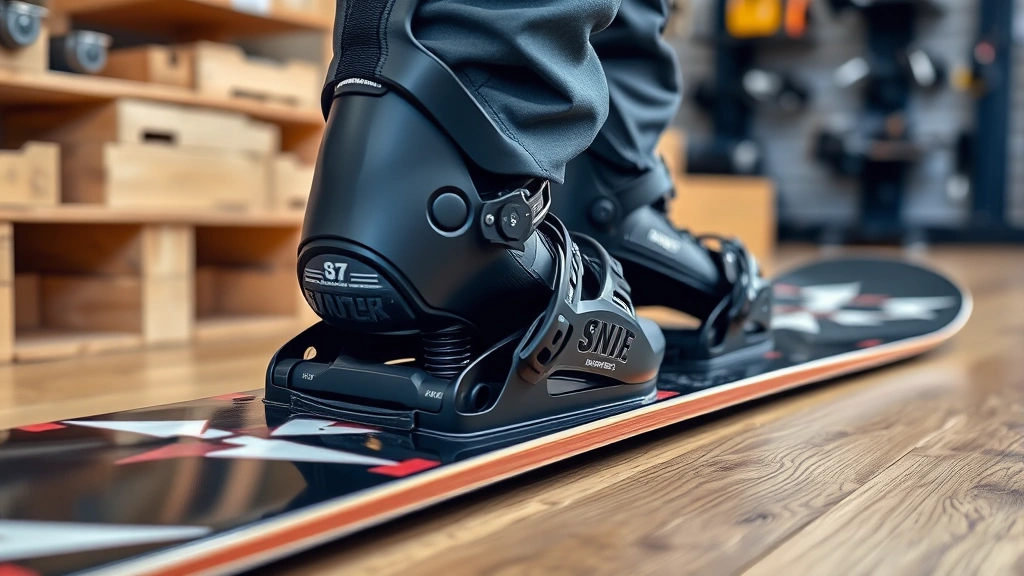
When you have your board in hand, perform several fit checks before taking it to the mountain. Stand on the board while wearing your snowboard boots to verify the stance width accommodates your feet comfortably. Your feet should be roughly shoulder-width apart on the board with adequate space between your heel and toe edges.
The chin test provides a quick reference point: when standing on flat ground next to the board, it should reach somewhere between your chin and nose. Boards reaching your nose suggest a size that might be too long, while boards falling below your chin might be slightly short. However, this test is merely a starting point and shouldn’t override your measurements and manufacturer recommendations.
Check your binding positioning by ensuring they’re mounted at appropriate angles (typically -15 to -9 degrees for your back foot and -9 to +15 degrees for your front foot, depending on your riding style). Bindings should be positioned so your boots don’t overhang the edges excessively, as this causes toe and heel drag during turns. If proper binding positioning seems impossible on your board, the size might not match your proportions.
Common Sizing Mistakes to Avoid
One of the most prevalent errors is selecting a board based solely on height without considering weight or riding ability. This approach leads to boards that feel either unstable (if too long) or sluggish (if too short) for your specific body composition and skill level.
Choosing a board that’s too long for your experience level is another common mistake that severely hinders progression. Many beginners purchase boards sized for advanced riders expecting to “grow into” them. This strategy backfires because the board’s characteristics—increased speed, reduced maneuverability, and greater turning radius—actively work against developing proper technique and confidence.
Ignoring manufacturer weight ranges causes significant performance issues. A board designed for 150-190 pounds will feel unresponsive and sluggish if you weigh 130 pounds. Similarly, a rider weighing 210 pounds on a board rated for 160-190 pounds will experience excessive flex and poor edge hold. Always verify that your weight falls comfortably within the manufacturer’s specified range for your chosen size.
Failing to account for different board types represents another common oversight. A park board, powder board, and all-mountain board of the same length perform completely differently due to variations in flex, sidecut radius, and construction. Selecting the appropriate board type for your primary riding activities is just as important as choosing the right length.
Many riders also neglect to consider their riding style’s evolution. If you’re currently a groomed-run carver but interested in eventually exploring the backcountry, selecting a mid-range all-mountain board provides better long-term versatility than an extremely specialized board. Conversely, if you’re certain your focus is park riding, optimizing for that specific discipline makes sense.
When you’re ready to invest in quality winter sports equipment, treat the selection process with the same care you’d apply to other important purchases. Taking time to properly size your snowboard pays dividends through improved performance, faster skill development, and enhanced safety on the mountain.
FAQ
Should I size my snowboard based on height alone?
No, height should only be your starting point. Weight, riding style, experience level, and terrain preferences all significantly impact the ideal board size. Using only height as your sizing metric often results in boards that don’t match your weight range or riding ability.
Can I ride a snowboard that’s too long for my height?
Technically yes, but you’ll experience reduced maneuverability, slower edge transitions, and increased difficulty controlling the board, especially at slower speeds. Boards significantly longer than recommended for your height and weight make learning difficult and can increase injury risk.
Is it better to size up or down when between sizes?
This depends on your experience level and riding style. Beginners and freestyle riders should size down for easier maneuverability and control. Advanced riders and those focused on speed and stability can safely size up. Consider your primary riding goals when making this decision.
How do I know if my snowboard is the right size after purchase?
You’ll notice proper sizing through improved control, balanced turn initiation, and comfortable stance width. If you struggle with edge control, feel unstable, or can’t turn easily, your board might not match your size or ability level. Conversely, if the board feels sluggish or unresponsive, it might be too short or too soft for your weight.
Does snowboard sizing differ between men’s and women’s boards?
Yes, women’s boards are often designed with different flex patterns, narrower waists, and adjusted sidecut radii to accommodate different body proportions and weight distributions. When possible, women riders should select from women’s-specific sizing charts, as these account for average physical differences.
What if I’m between two sizes according to manufacturer charts?
Review your primary riding style and experience level. Freestyle and park-focused riders should choose the shorter option, while all-mountain and freeriders might prefer the longer size. Test both if possible, or consult with experienced riders at your local shop who understand current board designs.
How often should I replace my snowboard?
Quality snowboards typically last 5-10 years with proper maintenance, depending on usage frequency and riding style. As your skills progress and your weight changes, you might need to upgrade sooner. Significant damage to the base or delamination warrants replacement.


