
Counting Buck Points: Expert Tips and Tricks
Understanding how to count buck points is essential for hunters, wildlife managers, and anyone interested in deer hunting regulations. Buck points, also known as antler points, determine whether a deer meets legal hunting requirements in many jurisdictions and help classify trophy-quality animals. The scoring system varies by region and hunting season, making accurate counting crucial for compliance and ethical hunting practices.
Whether you’re a seasoned hunter preparing for the season or a beginner learning deer anatomy, mastering point-counting techniques ensures you make informed decisions in the field. This comprehensive guide walks you through professional methods used by wildlife officials, taxidermists, and experienced hunters to accurately assess antler quality and point classification.
Understanding Buck Points and Antler Anatomy
Buck points are individual projections extending from the main antler beam. Each distinct point that meets minimum length requirements counts toward the total score. Before you can accurately count points, you must understand basic antler structure and terminology used across hunting communities.
The main beam forms the primary structure of the antler, extending upward from the pedicle (the bony growth on the skull). Points branch off this main beam at various angles. The brow tines are the first points emerging from the base, typically above the eye. G-points (or guard points) extend from the main beam, numbered sequentially as you move toward the tip. Understanding these anatomical terms helps you communicate accurately with other hunters and wildlife officials.
A point must extend perpendicular to the main beam and meet minimum length criteria—typically one inch or longer, depending on local regulations. Some jurisdictions require measurements from the base to the tip, while others focus on whether the point is visibly distinct. This variation in measurement standards explains why point counts may differ between regions and why consulting local hunting regulations is critical.
Young bucks typically display 2-4 points per side during their first few years. As they age and nutrition improves, point counts increase, often reaching 8 or more points per side in mature animals. Understanding age-related antler development helps you estimate a buck’s age and overall health status during field assessment.
For detailed insights into managing your hunting property and understanding wildlife behavior, explore our DIY Nests Hub Blog for comprehensive hunting and wildlife resources.
Official Point-Counting Methods
The most widely accepted point-counting system in North America follows guidelines established by the Boone and Crockett Club, the official record-keeping organization for big game hunting. Their scoring system, though primarily designed for trophy classification, provides the foundation for understanding professional point evaluation.
The Boone and Crockett method counts all points measuring at least one inch in length. Points are counted on both the left and right antlers separately, then combined for the total point score. This method requires careful visual assessment and often physical measurement to ensure accuracy. Main beam points include the brow tine (G-1), first point (G-2), second point (G-3), and continuing points toward the tip.
Most state wildlife agencies use simplified versions of this system for hunting regulation compliance. Many states employ a minimum point restriction (MPR) system where bucks must have a specified number of points on one side to be legally harvested. Common MPR thresholds include 3-point minimums (3 points on one side) or 4-point minimums (4 points on one side), though these vary significantly by region.
To count points accurately using official methods, stand directly in front of the buck’s head and examine each antler systematically. Start at the base and move toward the tip, identifying each distinct projection. Count points on the left antler, then the right, recording your findings. This systematic approach prevents double-counting and ensures consistency.
Some jurisdictions use inside spread measurements combined with point counts for more comprehensive scoring. Inside spread measures the distance between the main beams at their widest point. When combined with point counts, spread measurements provide a fuller picture of antler quality and trophy classification.
Measuring and Recording Points
Accurate measurement requires proper tools and technique. While experienced hunters often estimate point counts visually, official scoring demands precision measurement. A flexible measuring tape, calipers, or specialized antler measuring devices provide the accuracy needed for record-keeping or dispute resolution.
Each point requires measurement from its base (where it emerges from the main beam) to its tip. Points measuring less than one inch in length typically don’t count toward official scores, though some jurisdictions use different minimums. Measure perpendicular to the main beam for consistency, as angled measurements can produce inflated results.
Recording your measurements prevents confusion and provides documentation for hunting regulations compliance. Create a simple record noting the date, location, and point count for each buck observed or harvested. This documentation becomes valuable for tracking wildlife activity on your property and understanding population trends over multiple seasons.
Photography provides excellent documentation when physical measurement isn’t possible. Take clear photos from directly in front of the buck’s head, showing both antlers in profile. These images can be analyzed later or shared with wildlife officials for verification. Ensure adequate lighting and minimal background clutter for clearest results.
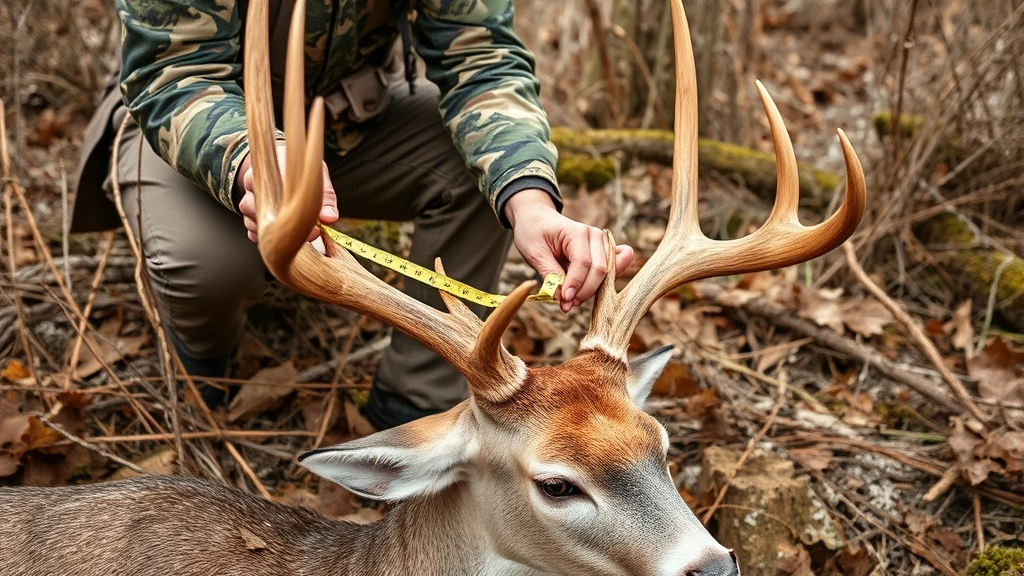
Professional taxidermists and wildlife biologists use specialized measuring equipment for trophy scoring. Specialized antler measuring kits include templates, digital calipers, and detailed instruction sheets following official Boone and Crockett standards. These professional tools ensure consistency and accuracy for record-book submissions or official scoring events.
Common Counting Mistakes
Even experienced hunters occasionally miscount points, particularly under field pressure or poor lighting conditions. Understanding common errors helps you avoid them and develop more reliable assessment skills.
Double-counting represents the most frequent mistake. When examining antlers from certain angles, the same point may appear on both sides of the main beam, tempting observers to count it twice. Systematic examination from a consistent position prevents this error. Always count left and right antlers separately, documenting each side’s total before combining them.
Counting split points as multiple points causes inflated tallies. When a single point splits into two branches near the tip, many hunters count this as two separate points. Official standards typically count split-tip projections as single points unless the split occurs significantly above the base, creating truly distinct formations. Examine the point’s base carefully—if it emerges as one projection that later divides, it counts as one point.
Including abnormal points in standard counts creates confusion. Abnormal points develop irregularly, sometimes curving backward or growing at unusual angles. While these points count toward total antler mass in some scoring systems, they’re often tallied separately from normal points. Understanding your jurisdiction’s classification system ensures accurate counting.
Misidentifying non-points as countable points leads to overestimation. Rough edges, burrs, or slight irregularities on the main beam aren’t points. True points must extend distinctly perpendicular to the main beam with clear separation at the base. When in doubt, apply the measurement standard—if it doesn’t exceed one inch from base to tip, it doesn’t count.
Inconsistent lighting assessment causes serious errors. Points visible in bright sunlight may disappear in shadow, or vice versa. Always count under consistent lighting conditions, ideally in natural daylight with the buck’s head positioned consistently. This practice prevents artificial inflation or deflation of point counts.
Regional Variations in Point Systems
Point-counting standards vary dramatically across North America, reflecting different wildlife management philosophies and hunting traditions. Before harvesting any buck, verify your specific state or provincial regulations, as point requirements directly affect legal compliance.
The Association of Fish and Wildlife Agencies provides resources for understanding regional regulations. Many eastern states use 3-point minimums (3 points on one side), allowing harvest of younger bucks and maintaining hunting opportunities across larger populations. Western states often employ stricter 4-point or 5-point minimums, prioritizing mature buck harvests and trophy-quality animals.
Some jurisdictions distinguish between point-on-one-side (POOS) and point-on-both-sides (POBS) systems. POOS regulations require the specified number of points on only one antler, allowing harvest of asymmetrical bucks. POBS systems demand the minimum point count on both sides, protecting younger or genetically inferior animals with uneven antler development.
Antlerless deer seasons operate independently from point requirements. Does and young bucks without sufficient points can be harvested during designated antlerless seasons regardless of point count. Understanding your state’s season structure—which may include early seasons, rut seasons, and late seasons with varying regulations—ensures full compliance throughout the hunting period.
Several states have implemented quality deer management (QDM) zones with more restrictive point requirements, typically 4-points-per-side minimums. These zones aim to improve overall herd genetics and buck quality by protecting younger males. If you hunt in QDM areas, stricter counting accuracy becomes essential for legal compliance.
Research your specific hunting location’s regulations through your state’s wildlife agency website. Many agencies provide detailed antler point diagrams, measurement standards, and scoring examples specific to your region. This investment in understanding local rules prevents costly violations and supports ethical hunting practices.
Professional Scoring Standards
When pursuing trophy classification or official record recognition, professional scoring standards apply. The Boone and Crockett Club, Safari Club International (SCI), and Pope and Young Club each maintain official record books with specific scoring methodologies. Understanding these standards helps hunters appreciate trophy quality and participate in organized hunting communities.
The Boone and Crockett Club’s official scoring system measures total antler points, main beam length, inside spread, and circumference measurements. Points are counted on both sides, with each point measuring at least one inch from base to tip included in the final tally. The Pope and Young Club uses identical point-counting methodology but maintains separate records for archery-harvested animals.
Safari Club International employs a slightly different system emphasizing typical and non-typical categories. Their scoring includes point counts, measurements between points, and overall symmetry evaluation. Understanding these distinctions matters if you plan to submit harvested bucks for official recognition or participate in competitive hunting forums.
Professional scorers complete certification programs ensuring consistent application of scoring standards. If you’re serious about trophy hunting or record submission, consulting a certified official scorer eliminates ambiguity and ensures accurate documentation. Many taxidermists hold official scorer credentials and can provide professional assessment during the mounting process.
For hunters interested in improving their property’s wildlife habitat, our guide to DIY basement finishing projects includes creating trophy room displays and hunting lodge spaces to showcase harvested animals and maintain hunting records.
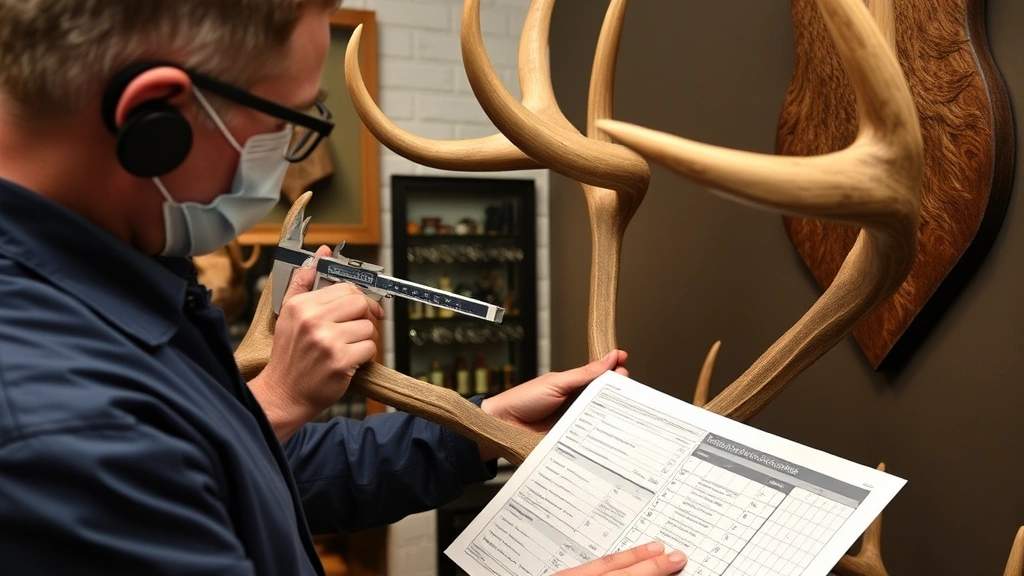
Trophy scoring competitions and hunting expos frequently offer scoring demonstrations where professionals teach point-counting techniques to interested hunters. Attending these educational events provides hands-on experience and direct instruction from certified scorers. Many regional hunting clubs sponsor scoring workshops during pre-season preparation periods, making professional education accessible to dedicated hunters.
Understanding score categories helps contextualize your harvested buck’s quality. Typical antlers develop symmetrically with normal point patterns, while non-typical antlers feature irregular points, abnormal projections, or asymmetrical development. Both categories have separate record books, and bucks with significant abnormal development might qualify for non-typical records even with lower overall point counts.
FAQ
What’s the minimum point length for official counting?
Official Boone and Crockett standards require points measuring at least one inch from base to tip. However, state hunting regulations may use different minimums—some jurisdictions count all visible points regardless of length, while others use different standards. Always verify your state’s specific requirements before counting points for legal compliance.
Can I count a split point as two separate points?
Split points (where a single point divides into branches near the tip) typically count as one point in official scoring if the split occurs near the tip. If the division occurs significantly above the base, creating truly distinct formations emerging separately from the main beam, they may count as two points. Professional scorers examine the point’s base carefully to make this determination.
How do I count points on an unusual or deformed antler?
Unusual antlers require careful examination of individual projections. Count all points that meet the standard definition—extending distinctly perpendicular to the main beam and measuring at least one inch. Abnormal or deformed points count in the total tally, though they’re often noted separately. When uncertainty exists, consult official scoring standards for your jurisdiction or contact a certified official scorer.
Does inside spread measurement affect point counting?
Inside spread (distance between main beams at widest point) is measured separately from point counting. While spread measurements contribute to overall trophy scores in some systems, they don’t affect the number of countable points. Both measurements combine to create comprehensive trophy evaluations.
What’s the difference between POOS and POBS regulations?
POOS (Point-On-One-Side) regulations require the minimum point count on only one antler, allowing harvest of bucks with uneven antler development. POBS (Point-On-Both-Sides) regulations require the minimum point count on both antlers, protecting bucks with asymmetrical development. Your state’s specific regulation determines which standard applies in your hunting area.
How can I prepare for accurate field counting?
Practice counting antler points before hunting season using photos, videos, or practice sessions at local hunting expos. Study your state’s point-counting standards and example images provided by wildlife agencies. Under field conditions, position yourself directly in front of the buck’s head when possible, count systematically from base to tip on each antler, and record your count immediately. This preparation ensures confident, accurate assessment when field opportunities arise.


