Septic System Cost: Contractor Insights and Budget Planning
Installing a septic system represents one of the most significant investments homeowners make when building in rural or unsewered areas. Understanding how much it costs to install a septic system requires examining multiple variables that directly impact your final bill, from soil conditions to system type and local regulations. Contractors consistently report that septic installation costs range from $3,000 to $25,000 or more, with the average residential system falling between $5,000 and $15,000. However, these figures only tell part of the story—site-specific factors, permit requirements, and system complexity create substantial variation across different properties and regions.
This comprehensive guide draws from contractor expertise and industry standards to help you understand septic system pricing, what influences costs, and how to budget effectively for this critical infrastructure. Whether you’re planning a new build or replacing an aging system, knowing the cost drivers will empower you to make informed decisions and avoid unexpected expenses during installation.

Average Septic System Installation Costs
The national average for septic system installation typically ranges from $5,000 to $15,000 for a conventional gravity-fed system serving a single-family home. However, contractors across different regions report significant variation. In the Northeast and Pacific Northwest, where soil conditions often require more sophisticated treatment, costs frequently exceed $12,000. The Midwest and South generally report lower averages around $4,500 to $8,000, while rural areas with challenging terrain may see installations reaching $20,000 to $25,000.
The cost per square foot of leach field area averages $5 to $15, depending on soil composition and drainage requirements. A typical 1,500-square-foot home requires a septic tank sized between 1,000 and 1,500 gallons, with a leach field covering 1,200 to 1,500 square feet. Tank costs alone range from $800 to $3,000 depending on material and capacity, while the drain field and associated components comprise 40-50% of total installation costs.
Contractors emphasize that these averages serve as starting points only. Your actual cost depends on numerous site-specific variables that can increase or decrease expenses significantly. Understanding these factors helps you obtain more accurate quotes and budget realistically for this essential system.
Key Factors Affecting Septic System Pricing
Soil composition and percolation rates represent the primary cost driver for septic installations. Soils that drain too quickly or slowly require additional treatment measures. Clay-heavy soils demand sand filters or other amendments, adding $2,000 to $5,000 to installation costs. Sandy soils with excellent drainage may reduce costs slightly, but poor drainage can necessitate mounded systems or engineered solutions that substantially increase expenses.
Property size and topography significantly influence pricing. Larger lots with gentle slopes allow conventional designs, keeping costs reasonable. Steep slopes require special construction techniques and additional labor, potentially adding $3,000 to $7,000. Properties with limited buildable area may necessitate compact or upflow systems, which cost 20-40% more than conventional designs.
Distance from the home to the suitable drain field location affects labor costs and material requirements. Systems installed 50+ feet from the residence require additional piping, more extensive excavation, and increased labor hours. Every 50 feet of additional distance can add $500 to $1,500 to your total cost.
Local groundwater levels impact system design requirements. High water tables require raised mounds or engineered systems, increasing costs by $3,000 to $8,000 compared to standard installations. Contractors must account for seasonal fluctuations, which vary significantly by region and specific property location.
Existing utilities and obstacles on the property create unexpected expenses. Underground electrical lines, gas pipes, water mains, or tree roots in the drain field area require careful navigation or relocation. Discovering these obstacles during excavation can add $500 to $2,000 in additional costs.
Types of Septic Systems and Their Costs
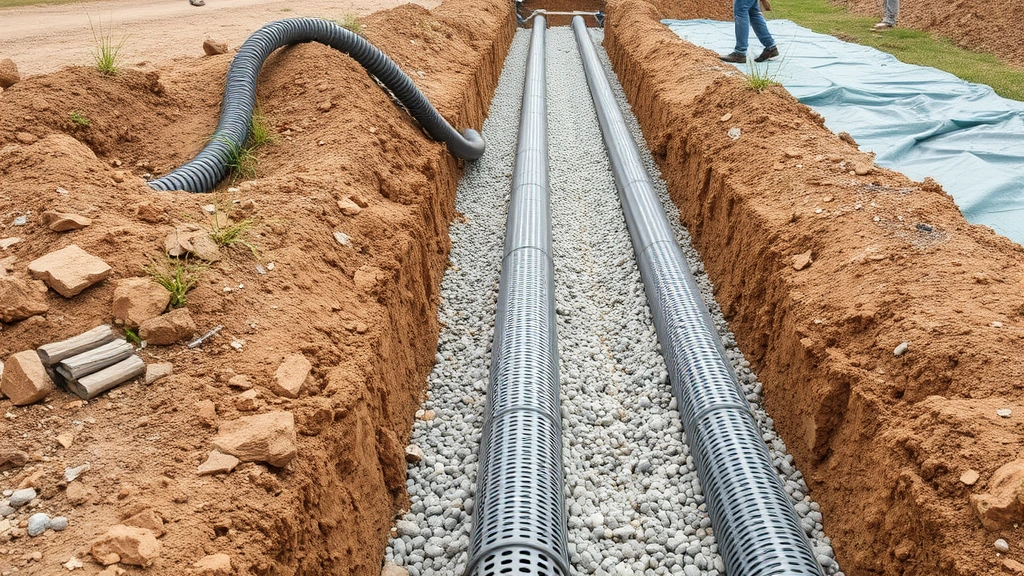
Conventional gravity systems represent the most affordable option, ranging from $3,000 to $8,000 for complete installation. These systems rely on natural gravity to move wastewater through the tank and into the drain field. They work best with suitable soil conditions and adequate space, making them ideal for rural properties with favorable characteristics. Most contractors recommend these systems when site conditions permit, as they offer reliable performance with minimal maintenance.
Aerobic treatment units (ATUs) cost between $8,000 and $15,000 installed, roughly double conventional system prices. These systems actively aerate wastewater, accelerating treatment processes and producing higher-quality effluent. ATUs work well on smaller lots or in environmentally sensitive areas where water quality protection is critical. They require more frequent maintenance and occasional professional service, increasing long-term operating costs.
Mounded systems, necessary when water tables are too high or soil unsuitable, cost $8,000 to $18,000. Contractors must construct raised soil mounds and install sophisticated distribution systems. These systems demand more complex engineering, specialized construction, and increased material costs. They’re essential in coastal areas, wetland regions, and properties with significant drainage challenges.
Constructed wetland systems and living machines represent premium options costing $15,000 to $30,000 or more. These ecologically-designed systems provide excellent treatment and can serve as attractive landscape features. They require substantial space and professional design, making them suitable primarily for larger properties or communal installations.
Holding tanks, the least expensive upfront option at $1,500 to $3,000, require regular pumping and aren’t true treatment systems. They serve temporary needs or properties awaiting connection to municipal sewer systems. Long-term operating costs can exceed initial savings, making them impractical for permanent installations.
Site Evaluation and Soil Testing Expenses
Professional site evaluations and soil testing typically cost $500 to $1,500 but represent essential investments that prevent costly mistakes. A qualified soil scientist or engineer performs percolation tests that determine how quickly soil absorbs water, directly influencing drain field size requirements and system design complexity.
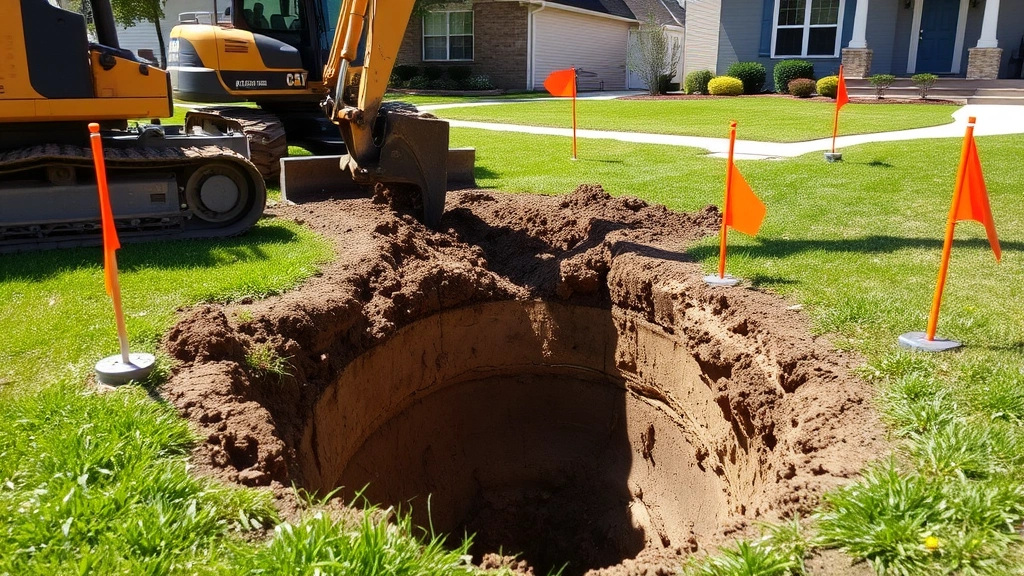
Percolation tests involve digging test holes to specific depths, saturating the soil, and measuring water absorption rates. Results determine whether your property can support conventional systems or requires engineered alternatives. Some properties fail percolation tests entirely, necessitating alternative systems or site modification—expenses that early testing helps anticipate.
Soil boring and analysis reveal subsurface conditions including clay layers, groundwater levels, and bedrock depth. This information guides system placement and helps contractors avoid costly installation surprises. Properties with complex soil profiles often require professional engineering, adding $800 to $2,500 to evaluation costs but preventing far more expensive installation complications.
Septic system designers use soil test results to create customized designs matching your property’s characteristics. This design phase costs $400 to $1,000 and produces the detailed specifications contractors use for accurate bidding. Skipping professional design to save money frequently results in system failures, regulatory violations, and expensive remediation.
Permits, Inspections, and Regulatory Costs
Permit costs vary dramatically by jurisdiction, ranging from $200 to $2,000. Some rural counties charge minimal fees, while suburban areas and states with stringent environmental regulations impose substantial permit costs. The International Code Council (ICC) establishes baseline standards, but individual states and counties adopt varying requirements.
Health department inspections are mandatory in most jurisdictions and typically included in permit fees, though some areas charge separate inspection fees of $200 to $500. Multiple inspections occur during installation—initial site evaluation, tank placement, drain field construction, and final approval. Each inspection point allows regulators to verify compliance with local codes and environmental standards.
Environmental impact assessments may be required in sensitive areas such as coastal zones, wetland regions, or areas with contaminated groundwater. These assessments add $1,000 to $3,000 but ensure your system protects water resources and complies with environmental regulations. The EPA provides comprehensive septic system guidelines that many jurisdictions exceed with additional local requirements.
As-built documentation and final certifications cost $300 to $800 and are required in most areas. These documents prove your system meets approved designs and current codes, essential for future property sales, insurance claims, or system modifications. Professional documentation protects your investment and ensures regulatory compliance.
Labor Costs and Contractor Selection
Labor typically comprises 40-60% of septic installation costs, with experienced crews charging $50 to $150 per hour depending on location, expertise, and system complexity. A straightforward conventional system installation requires 3-5 days of labor, translating to $1,500 to $6,000 in labor costs alone. More complex systems may require 7-10 days or specialized expertise commanding premium rates.
Contractor experience directly correlates with quality and cost-effectiveness. Established septic contractors with 10+ years of experience understand regional soil conditions, regulatory requirements, and design optimization strategies that newer contractors may overlook. While experienced contractors may charge more hourly rates, they often complete projects faster and with fewer costly mistakes, ultimately providing better value.
When obtaining quotes, ensure contractors provide detailed breakdowns separating labor, materials, equipment rental, and permits. Vague quotes offering only total pricing make comparison difficult and hide potential cost variations. Request references from recent projects and verify contractor licensing, insurance, and bonding—non-negotiable requirements protecting you from liability and ensuring professional standards.
Obtaining multiple quotes from qualified contractors is essential. Three to four detailed quotes reveal market rates for your specific project and help identify outliers. Unusually low bids often indicate inexperience or plans to cut corners on materials or labor. Conversely, the highest bid isn’t necessarily best—mid-range quotes from established contractors typically offer optimal value.
Additional Expenses You Shouldn’t Overlook
Driveway and landscape restoration costs often surprise homeowners. Excavation equipment and trucks damage existing driveways, landscaping, and yard areas. Budget $1,000 to $3,000 for restoration including grading, seeding, and minor repairs. Asphalt or concrete driveway repairs may require $2,000 to $5,000 additional investment.
Utility line locating services are legally required in most areas before excavation begins. These services cost $100 to $300 and prevent catastrophic damage to underground utilities. Many states have free utility locating services funded by utility companies, but private locating services may charge fees for complex situations.
Access road or temporary road construction becomes necessary on properties with challenging terrain or limited access. Contractors may need to create temporary roads for heavy equipment, costing $500 to $2,000. These roads are typically restored after installation but represent legitimate project expenses.
System upgrades such as septic effluent filters, alarm systems, or monitoring equipment add $500 to $2,000. While not always required, these components enhance system longevity and provide early warning of problems. Many contractors recommend them as cost-effective insurance against expensive failures.
Contingency reserves of 10-15% of total estimated costs provide buffer for unexpected discoveries or changes. A $10,000 estimated project should include $1,000 to $1,500 contingency reserve. This prudent approach prevents budget overruns when site conditions differ from initial assessments.
Cost-Saving Strategies Without Compromising Quality
Strategic design optimization can reduce costs while maintaining system performance. Working with designers experienced in your region’s soil conditions often reveals opportunities to minimize drain field size or simplify system configurations. Small design adjustments can save $500 to $2,000 without sacrificing functionality.
Phased installation approaches work for some projects. Installing the septic tank and basic infrastructure initially, then completing the drain field later, can spread costs across multiple years. This approach requires careful planning to ensure initial work doesn’t compromise final system performance.
Material selection offers legitimate savings opportunities. Standard concrete or plastic tanks cost significantly less than premium options while performing identically. Request detailed material specifications and compare options with contractors, ensuring cost reductions don’t compromise quality or longevity.
Equipment rental rather than contractor ownership sometimes reduces costs. Some contractors own heavy equipment and include ownership costs in pricing. Contractors renting equipment for specific projects may offer lower rates, though this varies by situation and contractor.
Timing installation during contractor off-seasons sometimes yields discounts. Winter and early spring typically see lower demand for septic work. Flexible scheduling allows contractors to offer 5-10% discounts while maintaining quality standards.
Learning more about DIY home security systems and other DIY home improvements helps you understand which projects you can tackle yourself versus those requiring professionals. Septic installation absolutely requires professional expertise, but understanding your property’s infrastructure empowers better decision-making throughout home construction.
Long-Term Maintenance and Operating Costs
While installation represents the major expense, ongoing maintenance costs affect total ownership expense. Professional pumping every 3-5 years costs $300 to $500 per service. A 30-year system lifespan requires 6-10 pumping services, totaling $1,800 to $5,000 in maintenance costs.
System inspections every 1-2 years cost $150 to $300 and help identify problems before they become expensive repairs. Early detection of issues like drain field saturation or tank cracks enables timely repairs costing $500 to $2,000 rather than complete system replacement requiring $10,000+.
Drain field repairs, when necessary, cost $2,000 to $5,000 depending on damage extent. Proper maintenance minimizes repair risk, making regular service a cost-effective investment. Neglected systems often fail catastrophically, requiring complete replacement at five to ten times maintenance costs.
System replacement at end-of-life costs similar to initial installation, typically $5,000 to $15,000 for conventional systems. Well-maintained systems often last 30-40 years, while neglected systems may fail within 15-20 years. This dramatic difference justifies consistent maintenance investment.
Water conservation practices extend system life and reduce operating costs. Installing low-flow fixtures, fixing plumbing leaks promptly, and avoiding excessive water use reduce strain on septic systems. These practices cost little but provide significant benefits to system longevity.
FAQ
What is the average cost to install a septic system?
Average installation costs range from $5,000 to $15,000 for conventional systems serving single-family homes. Costs vary significantly based on soil conditions, property size, system type, and local regulations. Site-specific factors can push costs as low as $3,000 or as high as $25,000+.
Can I install a septic system myself?
While homeowners can perform some preparation work, professional installation is essential and legally required in most jurisdictions. Septic system design and installation require specialized expertise, equipment, and permits. Improper installation creates health hazards, environmental contamination, and regulatory violations far exceeding any cost savings from DIY attempts.
How long does septic system installation take?
Standard installations typically require 3-5 days of active construction. Complex systems or challenging site conditions may require 7-10 days. Weather delays and permit processing can extend total project timelines significantly.
What factors most influence septic system costs?
Soil conditions and percolation rates represent the primary cost driver. Property topography, distance from home to drain field, local groundwater levels, and system type also significantly influence pricing. Site evaluation and engineering design reveal these factors and enable accurate cost estimation.
Are there financing options for septic system installation?
Many contractors offer payment plans or financing options. USDA Rural Development programs provide low-interest loans for septic systems in eligible rural areas. State environmental agencies sometimes offer cost-share programs or grants for system upgrades in environmentally sensitive areas. Check with local agencies for available assistance programs.
How often should septic systems be pumped?
Professional pumping every 3-5 years maintains system health and prevents failures. Pumping frequency depends on household size, water usage, and tank capacity. Larger households with high water usage require more frequent pumping. Professional inspections help determine optimal pumping schedules for your specific system.
What permits are required for septic installation?
The National Septic Tank Contractors Council provides information about permit requirements varying by jurisdiction. Most areas require health department permits, environmental review, and system design approval. Professional contractors handle permit applications, though homeowners remain responsible for compliance.
Can I install a septic system on a small lot?
Small lots often accommodate conventional systems if soil conditions permit. If space is insufficient, aerobic treatment units, mounded systems, or other engineered solutions work on compact properties. Professional site evaluation determines feasibility and appropriate system design for your specific lot size and characteristics.


