Alley Oop in 2K25: Pro Gamer Tips and Advanced Techniques
The alley-oop has become one of the most electrifying plays in NBA 2K25, combining style with effectiveness on the digital court. Whether you’re playing online multiplayer or dominating against AI opponents, mastering the alley-oop can elevate your game significantly. This guide breaks down everything you need to know about executing perfect alley-oops, from basic mechanics to advanced strategies that separate casual players from competitive champions.
NBA 2K25 rewards players who understand timing, player positioning, and the nuanced controls required for successful alley-oop plays. Unlike previous iterations, the 2025 version introduces refined physics and improved teammate AI, making alley-oops more intuitive yet requiring greater precision. Understanding these mechanics will transform your offensive arsenal and create scoring opportunities that opponents cannot defend.
Understanding Alley-Oop Basics in 2K25
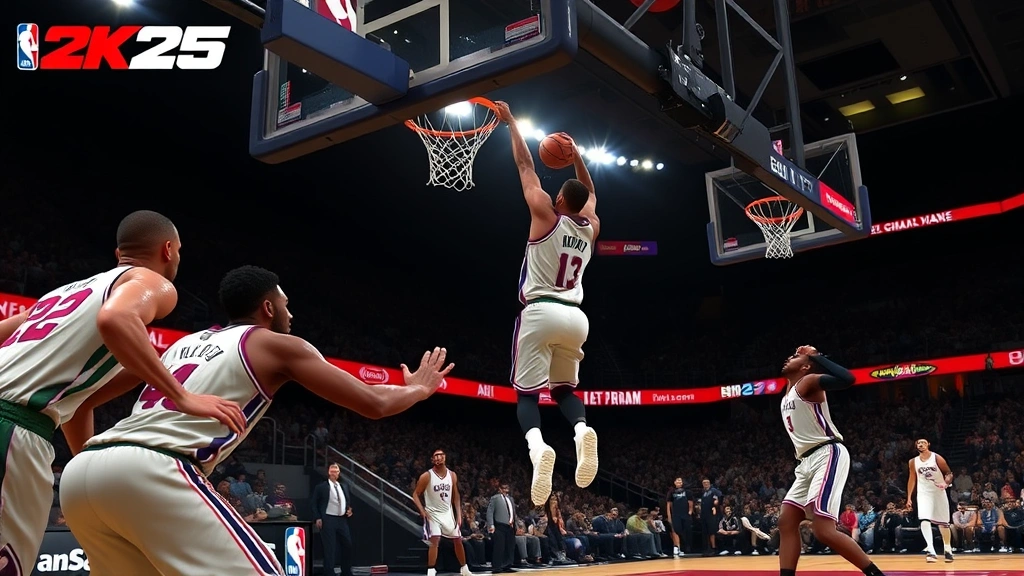
The alley-oop in 2K25 represents a two-player interaction where one player passes the ball to a teammate who catches and dunks or lays it up in one fluid motion. This play requires synchronization between the passer and the receiver, making it fundamentally different from standard passing mechanics. The game engine evaluates player positioning, defensive pressure, and athlete attributes to determine whether the alley-oop succeeds or results in a turnover.
Success rates depend heavily on several interconnected factors. Your point guard’s ball-handling and passing accuracy directly influence whether the pass reaches your target cleanly. Meanwhile, your center or power forward’s athleticism, vertical leap, and hands rating determine whether they can catch and complete the dunk successfully. Understanding this relationship helps you select the right players and execute alley-oops at optimal moments during games.
The 2K25 developers refined the alley-oop system to make it more responsive to player input while maintaining realistic difficulty. This means that poor timing or positioning no longer results in automatic success, even with elite players. Conversely, well-executed alley-oops with mid-tier athletes can succeed when performed correctly, rewarding skill over pure player statistics.

Controller Controls and Button Combinations
Executing an alley-oop in 2K25 requires precise button inputs that vary depending on your controller platform and control scheme settings. On PlayStation 5 and Xbox Series X|S, the primary method involves pressing Triangle (PlayStation) or Y (Xbox) while holding the right trigger. This combination signals to your player that you want to attempt an alley-oop rather than a standard pass.
For players using the Pro Stick passing option, you can alternatively flick the right stick upward while your intended receiver is in a favorable position. This alternative control method provides greater directional precision, allowing you to lead passes more accurately. Many competitive players prefer this method because it offers superior control over pass trajectory and speed.
The timing of your button press matters considerably. Pressing the alley-oop button too early results in the pass being intercepted or going out of bounds. Pressing too late causes your receiver to move away from the optimal dunking position. The ideal window is approximately one second before your teammate reaches the basket, though this varies based on player speed and court positioning.
Different control settings in 2K25 offer variations on these inputs. If you’re using Adaptive Controller settings, review your custom button mappings to ensure alley-oop commands are easily accessible. Players with accessibility needs should explore the extensive customization options available in the settings menu to create control schemes that work best for their situation.
Timing and Positioning Fundamentals
Positioning represents the foundation of successful alley-oop execution. Your ball handler must be close enough to your receiver to make a safe pass, typically within 12-15 feet on the digital court. Simultaneously, your receiver should be moving toward the basket at speed rather than standing stationary. The game rewards dynamic movement, penalizing static players who attempt to catch alley-oops without momentum.
Court spacing dramatically influences your success rate. When defenders collapse on your ball handler, passing lanes tighten and alley-oop attempts become risky. Conversely, when your offense spreads defenders across the floor, you create the open lanes necessary for clean alley-oop passes. This is why alley-oops work exceptionally well in fast-break situations where fewer defenders are back to challenge the play.
The receiver’s approach angle affects catch probability significantly. Players running perpendicular to the basket or at shallow angles toward the hoop have higher success rates than those cutting directly toward the passer. This mirrors real basketball physics, where receivers need proper momentum and positioning to complete the play. Adjust your offensive sets to create these optimal cutting angles for your athletic big men.
Timing the pass requires reading your teammate’s speed and distance from the basket. Professional 2K25 players develop an intuition for this, knowing exactly when to release the pass based on court position alone. New players should watch their receiver’s position relative to the basket and release the pass when they’re approximately 8-10 feet away, allowing them to complete the dunk before defensive players recover.
Advanced Alley-Oop Strategies
Once you master basic alley-oop execution, advanced strategies separate elite players from good ones. Pick-and-roll alley-oops combine screen mechanics with alley-oop passes, creating scoring opportunities that defenders struggle to stop. After your big man sets a screen, roll toward the basket while your point guard drives. The defense’s commitment to stopping the drive creates passing lanes for alley-oops that would normally be covered.
Fast-break alley-oops represent the most dangerous offensive weapon in 2K25. When you secure a rebound or turnover, push the ball up court with numerical advantages. Your trailing big man can cut to the basket aggressively, knowing defenders haven’t retreated. These situations offer the highest alley-oop success rates because defenders are out of position and unable to contest the play effectively.
Wing-to-center alley-oops add versatility to your offensive system. Rather than relying solely on point guard-to-center combinations, develop chemistry with wing players who can make alley-oop passes. This expands your offensive options, making you harder to defend because defenders cannot predict where the alley-oop will originate.
The reverse alley-oop adds a stylistic element while maintaining effectiveness. Instead of your receiver dunking facing forward, they catch the ball while moving away from the basket, then complete a reverse dunk. This variation works best with players possessing high athleticism and dunking packages that include reverse animations. It’s particularly effective against defenders who overcommit to stopping forward-facing dunks.
Defensive adjustments matter when executing advanced alley-oop strategies. If opponents consistently defend your alley-oop attempts, vary your approach by mixing in traditional passes, drives, and outside shots. This unpredictability keeps defenders honest, creating better opportunities for alley-oops when you do attempt them. Becoming predictable with alley-oops invites defenders to play more aggressively, leading to turnovers.
Player Attributes That Matter Most
Building a roster capable of executing consistent alley-oops requires understanding which player attributes directly impact success rates. Pass Accuracy for your ball handler is paramount—ratings above 80 ensure passes reach your target consistently without deflections. Players with lower pass accuracy will see increased turnover rates, making alley-oops risky with these individuals.
Ball Handle also influences passing ability, particularly in contested situations. Guards with elite ball-handling ratings maintain better control when defenders apply pressure, allowing them to thread passes to alley-oop receivers even when heavily defended. This attribute becomes critical in competitive online play where opponents actively disrupt passing lanes.
For your receiver, Vertical Leap determines dunking ability and catch success probability. Players with 85+ vertical ratings finish alley-oops more consistently, even against defenders attempting to block. Dunking ratings affect the variety and reliability of dunk animations available, with higher-rated dunkers possessing more reliable packages that complete in tight spaces.
Hands rating influences catch probability, particularly when passes are slightly off-target or defenders contest the catch. Elite hand ratings (85+) allow receivers to secure alley-oops that would slip away from lower-rated players. This becomes crucial in online competitive play where every possession matters.
Speed and Acceleration enable receivers to get into position quickly and maintain momentum toward the basket. Fast players create passing windows that slower athletes cannot access, making them superior alley-oop targets. Consider these attributes when deciding which players to develop and which to bench in critical moments.
Strength helps receivers finish through contact, preventing defenders from disrupting the dunk. Players with 80+ strength ratings complete alley-oops even when defenders reach them during the catch or dunk animation, whereas weaker players get stripped or blocked more frequently.
Defensive Counters and Avoiding Turnovers
Opponents who understand alley-oop mechanics will actively defend against this play. Aggressive perimeter defense on your ball handler disrupts passing lanes, making alley-oop attempts dangerous. When facing tight defense, recognize that forcing the alley-oop will likely result in a turnover. Instead, pivot to alternative offensive options like shooting, driving, or finding open shooters.
Defensive big men who play high up on the floor can contest alley-oop catches directly. If you notice opponents positioning their centers or power forwards in passing lanes, avoid attempting alley-oops in those areas. Instead, use ball movement to shift their defense, creating openings on the opposite side of the court.
Turnover prevention requires reading the defense before committing to alley-oop attempts. Successful 2K25 players develop pattern recognition, understanding when defenses are vulnerable to alley-oops versus when they’re well-positioned to intercept. This awareness comes from thousands of possessions and studying how opponents react to your offensive sets.
Mixing your offensive approach keeps opponents guessing. If you exclusively attempt alley-oops, defenders will play aggressively to intercept passes, leading to high turnover rates. Incorporate traditional passes, perimeter shots, and drives into your offensive rotation. This forces defenders to respect multiple threats, naturally creating better alley-oop opportunities when you do attempt them.
The risk-reward calculation should always guide your decision-making. Early in games when you’re building leads, alley-oop attempts are lower-risk because possessions are abundant. In tight games with limited time remaining, only attempt alley-oops when you have clear passing lanes and a high probability of success. Turnovers in critical moments can cost you games, so exercise caution accordingly.
FAQ
What’s the difference between an alley-oop and a regular pass in 2K25?
An alley-oop uses specialized button inputs (Triangle/Y + Right Trigger or right stick flick) that trigger automatic dunking animations if caught successfully. Regular passes require separate button presses for dunking, giving defenders more time to react. Alley-oops are faster but require better timing and positioning to execute.
Can you alley-oop with any player combination?
While technically possible with any players, alley-oops work best with combinations featuring a high-rated passer and an athletic receiver. Point guards with 80+ pass accuracy paired with centers or power forwards with 85+ vertical and dunking ratings offer the highest success rates. Pairing poor passers with poor athletes results in frequent turnovers.
Do alley-oops work in MyCareer mode?
Yes, alley-oops work in MyCareer, though teammate AI quality varies. Your teammates’ ability to execute alley-oops depends on their ratings and your chemistry level. Developing chemistry with specific teammates increases their willingness to cut to the basket and finish alley-oops successfully.
How do I improve my alley-oop success rate?
Practice timing and positioning in single-player modes before attempting alley-oops online. Develop chemistry with specific teammate combinations, develop their relevant attributes through training, and study defensive patterns to recognize when alley-oops are available. Review game film of your attempts to identify patterns in your mistakes.
Are alley-oops more effective on certain difficulty levels?
Alley-oops are generally more effective on lower difficulty levels where AI defenders play less aggressively and make more mistakes. On Hall of Fame difficulty, defenders actively disrupt alley-oop attempts, requiring better timing and positioning. Online competitive play demands the highest precision because human opponents actively counter this play.
What’s the best position for alley-oop attempts?
Alley-oops work best in transition situations and on the wing near the basket. Fast breaks create numerical advantages where defenders cannot contest the play. Pick-and-roll sets also create excellent alley-oop opportunities when the defense commits to stopping the drive. Avoid attempting alley-oops from the perimeter or when heavily defended.


