Beat Art Block with These Artist-Tested Methods
Artist’s block can feel like hitting a wall in your creative journey. Whether you’re a painter, sculptor, illustrator, or digital artist, that moment when inspiration vanishes and your hands won’t cooperate is frustrating and demoralizing. But here’s the truth: art block isn’t a permanent condition—it’s a signal that your creative mind needs a reset, fresh perspective, or different approach.
The good news? Countless artists have faced this challenge and developed proven strategies to break through the barrier. These methods aren’t mystical or complicated; they’re practical, evidence-based techniques that address the root causes of creative stagnation. Whether your block stems from perfectionism, fear of failure, burnout, or simply running out of ideas, we’ve compiled the most effective solutions that artists swear by.
Understanding What Causes Artist’s Block
Before you can effectively beat art block, you need to understand what’s actually causing it. Artist’s block differs from writer’s block in important ways. While writers struggle with words, artists often struggle with visual decision-making, technical execution, or emotional connection to their work. The American Psychological Association recognizes creative blocks as periods of reduced productivity that stem from psychological, environmental, or physiological factors.
Common culprits include perfectionism, where the gap between your vision and execution feels too large; fear of judgment, whether from others or yourself; burnout from overworking without adequate rest; comparison to other artists’ work; and lack of clear direction or purpose in your art. Some artists experience blocks when they’re learning new techniques, while others hit walls when they’ve become too comfortable with familiar methods.
Understanding your specific trigger is half the battle. Keep a brief journal for a few days, noting when you feel most blocked and what you were attempting to create. Were you trying something new? Working on a piece for someone else? Comparing your work to others? This self-awareness helps you apply the most relevant solutions.
The Power of Changing Your Environment
Your physical space profoundly influences your creative output. When you sit in the same spot day after day, your brain enters a routine mode that can actually inhibit creative thinking. Studies on environmental psychology show that novelty stimulates the brain’s reward system and enhances creative problem-solving. This doesn’t mean you need an expensive studio overhaul—simple changes work wonders.
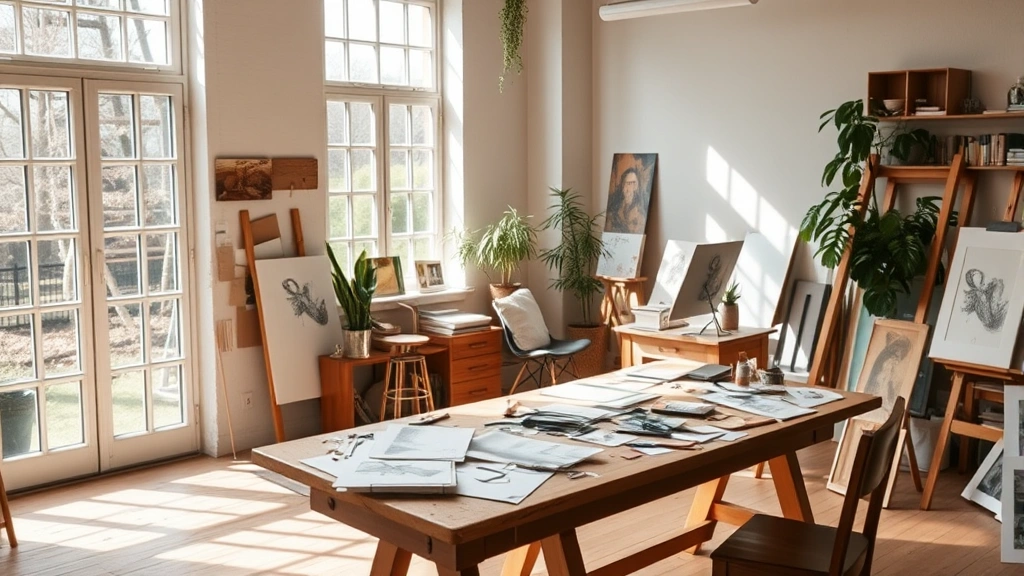
Try working in different locations: a coffee shop, park, library, friend’s studio, or even a different room in your home. The change in visual stimuli, ambient sounds, and energy can unlock ideas that felt trapped before. Many artists report their best breakthroughs happen when they’re not in their usual workspace. If you can’t leave your studio, rearrange furniture, change your lighting, add plants, or paint an accent wall.
Consider also the practical aspects: Is your space too cluttered or too sterile? Do you have adequate lighting? Is the temperature comfortable? These environmental factors seem minor but significantly impact your ability to focus and create. When building your creative space, think of it similarly to how you’d approach DIY basement finishing—you’re creating a functional, inspiring environment tailored to your needs.
Embrace Imperfection and Speed Sketching
Perfectionism is one of the most common creativity killers. The internal critic that demands every line be perfect, every color choice flawless, every composition ideal will paralyze you faster than anything else. The antidote? Deliberately creating imperfect work.
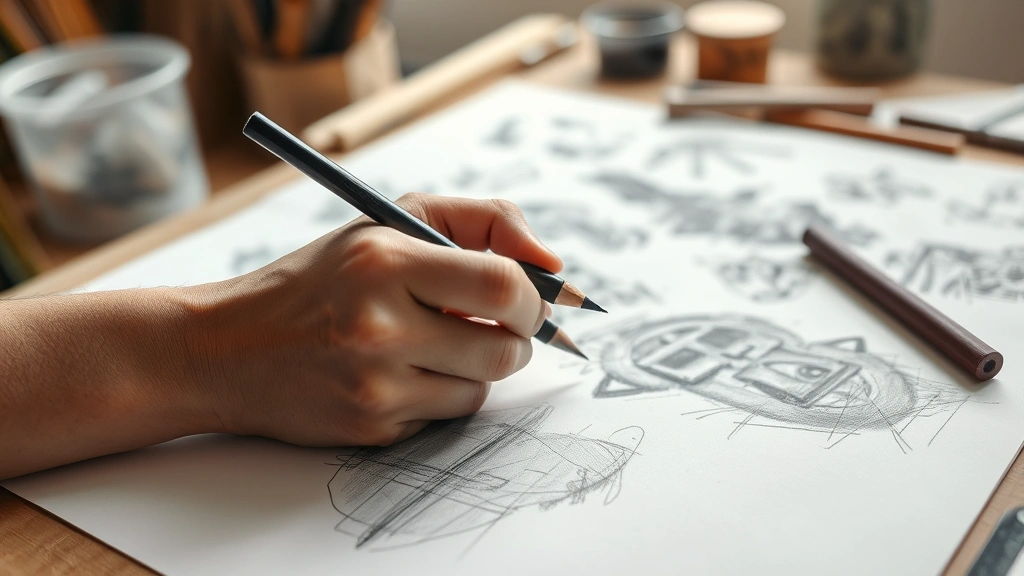
Speed sketching is a game-changing technique. Set a timer for 5-10 minutes and create without judgment. The goal isn’t a finished piece—it’s to move your hand, explore ideas, and silence the perfectionist voice. During these sessions, embrace mistakes. Draw lopsided figures, use clashing colors, let your lines be wobbly. You’re training your brain that imperfection is acceptable and often interesting.
Professional illustrators use this method constantly. The sketches become loose, energetic, and often contain more life than their polished final pieces. Once you complete several speed sketches, review them. You’ll likely find interesting ideas, unexpected compositions, or techniques worth developing further. Even failed speed sketches serve a purpose—they prove that creating something imperfect is better than creating nothing at all.
Try the “bad art challenge” where you intentionally create the worst possible version of something. Make it deliberately ugly, wrong, or ridiculous. This removes the pressure of creating good work and often leads to surprising discoveries about what actually works visually.
Building a Creative Routine That Works
Paradoxically, while change and novelty help break blocks, consistent creative routines help prevent them in the first place. The most productive artists treat their practice like a job—they show up at the same time, in the same place, prepared to work for a set duration, regardless of inspiration levels.
This approach leverages habit formation. After 2-3 weeks of consistent practice at the same time and place, your brain enters creative mode automatically. You don’t need to wait for inspiration; you create on schedule. Many famous artists, from Picasso to contemporary digital creators, swear by morning creative sessions before checking email or social media.
Your routine should include a warm-up phase. Just as athletes warm up before competition, artists benefit from 10-15 minutes of loose sketching, color exploration, or technical exercises before tackling major work. This primes your creative brain and transitions you from daily tasks into artistic thinking.
Schedule your creative time when you have the most mental energy. For many people, this is morning; for others, it’s late afternoon or evening. Work in blocks—90 minutes on, 15 minutes off—which aligns with natural ultradian rhythms. Track your sessions not for perfectionism, but to build accountability and recognize patterns in your most productive times.
Exploring New Mediums and Techniques
Sometimes your block exists because you’ve exhausted what you can express in your current medium. A painter might try sculpture. A digital artist might explore traditional media. A sculptor might experiment with mixed media. This isn’t abandoning your primary practice—it’s expanding your creative vocabulary.
Learning new techniques engages different parts of your brain. If you typically work digitally, the tactile experience of charcoal or clay offers novel sensory feedback. If you’re traditionally trained, digital tools introduce new possibilities and workflows. These explorations often reveal new approaches you can bring back to your primary medium.
You don’t need expensive materials. Try:
- Charcoal or graphite in different grades for varied mark-making
- Collage using magazine cutouts, found objects, or recycled materials
- Photography and photo manipulation
- Printmaking with simple linoleum or foam blocks
- Watercolor or ink for fluid, unpredictable effects
- Found-object sculpture using recycled materials
- Digital tools if you’re traditionally trained
The goal isn’t to become expert in new mediums immediately. You’re giving yourself permission to be a beginner again, which ironically frees you from perfectionism. Beginners are expected to struggle and learn—there’s no pressure to produce finished work. This mental shift can dissolve blocks that felt immovable in your primary medium.
Using Constraints as Creative Fuel
Unlimited options sound ideal but actually paralyze creativity. When you can do anything, deciding what to do becomes overwhelming. Constraints, paradoxically, boost creative thinking. This principle is backed by research in cognitive psychology and widely used in professional creative industries.
Impose specific constraints on your work:
- Color limitations: Create a piece using only three colors, or only grayscale, or only warm tones
- Size restrictions: Work very small (3×3 inches) or very large (fill a wall)
- Subject matter: Create 30 pieces inspired by a single object, emotion, or concept
- Time limits: Finish a piece in one hour, one day, or one week
- Material constraints: Use only materials you already have, or only recycled materials
- Technique restrictions: Draw using only dots, lines, or geometric shapes
- Thematic challenges: Participate in DIY creative projects like Inktober, 30-day drawing challenges, or community art prompts
These constraints force your brain to problem-solve creatively. Instead of endless possibilities, you’re working within defined parameters, which actually makes decisions easier and faster. Many artists find their most innovative work emerges from self-imposed constraints rather than open-ended freedom.
Social Connection and Accountability
Isolation intensifies art block. When you’re alone with your critical thoughts and struggling work, negativity compounds. Conversely, community, critique, and accountability help breakthrough blocks. This is why art schools, studios, and online art communities are so powerful.
Consider joining:
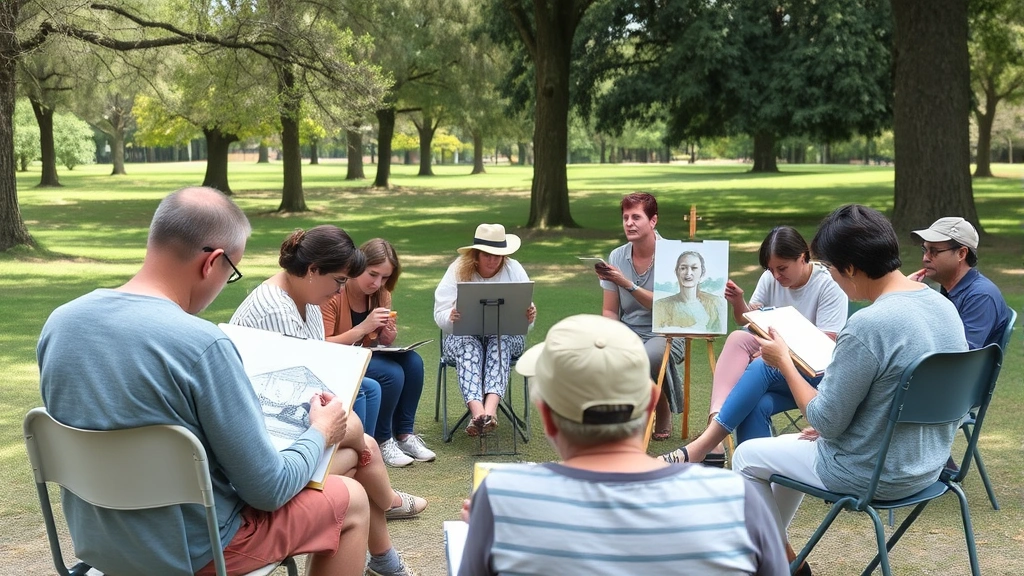
- Local art groups or meetup sketching sessions
- Online art communities with regular challenges and feedback
- Artist accountability partnerships with specific goals and check-ins
- Classes or workshops in your medium
- Open studio events or gallery exhibitions
- Art critique groups that meet regularly
Sharing work-in-progress, even when imperfect, reduces the pressure of perfectionism. Receiving constructive feedback helps you see your work objectively. Seeing other artists’ work reminds you that struggle is universal and that multiple valid approaches exist. Accountability partners create gentle pressure to keep creating, even during unmotivated periods.
Online communities are particularly valuable if you lack local options. Platforms connecting creators offer daily prompts, feedback opportunities, and exposure to diverse artistic styles and approaches. The key is engaging genuinely—not just scrolling, but participating, sharing, and supporting others.
Physical Movement and Mental Breaks
Creative blocks often involve mental fatigue. Your brain, like your body, needs rest and movement to function optimally. Extended sitting in focused concentration actually reduces creative output. Movement, conversely, enhances blood flow to the brain and promotes creative thinking.
Implement these physical practices:
- Regular exercise: Walking, running, yoga, or dancing increase blood flow and reduce stress
- Stretching: Counter the physical tension that builds during focused creative work
- Outdoor time: Nature exposure boosts mood and creative thinking
- Sleep: Most critical for creative consolidation; inadequate sleep severely impairs creativity
- Nutrition: Stable blood sugar and adequate hydration support sustained creative focus
- Meditation or mindfulness: Quiets the critical inner voice and reduces anxiety
The Pomodoro Technique (25 minutes work, 5 minutes break) works well for artists. During breaks, move away from your work. Walk around, stretch, get water, look out a window. This mental distance allows your subconscious to process problems while your conscious mind rests. Many artists report their best solutions arrive during breaks, not during focused work.
Sleep deserves special mention. During sleep, your brain consolidates learning, processes experiences, and makes creative connections. Inadequate sleep directly impairs creative thinking and increases perfectionism and self-criticism. Prioritizing 7-9 hours of quality sleep is one of the most underrated block-busting strategies.
FAQ
How long does artist’s block typically last?
Duration varies widely. Some blocks resolve in days with a change of approach; others persist for weeks or months if underlying issues (burnout, perfectionism, lack of direction) aren’t addressed. The key is taking action rather than waiting passively for inspiration to return. Most artists find that implementing even one or two strategies from this guide produces noticeable improvement within 1-2 weeks.
Is artist’s block a sign I should quit?
No. Art block is a normal part of every artist’s journey. Even the most accomplished professionals experience blocks. It’s not a sign of failure or lack of talent—it’s a signal that something in your practice needs adjustment. Many artists report that their breakthrough periods, when they finally break through a block, lead to their best work.
Can I prevent art block entirely?
While you can’t prevent it entirely, you can significantly reduce frequency and severity through consistent practice, varied approaches, adequate rest, and community engagement. Artists with established routines, regular learning, and strong support networks experience fewer and shorter blocks than isolated artists with irregular practices.
What’s the difference between art block and burnout?
Art block is temporary inability to create or decide what to create, usually lasting days to weeks. Burnout is deeper exhaustion from overwork, often involving loss of passion or meaning in your art. Burnout requires more substantial intervention: extended breaks, reassessing your relationship with art, possibly seeking therapy, and potentially restructuring how you approach your creative practice. If you suspect burnout rather than typical block, prioritize rest and reflection before returning to creation.
Should I force myself to create through a block?
It depends. Short, structured forcing (like 10-minute speed sketches) can be helpful and often breaks the inertia. But extended forcing when you’re experiencing severe block or burnout tends to worsen the situation. The balance is showing up consistently to your practice while being flexible about what that practice looks like. On blocked days, you might sketch loosely, explore new materials, or study other artists’ work rather than forcing a finished piece.
Are external resources like tutorials or inspiration boards helpful?
Yes, but with caution. Tutorials and learning resources are valuable for skill development and exploring new techniques. However, excessive consumption of others’ work (especially on social media) can intensify comparison and perfectionism, worsening blocks. Use external resources intentionally for learning or specific problem-solving, rather than as procrastination or comparison traps. Set time limits on inspiration browsing and balance it with your own creative output.


