Can You DIY a Deck? Builder’s Essential Guide
Building a deck is one of the most rewarding DIY projects a homeowner can undertake, transforming your outdoor space into a functional entertainment area. However, deck construction demands serious planning, proper permits, and technical knowledge to ensure structural integrity and safety. This comprehensive guide walks you through every phase of deck building, from initial design through final finishing touches, so you can confidently determine whether this project suits your skill level.
Before you commit tools to wood, understand that decks support significant weight and must withstand weather, frost heave, and constant stress. Mistakes in foundation, framing, or fastening can result in collapse, injuries, or costly repairs. This guide covers the essential knowledge you need to build safely and code-compliant, whether you’re a seasoned DIYer or evaluating if professional help makes sense.
Deck Permits and Building Codes
The first and most critical step is obtaining proper permits. Many homeowners skip this, but it’s a serious mistake. Building permits exist to ensure safety, and code inspections catch problems before they become dangerous. Your local jurisdiction requires permits for decks over a certain height (typically 30 inches) or covering specific square footage.
Why permits matter: Unpermitted work voids homeowner’s insurance, creates liability issues if someone is injured, complicates future home sales, and results in fines or forced removal. Contact your International Code Council (ICC) or local building department to understand specific requirements in your area.
Deck codes address post spacing, beam sizing, railing height and strength, stair dimensions, and fastener specifications. The American Wood Council publishes detailed span tables and fastening guides essential for proper design. Most jurisdictions follow the International Residential Code (IRC), which specifies that deck posts must be on footings below frost line depth (varies by region—typically 12 to 48 inches), that ledger boards must be flashed to prevent water intrusion, and that railings must resist 200 pounds of horizontal force.
Before breaking ground, visit your building department, pay permit fees (typically $50–$300), and submit plans. Simple deck plans are often available online, but complex designs or unusual soil conditions may require a licensed engineer or architect to stamp drawings.

Site Assessment and Foundation Planning
Proper foundation work determines whether your deck stands for 20 years or fails in five. This begins with thorough site assessment and understanding frost depth in your region.
Frost heave: This is the primary threat to deck longevity. Water in soil freezes, expands, and pushes posts upward, causing structural misalignment and damage. Footings must extend below your local frost line—the depth at which soil stays frozen year-round. Your building department provides this information; it ranges from 12 inches in warm climates to 48+ inches in northern regions.
Mark post locations using batterboards and string. For a level deck, establish grade elevation with a laser level or water level, then calculate post heights accordingly. Check for utilities before digging—contact your local one-call utility locating service (811 in the US) to mark buried gas, electric, and water lines.
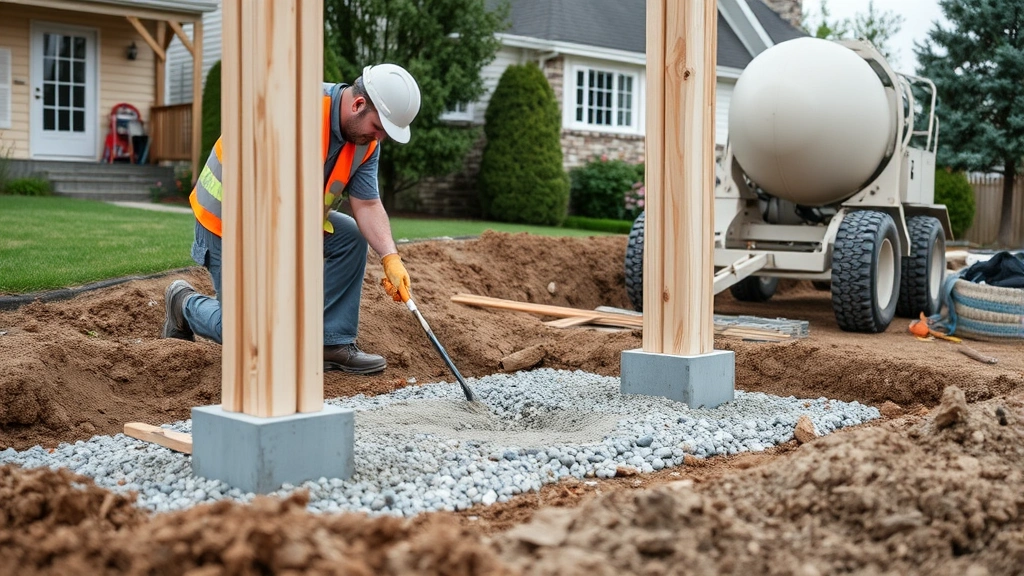
Dig post holes to frost depth plus 6 inches for gravel drainage. Pour 4–6 inches of gravel for drainage, then set concrete footings. Use concrete piers, footings, or post bases rated for ground contact. Never set posts directly in soil or concrete touching wood—this traps moisture and promotes rot. Post bases elevate wood above concrete and allow water to drain.
For ledger boards (where decks attach to the house), proper flashing is non-negotiable. Water intrusion behind ledgers causes rot in house rim joists, leading to structural damage costing thousands to repair. Install flashing tape or metal L-flashing between the ledger and house rim, ensuring water sheds downward and outward, away from the house.
Materials Selection and Budgeting
Deck material choice affects cost, maintenance, longevity, and appearance. Each option has tradeoffs.
Pressure-treated lumber: Most affordable ($1–$3 per linear foot for joists). Treated with preservatives to resist rot and insects. Requires regular staining or sealing every 2–3 years. Susceptible to warping and checking. Ideal for hidden structural elements like posts, beams, and joists.
Cedar or redwood: Beautiful natural appearance, moderate cost ($2–$5 per linear foot). Naturally rot-resistant but requires annual sealing. Prone to checking and splintering. Better for visible decking and railings.
Composite decking: Wood-plastic blend, $3–$8 per linear foot. Minimal maintenance, resists rot and insects, longer lifespan (25–30 years). Higher initial cost but lower lifetime cost. Thermal expansion requires wider spacing. Excellent for homeowners wanting low maintenance.
Tropical hardwoods: Extremely durable ($5–$10+ per linear foot). Minimal maintenance. Sustainability concerns. Expensive but longest-lasting option.
Budget 15–20% extra for waste, mistakes, and contingencies. A typical 12×16 foot deck costs $3,000–$8,000 in materials depending on choices, plus tools if you don’t already own them.
Purchase fasteners rated for your material. Hot-dipped galvanized, stainless steel, or coated deck screws prevent rust staining and corrosion. Never use regular nails—they work loose. Use 3-inch deck screws for joists to rim boards, 2.5-inch for decking, and 1.5-inch for railings.
Tools and Safety Equipment
Proper tools and safety gear are non-negotiable. Deck building involves heavy materials, power tools, and working at heights.
Essential tools: Circular saw or miter saw, power drill, impact driver, level (laser or spirit), measuring tape, speed square, post level, reciprocating saw, and adjustable wrench. A compound miter saw makes clean crosscuts. A power drill with mixing paddle simplifies concrete mixing.
Safety equipment: Work gloves, safety glasses, dust mask or respirator, hearing protection, steel-toed boots, and fall protection if working more than 6 feet high. Pressure-treated lumber contains chemicals—wear gloves and wash hands before eating or drinking. Never operate power tools while fatigued or impaired.
Rent specialized equipment like a post hole digger, concrete mixer, or power auger rather than buying. Tool rental costs $20–$50 per day, far cheaper than purchase.
Consider exploring additional DIY project resources to expand your skills and confidence with tools before starting major construction.
Building the Foundation and Posts
The foundation is where deck success or failure begins. This phase sets the stage for everything above.
Step 1: Excavate and prepare footings. Dig holes to frost depth plus 6 inches, spacing posts 4–6 feet apart (closer spacing for larger loads or softer soil). Fill holes with 4–6 inches of gravel for drainage. For concrete footings, mix and pour concrete to ground level, then set a post base or adjustable post bracket into the wet concrete before it hardens. Alternatively, dig deeper and pour concrete 6 inches above grade for a concrete pier.
Step 2: Set posts. Posts must be perfectly plumb (vertical) and properly spaced. Use a post level to check plumb in two directions. Cut posts from pressure-treated 4×4 lumber to calculated heights (accounting for beam and decking thickness). Set posts into bases and secure with bolts or fasteners per manufacturer specs. For adjustable post bases, you can fine-tune height after initial setting.
Step 3: Install ledger board. If your deck attaches to the house, install the ledger board with flashing before setting beams. Bolt ledger to house rim board with ½-inch bolts every 16 inches, maximum spacing. Install flashing tape or L-flashing behind the ledger, ensuring it extends under siding and slopes downward. This is the single most important detail for preventing water damage to your house.
Measure twice, check plumb and level constantly, and don’t rush this phase. A solid foundation prevents problems that multiply through the rest of construction.
Framing the Deck Structure
Once posts are set, build the frame connecting them—beams, rim boards, and joists.
Beams: Beams span between posts and support joists. Use doubled 2×10 or 2×12 pressure-treated lumber, bolted together with ½-inch bolts every 4 feet. Beam sizing depends on span and joist spacing—use American Wood Council span tables to determine appropriate sizing. Beams must be level; use shims under posts to adjust if needed.
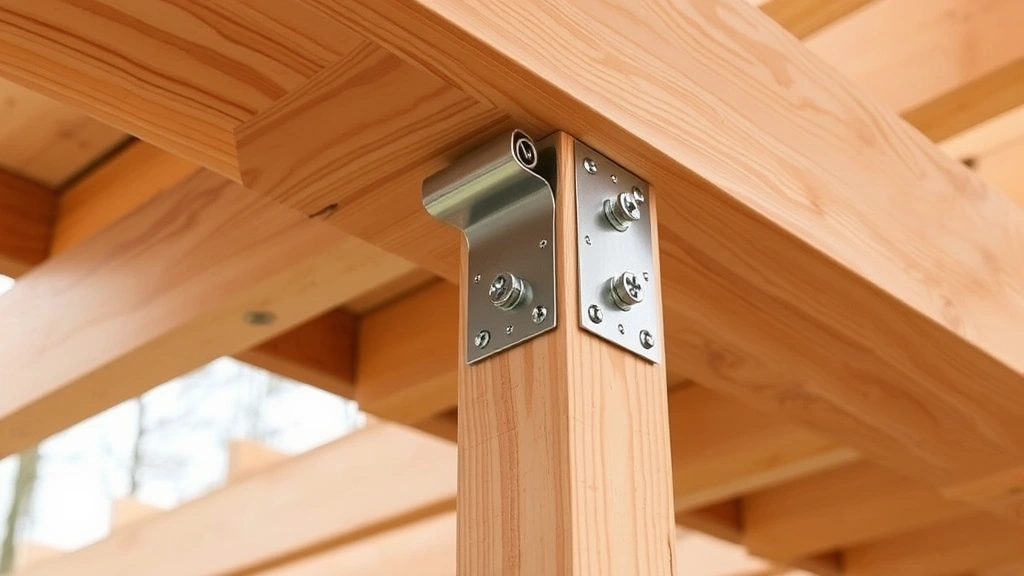
Rim boards and band boards: These frame the outer perimeter. Use 2×10 or 2×12 lumber matching joist size. Attach to beam ends with bolts or heavy-duty brackets. Rim boards support decking edges and anchor railings.
Joists: These are the horizontal members supporting decking, typically 2×8 or 2×10 spaced 16 inches on center (or 12 inches for added strength). Attach joists to beams and rim boards with joist hangers (metal brackets rated for your load) or bolted connections. Joist hangers are faster and create cleaner connections than bolting. Space joists consistently for uniform decking appearance.
Check that the frame is square using the 3-4-5 triangle method: measure 3 feet along one side, 4 feet along an adjacent side, and the diagonal should measure 5 feet. Adjust until square, then brace temporarily to hold alignment.
Installing Decking and Railings
With the frame complete, decking and railings transform raw structure into finished deck.
Decking installation: Begin at one edge and work across, leaving 1/8-inch gaps between boards for water drainage and thermal expansion (composite materials need wider gaps—check manufacturer specs). Use 2.5-inch deck screws, two per joist, driving screws at slight angles to prevent cupping. Stagger end joints across joists rather than aligning them in a line, which weakens structure.
For a professional appearance, snap chalk lines and use a speed square to ensure straight edges. Pre-drill screw holes in hardwoods to prevent splitting. Sand or plane any rough edges before finishing.
Railings: Decks over 30 inches high require railings for safety. Railings must be 36 inches tall (measured from deck surface) and resist 200 pounds of horizontal force without deflecting more than 1 inch. Balusters (vertical members) must be spaced so a 4-inch sphere cannot pass between them—this prevents children from getting stuck.
Install railing posts at corners and every 4 feet maximum, bolted to rim boards. Space balusters 4 inches on center, or use solid panels or cables for a contemporary look. Horizontal rails resist the most force, so use sturdy lumber and solid connections.
Finishing and Maintenance
Finishing protects your investment and extends deck life significantly.
Sealing and staining: Pressure-treated lumber and natural wood need protection from UV and moisture. Apply sealant or stain within six months of construction, then every 2–3 years. Composite decking requires less maintenance but still benefits from occasional cleaning and UV-protective coatings.
Clean decks annually with a pressure washer (under 1500 PSI to avoid damage) and mild detergent. Remove leaves, debris, and standing water promptly. Inspect fasteners and connections annually for looseness or corrosion.
Long-term care: Check for rot by probing wood with a screwdriver—soft spots indicate decay. Replace compromised boards promptly. Inspect ledger flashing for gaps or deterioration. Tighten any loose bolts or fasteners.
For related guidance on protecting your home, explore comprehensive home security strategies that complement outdoor improvements.
Consider basement finishing projects if you’re expanding livable space beyond decking alone. Proper maintenance ensures decades of safe, beautiful outdoor living.
FAQ
Do I need a permit for a small deck?
Most jurisdictions require permits for any deck over 30 inches high or covering more than 200 square feet. Even smaller decks may need approval. Check with your local building department—permits are mandatory, and unpermitted work creates serious liability and insurance issues.
How deep do deck footings need to be?
Footings must extend below your local frost line, typically 12–48 inches depending on climate. Contact your building department or check the Department of Energy frost depth maps for your region. Shallow footings fail when frost heave pushes posts upward.
Can I attach a deck directly to my house?
Yes, but only with proper flashing and ledger installation. The ledger must be bolted to the house rim board and properly flashed to prevent water intrusion, which causes catastrophic rot damage. This is non-negotiable for safety and structural integrity.
What’s the best decking material?
It depends on your priorities. Pressure-treated lumber is most affordable but requires regular maintenance. Composite offers low maintenance and longer life but higher initial cost. Cedar looks beautiful but needs frequent sealing. Evaluate cost, maintenance, durability, and aesthetics for your situation.
How often should I seal my deck?
Pressure-treated wood and natural wood need sealing every 2–3 years. Composite decking requires less frequent maintenance—typically every 3–5 years or as needed. Clean annually and address damage promptly to extend life.
What’s the most common deck failure?
Ledger board failure from water intrusion is the most destructive. Improper footings causing frost heave is second. Both are preventable with proper design and installation. Hire professionals if you’re uncertain about these critical details.


