Wave Frequency Calculation: Expert Tips & Tools for Builders and DIY Enthusiasts
Understanding wave frequency is essential for anyone working in construction, acoustics, electrical systems, or advanced DIY projects. Whether you’re designing a home security system with motion sensors, installing audio equipment, or working with radio frequency applications in your basement finishing project, knowing how to calculate frequency of a wave is a valuable skill. Frequency measurement applies to everything from sound waves bouncing off your walls to electromagnetic signals used in modern building automation systems.
This comprehensive guide breaks down wave frequency calculation into practical, actionable steps. You’ll learn the fundamental formulas, discover real-world applications in home construction, and master the tools professionals use daily. We’ve included expert tips, safety considerations, and troubleshooting advice to help you confidently apply these concepts to your next project.
Understanding Wave Frequency Basics
Frequency represents the number of complete wave cycles that pass a fixed point in one second, measured in Hertz (Hz). This fundamental concept applies across multiple domains relevant to DIY builders and home improvement enthusiasts. When sound travels through your home’s walls, electromagnetic signals power your wireless devices, or vibrations affect structural integrity, frequency plays a critical role in understanding and controlling these phenomena.
Every wave has three interconnected properties: frequency (how many cycles per second), wavelength (distance between wave peaks), and velocity (how fast the wave travels). These three elements maintain a mathematical relationship that allows professionals to calculate any one if they know the other two. Understanding this relationship is crucial for applications ranging from acoustic treatment in basements to ensuring proper electrical grounding in your home’s wiring systems.
The basic principle is straightforward: higher frequency means more oscillations per second, while lower frequency means fewer cycles. A musical note at 440 Hz vibrates 440 times per second, while a 60 Hz electrical current in North American homes completes 60 cycles per second. This seemingly simple concept becomes powerful when applied to real construction and DIY scenarios where frequency directly impacts performance and safety.
The Core Frequency Formula
The fundamental equation for calculating wave frequency is elegantly simple but incredibly powerful:
f = v / λ
Where:
- f = frequency (measured in Hertz or Hz)
- v = velocity of the wave (measured in meters per second, m/s)
- λ (lambda) = wavelength (measured in meters, m)
This relationship means that if you know the speed at which a wave travels and the distance between successive wave peaks, you can determine how many complete cycles occur each second. Conversely, if you know frequency and velocity, you can calculate wavelength using the rearranged formula: λ = v / f.
An alternative formula applies when you know the period (time for one complete cycle):
f = 1 / T
Where T is the period measured in seconds. This inverse relationship means that shorter periods correspond to higher frequencies. A wave completing one cycle in 0.01 seconds has a frequency of 100 Hz, while a wave with a 1-second period has a frequency of only 1 Hz.
For professionals working with electromagnetic waves and radio frequency applications in pole barn construction or other structures, understanding these formulas enables proper shielding and signal management. The speed of electromagnetic waves in free space is approximately 3 × 10⁸ meters per second, which differs from sound wave velocity in air (approximately 343 m/s at room temperature).
Step-by-Step Calculation Methods
Method 1: Using Wavelength and Velocity
This is the most common calculation method in construction and DIY applications:
- Identify the wave type (sound, electromagnetic, water, etc.)
- Determine the velocity appropriate for that wave type in your medium
- Measure or obtain the wavelength value
- Divide velocity by wavelength: f = v / λ
- Express the result in Hertz
Practical Example: You’re installing a home security motion detector that uses infrared waves. The infrared wave has a wavelength of 10 micrometers (0.00001 m), and electromagnetic waves travel at 3 × 10⁸ m/s. Calculate: f = (3 × 10⁸) / (0.00001) = 3 × 10¹³ Hz or 30 THz.
Method 2: Using Period
When you know how long one complete cycle takes:
- Measure or determine the period (T) in seconds
- Apply the formula: f = 1 / T
- Convert to appropriate units if necessary
Practical Example: An electrical circuit oscillates with a period of 0.02 seconds. Frequency = 1 / 0.02 = 50 Hz. This is useful when troubleshooting electrical systems or designing circuits for your projects.
Method 3: Using Oscilloscope Readings
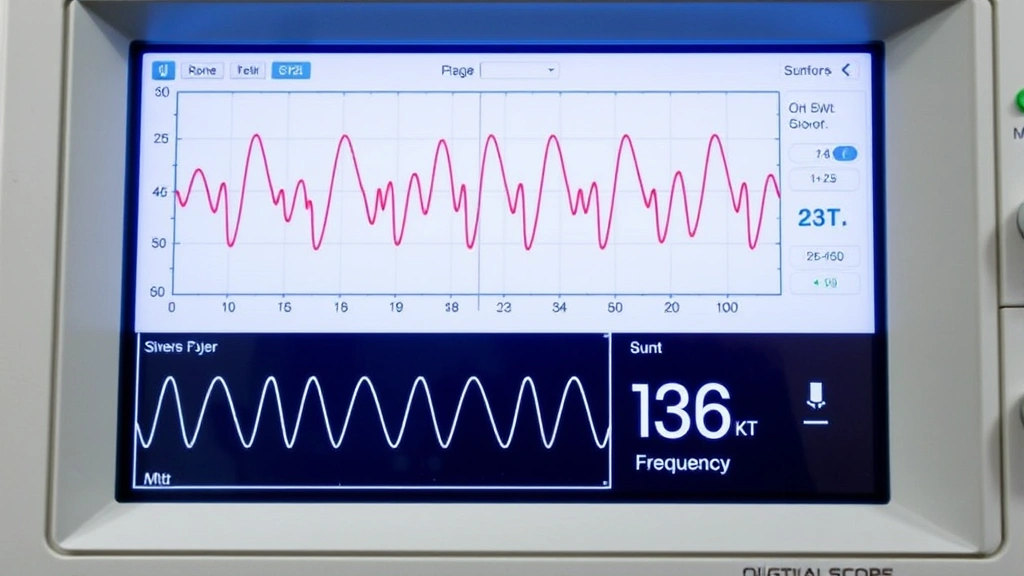
Modern digital oscilloscopes display frequency directly, but understanding the calculation helps verify readings:
- Count complete wave cycles visible on the display
- Note the time scale setting
- Multiply cycles by the time scale factor
- Divide by the total time window displayed
This method proves invaluable when working with complex woodworking projects involving power tools with variable frequency drives or when setting up audio equipment in your home.
Practical Applications in Home Building
Acoustic Frequency and Soundproofing
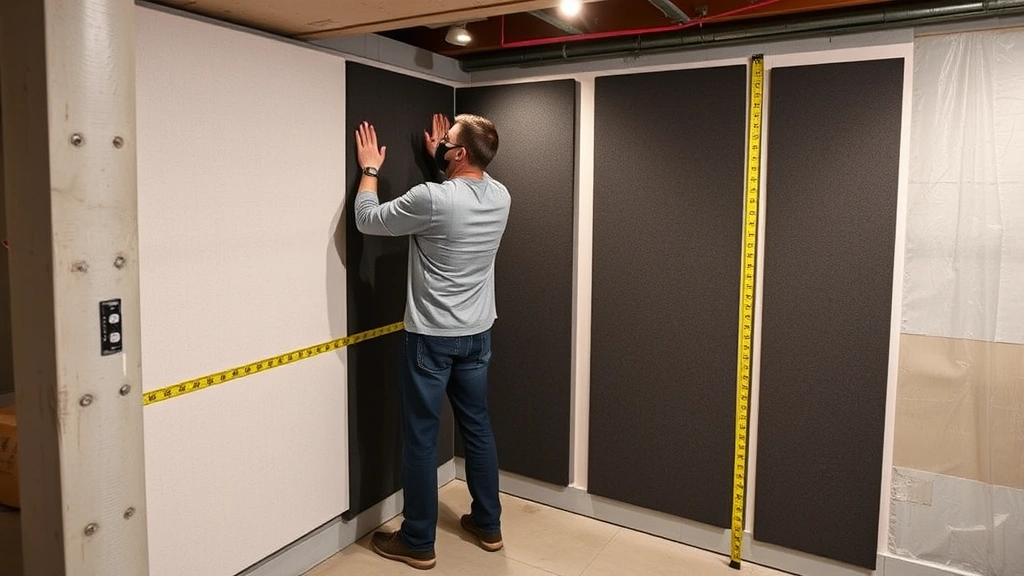
When finishing your basement, understanding sound frequency helps you choose appropriate insulation and dampening materials. Human hearing ranges from approximately 20 Hz (low bass) to 20,000 Hz (high treble). Low-frequency sounds (below 100 Hz) require thicker, denser materials to effectively attenuate. When calculating the frequency of sound waves bouncing around your space, you can determine which frequencies your walls effectively block and which require additional treatment.
Sound travels at approximately 343 m/s in air at room temperature (68°F). If you measure the wavelength of a problematic noise at 0.5 meters, you calculate its frequency as 343 / 0.5 = 686 Hz. This mid-range frequency typically requires 2-4 inches of acoustic foam or fiberglass insulation for adequate absorption.
Electrical System Frequency
North American residential electrical systems operate at 60 Hz, while many other countries use 50 Hz systems. Understanding this frequency is essential when importing appliances, designing circuits, or troubleshooting electrical issues. The frequency directly affects motor performance, transformer efficiency, and electromagnetic interference (EMI) in your home. When calculating frequency of a wave in electrical systems, you’re measuring how many times the alternating current reverses direction per second.
Radio Frequency Applications
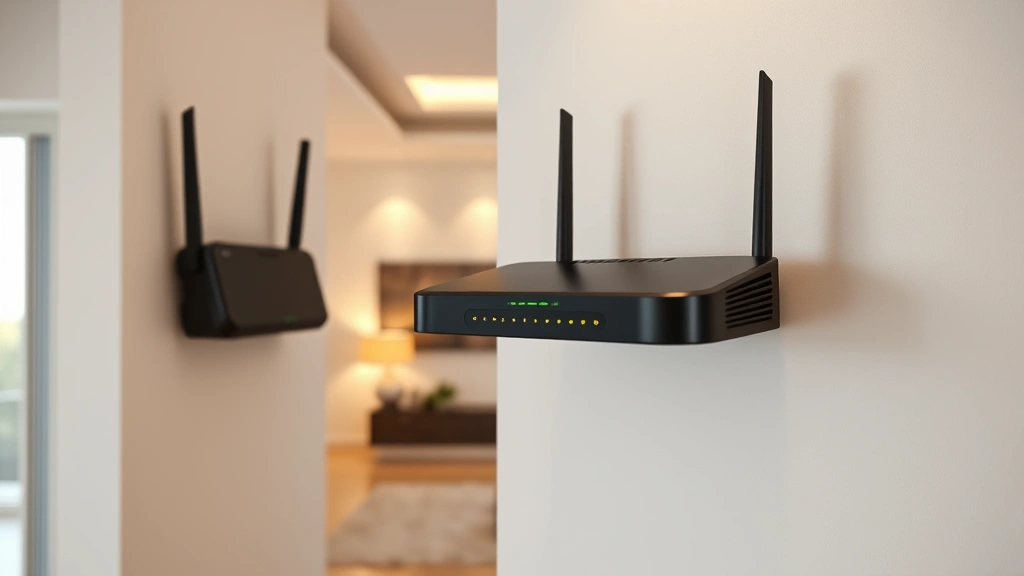
Modern homes increasingly incorporate wireless systems for security, networking, and automation. WiFi operates around 2.4 GHz and 5 GHz, while cellular signals use various frequency bands. Understanding these frequencies helps you position routers, design shielding for sensitive equipment, and troubleshoot signal issues. The higher the frequency, the shorter the wavelength, which affects how signals propagate through walls and obstacles in your home.
Vibration and Structural Concerns
Heavy machinery, HVAC systems, and even traffic can introduce vibrations into your home structure. These vibrations have specific frequencies that, if they match your building’s resonant frequency, can cause amplification and potential damage. Calculating the frequency of these vibrations allows you to implement appropriate damping solutions, whether through isolation pads, tuned mass dampers, or structural modifications.
Tools and Instruments for Measurement
Digital Multimeters with Frequency Function
Modern digital multimeters include frequency measurement capabilities, typically accurate for signals from 10 Hz to 100 kHz. These affordable tools ($20-100) work well for measuring electrical signal frequencies and are essential for any serious DIY builder. Simply select the frequency mode and connect the probes to your signal source.
Oscilloscopes
Digital oscilloscopes provide visual representation of waveforms and direct frequency readouts. While more expensive ($200-2000+), they’re invaluable for complex electrical troubleshooting and signal analysis. The visual display helps you understand wave characteristics beyond just frequency, including amplitude, phase, and distortion. According to NIST measurement standards, oscilloscopes must be calibrated regularly for accurate readings.
Sound Level Meters and Frequency Analyzers
Specialized sound measurement tools ($100-500) display both sound pressure levels and frequency content. Real-time frequency analyzers show which frequencies dominate in your environment, crucial for acoustic treatment decisions. These instruments typically measure frequencies from 20 Hz to 20 kHz, covering the entire human hearing range.
Thermal Imaging and Vibration Sensors
Advanced DIY builders use vibration sensors and accelerometers to measure structural vibrations and calculate their frequencies. These sensors connect to computers or smartphones for analysis. They’re particularly useful when evaluating pole barn stability or assessing machinery vibrations.
Online Calculators and Software
Numerous free online tools simplify frequency calculations. Enter any two variables (frequency, wavelength, or period), and the calculator provides the third. Engineering software like MATLAB or Python with scientific libraries offers more sophisticated analysis for complex wave interactions. The International Code Council (ICC) provides standards-based information on frequency requirements in building codes.
Common Mistakes and How to Avoid Them
Unit Confusion
The most frequent error involves mixing units. Always ensure velocity and wavelength use compatible units (both metric or both imperial). Convert everything to meters and meters per second before calculating. A wavelength of 10 centimeters is 0.1 meters. Mixing units produces results off by factors of 10, 100, or worse.
Temperature Effects on Wave Velocity
Sound velocity varies significantly with temperature. At 32°F, sound travels approximately 331 m/s in air, while at 68°F it reaches 343 m/s. Temperature changes of just 10°F alter sound velocity by about 2%. In acoustic calculations for your basement or other spaces, account for typical temperature conditions. Similarly, electromagnetic wave velocity through materials differs from free-space velocity, requiring adjustment for dielectric properties.
Confusing Frequency with Period
These are inverse relationships, not interchangeable values. Frequency counts cycles per second, while period measures time per cycle. A 100 Hz signal has a period of 0.01 seconds. Always verify which measurement you’re using before applying formulas.
Neglecting Medium Effects
Waves travel at different speeds through different media. Sound moves faster through water than air, and electromagnetic waves slow when passing through materials. Always specify your medium when calculating frequency. For construction applications, specify whether you’re calculating for sound in air, through drywall, or through concrete.
Ignoring Damping and Attenuation
Real-world waves lose energy as they propagate. Frequency remains constant, but amplitude decreases. When measuring frequencies in your home environment, account for reflections, absorption, and interference patterns that complicate simple calculations. Multiple reflections from walls create standing waves with nodes and antinodes at specific frequencies.
Advanced Frequency Calculations
Resonant Frequency Calculations
Structures and materials have natural resonant frequencies where they vibrate most easily. The resonant frequency of a simply supported beam depends on its length, material properties, and cross-sectional dimensions. Calculating this frequency helps you avoid designing systems that operate at problematic resonance points. A room’s acoustic modes create resonances at specific frequencies determined by its dimensions.
For a rectangular room with dimensions length (L), width (W), and height (H), the resonant frequencies are:
f = (c/2) × √[(m/L)² + (n/W)² + (p/H)²]
Where c is sound velocity, and m, n, p are mode numbers (integers starting at 0). This calculation helps identify which frequencies will be amplified or attenuated in your space, crucial for acoustic treatment planning.
Doppler Shift Calculations
When a wave source moves relative to an observer, the observed frequency changes. This Doppler effect is important in applications like motion detection sensors. The observed frequency is:
f’ = f × (v + v_observer) / (v – v_source)
Where v is wave velocity, and v_observer and v_source are velocities of observer and source (positive away from each other). Understanding this effect helps troubleshoot motion detector false triggers and optimize sensor placement in your home security system.
Harmonic and Subharmonic Analysis
Complex signals contain multiple frequency components. A fundamental frequency might be 60 Hz (electrical line frequency), but harmonics appear at 120 Hz, 180 Hz, 240 Hz, etc. These harmonics can cause equipment malfunction and should be filtered in sensitive applications. Calculating and measuring harmonic content requires frequency analysis tools but provides valuable insight into signal quality and equipment performance.
Beat Frequency Calculations
When two waves of slightly different frequencies overlap, they create beats—periodic fluctuations in amplitude. The beat frequency equals the absolute difference between the two frequencies:
f_beat = |f₁ – f₂|
This phenomenon occurs in audio applications when two instruments are slightly out of tune. Understanding beat frequency helps tune equipment and diagnose interference issues in your home’s electrical or communication systems.
FAQ
What is the difference between frequency and wavelength?
Frequency measures how many complete cycles occur per second (Hz), while wavelength measures the distance between successive peaks (meters). They’re inversely related through wave velocity: longer wavelengths correspond to lower frequencies when velocity is constant. In a 343 m/s sound environment, a 1-meter wavelength equals 343 Hz, while a 0.1-meter wavelength equals 3,430 Hz.
How do I measure wave frequency without specialized equipment?
Count oscillations visually and time them with a stopwatch. Count 10 complete cycles, divide by the time in seconds, and multiply by 10. This provides rough frequency measurement suitable for preliminary assessments. For electrical signals, count cycles on an oscilloscope display. For sound, use a smartphone frequency analyzer app (generally accurate to ±5% above 100 Hz).
Why does temperature affect frequency calculations?
Temperature doesn’t change frequency itself, but it alters wave velocity through the medium. Sound velocity increases approximately 0.6 m/s per degree Celsius increase. Since frequency = velocity / wavelength, if velocity changes while wavelength remains constant, calculated frequency changes. Always note the temperature when performing acoustic frequency calculations.
What frequency ranges matter for home construction?
Human hearing spans 20 Hz to 20 kHz; electrical systems use 50-60 Hz; WiFi operates at 2.4-5 GHz; structural vibrations typically fall below 100 Hz. Acoustic resonances in rooms range from 20 Hz (large rooms) to several hundred Hz (small rooms). Understanding these ranges helps you select appropriate materials and equipment for your projects.
Can frequency calculations help with electrical safety?
Yes. Understanding your home’s 60 Hz electrical frequency helps ensure proper grounding, identifies harmonic distortion problems, and assists in selecting appropriate filters and suppressors. Frequency analysis reveals whether electrical noise from devices might interfere with sensitive electronics. High-frequency noise above 10 kHz often indicates switching power supply issues or ground loops requiring correction.
How accurate do frequency measurements need to be for DIY projects?
For most home construction applications, ±5% accuracy suffices. Acoustic treatments, electrical troubleshooting, and wireless system optimization all tolerate this tolerance. Precision applications like laboratory measurements or professional audio equipment require ±1% or better accuracy, necessitating calibrated instruments.
What’s the relationship between frequency and energy in waves?
For electromagnetic waves and photons, energy is directly proportional to frequency: E = hf, where h is Planck’s constant. Higher frequency light carries more energy (ultraviolet light has more energy than infrared). This relationship is less directly applicable to mechanical waves like sound, where amplitude (not frequency) primarily determines energy content, though frequency affects how readily materials absorb that energy.


