
Learn Korean Fast: Expert Tips for Quick Mastery
Learning Korean has become increasingly popular, with millions of people worldwide eager to master this fascinating language. Whether you’re motivated by K-pop, Korean dramas, business opportunities, or cultural curiosity, the question “how long does it take to learn Korean” is one of the first you’ll ask. The honest answer depends on multiple factors including your starting point, study intensity, native language background, and learning methods.
The U.S. State Department’s Foreign Service Institute estimates that English speakers need approximately 2,200 hours of study to reach professional proficiency in Korean. However, this timeline can be significantly compressed with strategic approaches, consistent practice, and the right resources. This comprehensive guide will walk you through realistic timelines, proven learning strategies, and actionable tips to accelerate your Korean language acquisition.
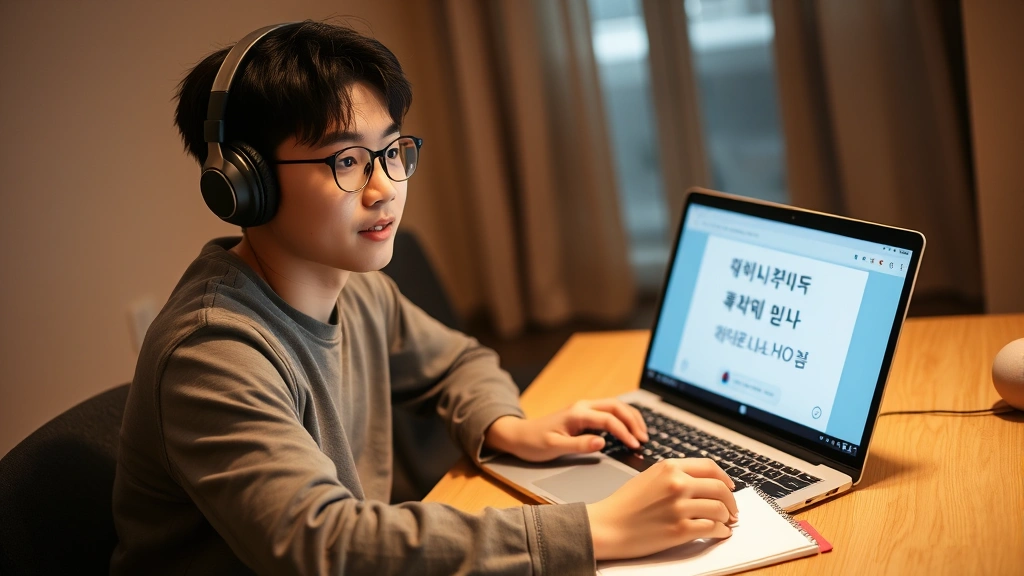
Understanding Korean Language Difficulty
Korean occupies a unique position in language difficulty rankings. Unlike Chinese, which requires memorizing thousands of characters, Korean uses Hangul—an alphabetic writing system created specifically to be easy to learn. This is your first major advantage. Most learners can read and write Korean within 1-2 weeks of focused study, which immediately opens doors to self-directed learning.
The Foreign Service Institute categorizes Korean as a Category IV language, placing it in the “hard” category for English speakers, but not the hardest. Japanese and Chinese rank higher in difficulty. Korean grammar, while different from English, follows logical patterns once understood. The language lacks gendered nouns and uses a relatively straightforward subject-object-verb sentence structure.
When you’re approaching any substantial learning project like language acquisition, it shares principles with home improvement work—like the planning required for basement finishing projects. Both require breaking down large goals into manageable phases, proper sequencing, and consistent execution.

Realistic Learning Timelines
Timeline expectations depend on your proficiency goals. Here’s a breakdown of realistic timeframes:
- Basic Conversational Ability (3-6 months): With 1-2 hours daily study, you can achieve simple conversations, introduce yourself, order food, and handle basic social interactions. This requires roughly 300-600 hours of study.
- Intermediate Proficiency (6-12 months): At this level, you can discuss daily topics, understand most conversations at normal speed, and read simple texts. Plan for 600-1,200 hours of cumulative study.
- Advanced Proficiency (1-2 years): You’ll comprehend nuanced conversations, understand cultural references, read literature, and watch media without subtitles. This demands 1,200-2,200 hours of study.
- Professional Fluency (2-3 years): Achieving near-native capability for business, translation, or teaching requires 2,200+ hours and typically includes immersion periods.
These timelines assume consistent, focused study. Sporadic learning stretches these estimates significantly. Someone studying 30 minutes daily will take twice as long as someone studying an hour daily to reach the same level.
Foundational Elements: Hangul and Grammar
Hangul Mastery (1-2 weeks): Begin by learning Hangul, the Korean alphabet. This 24-letter system is deliberately designed for quick acquisition. Spend 30 minutes daily for two weeks, and you’ll read and write Korean fluently. Numerous free resources exist online, including interactive tools and YouTube tutorials. This foundation is non-negotiable and provides immediate gratification.
Understanding basic grammar structures accelerates your progress significantly. Korean grammar includes particles that indicate sentence function, a politeness system with multiple levels, and verb conjugations. Rather than memorizing rules, learn them through contextual examples. Focus on these fundamental structures first:
- Subject-object-verb word order
- Particle usage (은/는 for topics, 이/가 for subjects)
- Polite and casual speech levels
- Basic present tense conjugation
- Question formation
Many learners struggle because they try memorizing grammar rules without context. Instead, learn grammar through real sentences and dialogues. This approach mirrors how beginner woodworking projects teach through hands-on application—understanding comes through doing, not just reading instructions.
Accelerated Learning Strategies
Several evidence-based strategies dramatically reduce learning time:
Spaced Repetition Systems (SRS): Applications like Anki use scientifically-proven spacing algorithms to optimize memory retention. Rather than cramming, you review material at optimal intervals before you forget it. Studies show SRS can reduce vocabulary learning time by 40-50% compared to traditional methods. Invest 20-30 minutes daily in an SRS app focused on high-frequency words.
Comprehensible Input: Consume Korean content slightly above your current level. Start with children’s content, graded readers, and simplified podcasts. As you progress, watch Korean dramas with subtitles, listen to K-pop with lyrics, and read Korean news sites. This passive learning complements active study and maintains motivation.
Active Output: Speaking and writing force your brain to produce language, not just recognize it. Join language exchange platforms like Tandem or ConversationExchange. Schedule weekly conversation partners. Record yourself speaking and listen critically. Write journal entries in Korean. This active practice is essential and cannot be replaced by passive consumption.
Structured Courses: Combine free resources with paid courses providing structure. Platforms like Lingoni Korean and Talk To Me In Korean offer progressive curricula that build systematically. The structure prevents knowledge gaps that derail progress later.
Building Vocabulary Efficiently
Vocabulary acquisition is the most time-consuming aspect of language learning. Strategic approaches accelerate this process:
Frequency-Based Learning: Master high-frequency words first. The 1,000 most common Korean words comprise approximately 80% of everyday conversations. Focus on these before expanding to specialized vocabulary. Apps like Anki include frequency-sorted decks specifically designed for this.
Word Families and Roots: Korean borrows extensively from Chinese (about 60% of vocabulary), creating word families sharing similar components. Learning one Chinese-origin word often helps you understand related words. Similarly, understanding verb stems helps you conjugate and modify them correctly.
Contextual Learning: Never learn words in isolation. Learn them within sentences and phrases. This creates stronger neural associations and teaches you proper usage simultaneously. For example, learning “먹다” (to eat) alongside “밥을 먹어요” (I eat rice) is more effective than learning the verb alone.
Active Recall: Test yourself constantly rather than passively reviewing. Flashcards, quizzes, and conversation practice force active recall, strengthening memory. Passive review (reading word lists) creates an illusion of learning without building functional vocabulary.
Immersion and Practical Practice
Immersion dramatically accelerates learning, though it’s not essential. Consider these approaches:
Full Immersion (3-6 months abroad): Studying in Korea or another Korean-speaking environment compresses learning timelines by 50-75%. You’re forced to use Korean daily for survival, and you’re surrounded by native speakers providing constant input. Study abroad programs, language schools, and volunteer opportunities provide structure while immersing you in the language.
Partial Immersion (at home): Change your phone and computer language to Korean. Watch Korean content exclusively. Listen to Korean podcasts during commutes. Join online Korean communities. Spend time with Korean speakers. While less intense than full immersion, these strategies significantly accelerate progress and maintain motivation.
Conversation Practice: Regular conversation with native speakers is irreplaceable. Online language exchange platforms connect you with Korean speakers learning English. Schedule regular sessions (ideally 2-3 times weekly). Prepare topics in advance, record conversations, and review them later. This active practice reveals gaps in your knowledge and builds confidence.
Just as home security requires multiple layers of protection, language learning benefits from multiple reinforcing approaches. Combine structured study, immersion, conversation, and media consumption for optimal results.
Common Obstacles and Solutions
Plateau Effect: Most learners hit plateaus around the 6-month mark when initial progress slows. This is normal and temporary. Push through by increasing difficulty, changing study methods, or intensifying immersion. Many successful learners report breakthroughs immediately after plateaus if they persist.
Motivation Loss: Language learning is a marathon. Maintain motivation by setting specific goals (watch a Korean drama without subtitles by month 4), connecting with communities, and celebrating progress. Join Korean cultural groups, attend language meetups, or find accountability partners.
Pronunciation Anxiety: Many learners fear speaking due to pronunciation concerns. Korean pronunciation is highly consistent—once you learn the rules, you can pronounce any word correctly. Practice pronunciation early and often. Native speakers are incredibly forgiving and appreciate effort. Don’t let perfection paralyze you.
Grammar Overwhelm: Don’t try learning all grammar simultaneously. Follow a structured curriculum that introduces grammar progressively. Understand grammar in context rather than memorizing rules. Accept that some ambiguity is normal—you’ll understand grammar better through exposure than through explicit study.
Lack of Resources: This is rarely a genuine obstacle anymore. Free resources abound: YouTube channels like Talk To Me In Korean provide comprehensive free instruction, language exchange apps connect you with native speakers, and communities like r/Korean offer support and resources. Paid courses provide structure, but many successful learners use primarily free resources.
FAQ
How long does it take to learn Korean conversationally?
Most people reach basic conversational ability in 3-6 months with consistent daily study (1-2 hours). This allows simple conversations about daily topics but not complex discussions.
Is Korean harder than Japanese?
Korean is generally considered easier than Japanese for English speakers. Japanese requires learning three writing systems (hiragana, katakana, kanji), while Korean uses one phonetic alphabet (Hangul). Korean grammar is also more straightforward.
Can you learn Korean in 3 months?
Yes, you can achieve conversational basics in 3 months with intensive study (2-3 hours daily). However, reaching functional fluency typically requires 6-12 months. The timeframe depends on your definition of “learning Korean” and your study intensity.
What’s the best way to learn Korean fast?
Combine multiple approaches: structured courses for systematic learning, spaced repetition for vocabulary, immersion for natural acquisition, and conversation practice for speaking confidence. Consistency matters more than any single method.
Do I need to study in Korea to learn Korean?
No, studying in Korea accelerates learning but isn’t necessary. Many fluent Korean speakers never studied in Korea. However, immersion—whether in Korea or through intensive home-based approaches—significantly speeds up the process.
How much vocabulary do I need for fluency?
Understanding 1,000-2,000 words provides functional fluency for everyday conversations. Professional fluency requires 5,000-10,000 words. Passive recognition vocabulary (words you understand) is typically 2-3 times larger than active vocabulary (words you use).
Is Hangul hard to learn?
No, Hangul is remarkably easy. Most learners master it in 1-2 weeks with casual study. This is one of Korean’s advantages as a language to learn quickly.


