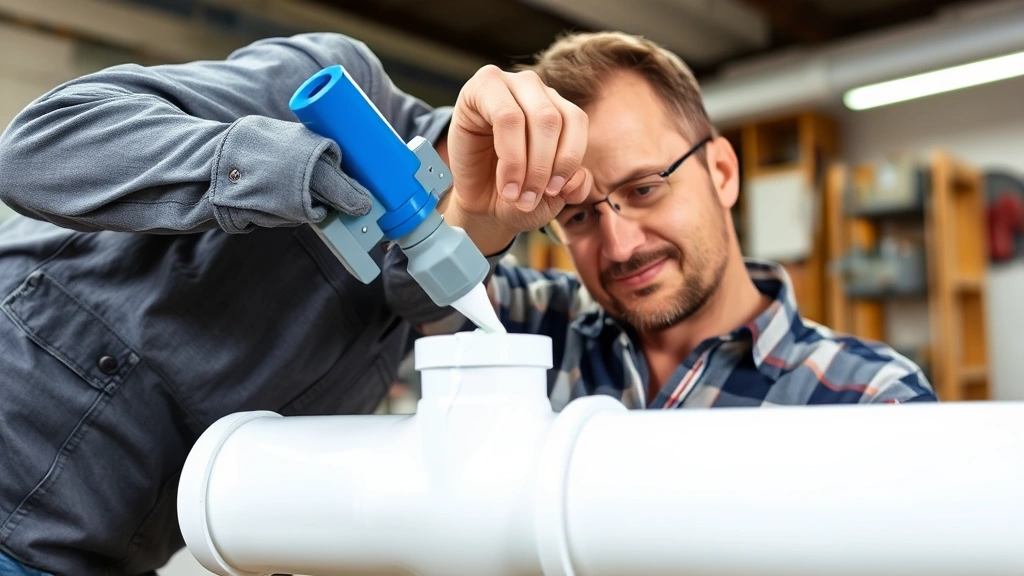
PVC Glue Dry Time: Expert’s Quick Guide
PVC glue is one of the most essential materials for any DIY plumbing or construction project. Whether you’re working on basement finishing with new drainage systems or installing simple PVC piping, understanding how long PVC glue takes to dry is critical for project success. The drying time directly impacts when you can pressure-test your system, when water can flow through the pipes, and ultimately, whether your installation will hold up over time without leaks or failures.
Many DIYers make costly mistakes by rushing the curing process or misunderstanding the difference between surface drying and full structural strength. This comprehensive guide breaks down everything you need to know about PVC glue drying times, factors that affect curing, and best practices to ensure your PVC joints are properly set before putting them to work.
Understanding PVC Glue and Its Composition
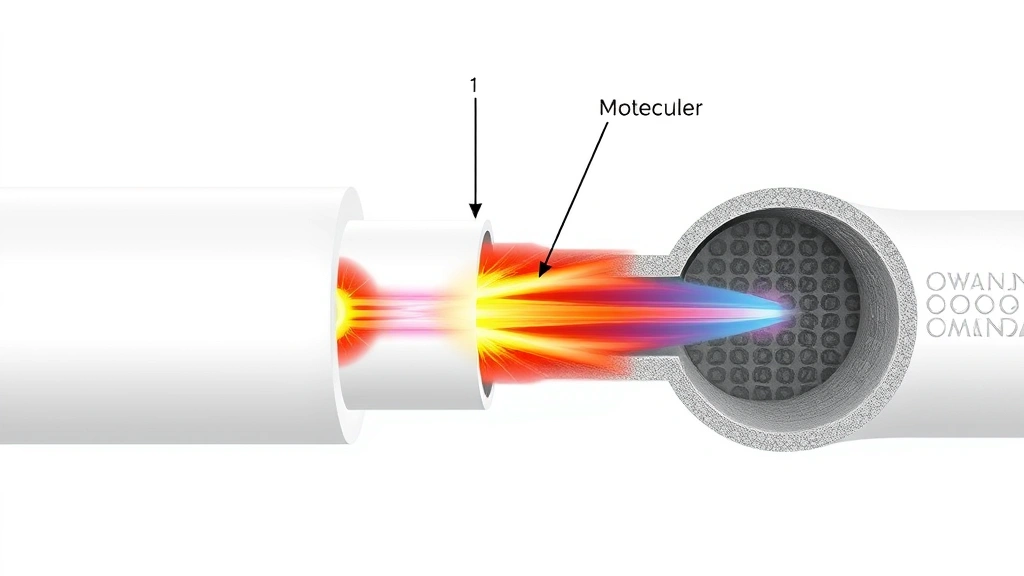
PVC cement, commonly called PVC glue, is not actually an adhesive in the traditional sense. Rather than bonding two surfaces together like wood glue, PVC cement chemically dissolves the outer layer of both the pipe and fitting, creating a molecular bond that fuses them together permanently. This is why understanding the curing process is so different from other adhesives used in woodworking projects.
The cement contains a solvent that temporarily softens the PVC material. As the solvent evaporates, the plastic hardens and the two pieces become one unified component. This chemical welding process is what makes PVC joints so strong and reliable when properly executed. The solvent must fully evaporate for the joint to achieve its rated pressure strength and durability.
Most PVC cements are formulated with methylethylketone (MEK) or similar volatile organic compounds (VOCs) as the primary solvent. Different manufacturers may adjust their formulations, which is why checking the specific product instructions is always important. Some products are designed for faster drying, while others prioritize maximum strength development.
Typical Drying Times for PVC Cement
The short answer to “how long does PVC glue take to dry” depends on several variables, but here are the general guidelines:
- Initial set time: Most PVC cements reach an initial set in 30 seconds to 2 minutes. At this point, you can stop holding the joint, and it will maintain its position without slipping.
- Handling time: After 15 to 30 minutes, the joint is typically strong enough to handle light movement or to begin installing additional fittings nearby.
- Light pressure readiness: Within 1 to 2 hours, many PVC joints can withstand light pressure and minimal water flow.
- Full cure time: Complete curing, where the joint reaches full pressure rating, typically takes 24 hours under ideal conditions.
However, these timelines assume optimal temperature and humidity conditions. According to ICC (International Code Council) standards, PVC installations must meet specific strength requirements before being placed into service. The manufacturer’s specifications should always be your primary reference.
For schedule 40 PVC pipe, which is the most common residential grade, manufacturers typically recommend waiting at least 24 hours before pressurizing the system. For larger diameter pipes or schedule 80 (thicker-walled) PVC, some manufacturers recommend 48 hours for full strength development.
Factors That Affect PVC Glue Drying Speed
Several factors can accelerate or delay PVC glue drying time, and understanding these variables is essential for successful projects.
Cement formulation: Fast-set cements cure in roughly half the time of standard formulations. These products are ideal when you’re working on a deadline, but they require more precision during application since you have less time to adjust the joint position.
Pipe diameter: Larger diameter pipes require longer curing times because there’s more material and a larger bonding surface area. A 1/2-inch pipe joint might be fully cured in 24 hours, while a 4-inch pipe may need 48 hours or more to achieve full strength.
Ambient conditions: Environmental factors play a massive role in drying speed. Cold, damp conditions dramatically slow solvent evaporation, while warm, dry conditions accelerate it.
Ventilation: Adequate air circulation helps solvent vapors escape more efficiently. Working in a confined space without ventilation will extend drying times significantly.
Amount of cement applied: Using excessive cement creates a thicker layer that takes longer to cure completely. Using too little can result in incomplete bonding and weak joints. The proper amount is typically a thin, consistent layer around the pipe end and fitting socket.
Temperature and Humidity Impact
Temperature is perhaps the single most important factor affecting PVC glue drying time. The solvent in PVC cement evaporates much more slowly in cold conditions.
According to ASTM International standards for PVC materials, here’s how temperature affects drying:
- Above 70°F (21°C): Standard curing times apply as listed on the product. Solvent evaporation is optimal.
- 50-70°F (10-21°C): Add 50% to the recommended curing time. A 24-hour cure becomes 36 hours.
- Below 50°F (10°C): Drying times can double or triple. Many manufacturers recommend not installing PVC in temperatures below 40°F without special precautions.
Humidity also matters considerably. High humidity (above 85%) slows evaporation because the air is already saturated with moisture. Low humidity (below 30%) speeds up the process. Ideally, you want humidity between 40-60% for optimal curing conditions.
When working in winter or in cold climates, consider warming the area where you’re making PVC connections. Even a portable space heater can maintain the ambient temperature above 70°F, which ensures proper curing. Never apply heat directly to the PVC pipes themselves, as this can damage the material.
Pipe Size and Wall Thickness Considerations
The relationship between pipe diameter and curing time is linear. Larger pipes require proportionally longer curing periods because the joint has more mass and surface area.
Small diameter pipes (1/2″ to 1″): These typically cure in 24 hours under standard conditions. You can often begin testing with low pressure after 4-6 hours if necessary.
Medium diameter pipes (1.5″ to 2″): Allow 24 hours for initial cure and 36-48 hours for full pressure rating, especially if you’re planning to apply significant water pressure.
Large diameter pipes (3″ and above): Many manufacturers recommend 48-72 hours for complete cure. For critical applications, waiting a full week before pressurizing is prudent.
Schedule 80 PVC, which has thicker walls than schedule 40, also requires longer curing times because more material must be chemically bonded. When working with schedule 80 fittings and pipe, add 25-50% to your standard curing times.
Best Practices for Optimal Curing
Following these best practices ensures your PVC joints reach maximum strength and reliability:
- Read the manufacturer’s instructions: Different brands have slightly different formulations. Always follow the specific guidance on your cement container.
- Check the temperature: Verify ambient temperature before starting. If it’s below 50°F, either warm the space or delay the project until conditions improve.
- Use the right amount of cement: Apply enough to coat the pipe end and the fitting socket completely, but avoid excessive buildup. A thin, consistent layer is ideal.
- Work quickly but carefully: Insert the pipe into the fitting with a slight twisting motion, then hold it firmly for 30 seconds to ensure proper contact and positioning.
- Provide ventilation: Ensure adequate air circulation to allow solvent vapors to escape. Cracking windows or using fans helps significantly.
- Protect from moisture: Don’t expose freshly glued joints to water or moisture during the curing period. Even humid air can extend drying times.
- Keep joints undisturbed: Don’t move, flex, or stress the joint during the initial curing period. Movement can break the molecular bond before it’s fully formed.
- Label and date your work: If you’re doing extensive PVC work, mark joints with the date and time so you know when they’re fully cured.
Common Mistakes to Avoid
Even experienced DIYers sometimes make critical errors with PVC glue. Here are the most common mistakes that compromise joint strength:
Pressurizing too soon: This is the number one reason for PVC joint failures. Many people assume that because a joint feels solid, it’s fully cured. Surface hardening happens quickly, but internal bonding takes much longer. Pressurizing before full cure can cause leaks that appear weeks or months later.
Using old or improperly stored cement: PVC cement has a shelf life, typically 12-18 months. As solvents evaporate from the can, the cement becomes less effective. Store containers in cool, dry places with tight lids.
Mixing different brands: While most PVC cements are chemically similar, mixing brands can create unpredictable results. Stick with one manufacturer’s products for consistency.
Applying cement in cold conditions: Working with PVC cement below 40°F is risky. The solvent won’t evaporate properly, and the joint may never achieve full strength.
Using too much cement: Excess cement creates a thick layer that cures from the outside in. The interior may still be soft long after the surface appears cured.
Failing to dry the pipes: Any moisture on the pipe or fitting surface interferes with the cement’s ability to bond properly. Always dry PVC thoroughly before applying cement.
Testing Your PVC Joints
Before putting your PVC system into service, proper testing ensures all joints are sound. This is especially important for projects like basement finishing where water damage could be catastrophic.
Visual inspection: After curing, examine each joint for cracks, gaps, or incomplete bonding. The joint should appear smooth and uniform with no visible separation between the pipe and fitting.
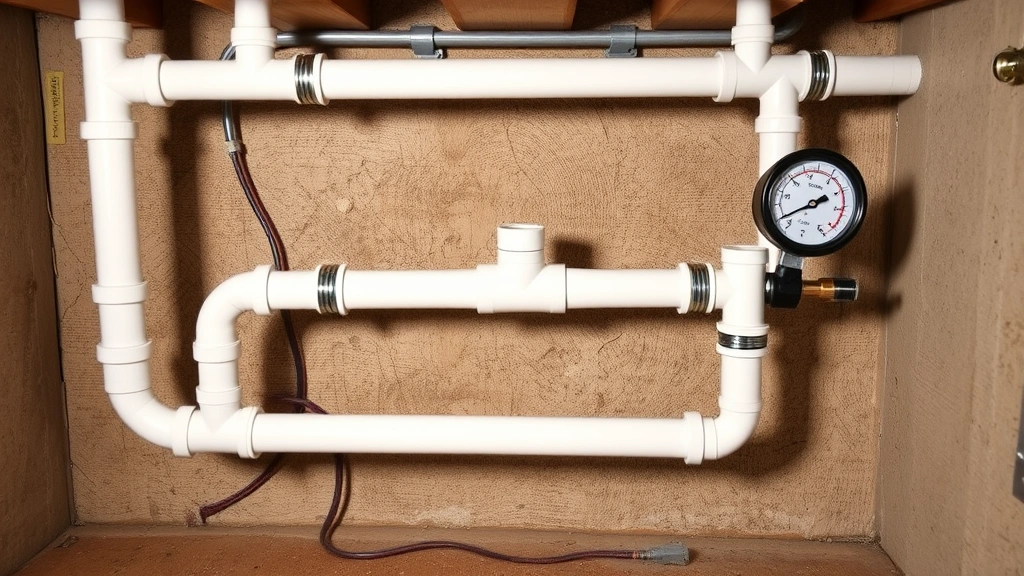
Pressure testing: For pressurized systems (supply lines), use a pressure test gauge to pressurize the system to 50% of its rated working pressure for 15 minutes. Watch for any pressure drop, which indicates a leak.
Water flow testing: For drain and vent lines, fill the system with water and observe for leaks at all joints. Drain lines don’t experience pressure, but they must still be watertight.
Dye testing: For critical applications, add food coloring to water flowing through the system. Any discoloration around a joint indicates a leak.
According to the International Plumbing Code, all newly installed PVC systems must be tested and approved before being concealed in walls or buried underground. Documentation of these tests should be kept with your home records.
For those tackling comprehensive projects, understanding timing is crucial. Just as knowing how long various tasks take helps with project planning, understanding PVC curing times prevents costly mistakes and schedule delays.
FAQ
Can I use PVC glue in cold weather?
PVC cement can be used in temperatures as low as 40°F, but curing times will extend significantly—potentially doubling or tripling. Below 40°F, most manufacturers recommend against installation. If you must work in cold conditions, use a space heater to warm the work area to at least 60°F.
How long before I can turn on water after gluing PVC?
For low-pressure testing, you can turn on water after 4-6 hours for small diameter pipes in warm conditions. However, for full operational use with normal water pressure, wait the full 24 hours for schedule 40 pipe, 48 hours for larger diameters or schedule 80. This conservative approach prevents catastrophic failures.
What happens if I use too much PVC cement?
Excess cement creates a thicker layer that cures slowly from the outside in. The interior may remain soft and weak even after the surface hardens. Use only enough cement to create a thin, consistent coating around the joint.
Can PVC glue dry too fast?
Fast-set formulas are designed to cure quickly while still developing full strength. However, they require more precision during installation because you have less time to adjust joint position. They don’t “dry too fast” in a problematic sense—they’re formulated to develop strength quickly while maintaining quality.
Is PVC cement waterproof immediately?
No. While the surface may feel dry within minutes, the joint is not waterproof until the solvent has fully evaporated and the chemical bond has completely formed. This typically takes 24 hours. Exposing joints to water during this period can compromise the bond.
Why is my PVC joint still leaking after 24 hours?
Common causes include: insufficient cement application, moisture on the pipe or fitting before gluing, incomplete insertion of the pipe into the fitting, or movement of the joint during curing. If a joint leaks after proper curing, you may need to cut it out and redo it.
Can I accelerate PVC curing with heat?
You can warm the ambient environment to accelerate solvent evaporation, but never apply direct heat to the PVC pipe or joint. This can damage the material and weaken the joint. Instead, use a space heater to maintain the work area at 70-75°F.


