How Long to Smoke Chicken Drumsticks: Chef’s Guide to Juicy Drums
Smoking chicken drumsticks is one of the most rewarding backyard cooking experiences you can master. Unlike larger cuts of meat that require hours of patience, drumsticks offer a perfect balance: they cook quickly enough for a weeknight dinner, yet slowly enough to develop that coveted smoky bark and tender, juicy meat. The key to achieving restaurant-quality results lies in understanding the timing, temperature control, and proper preparation techniques that transform simple chicken legs into a showstopping centerpiece.
Whether you’re a seasoned pitmaster or picking up your first smoker, drumsticks represent an ideal learning opportunity. They’re forgiving, affordable, and deliver impressive results that will impress family and friends. This comprehensive guide walks you through every step of the smoking process, from selecting the right equipment to achieving that perfect internal temperature that guarantees food safety and maximum flavor.
How Long to Smoke Chicken Drumsticks: The Basics
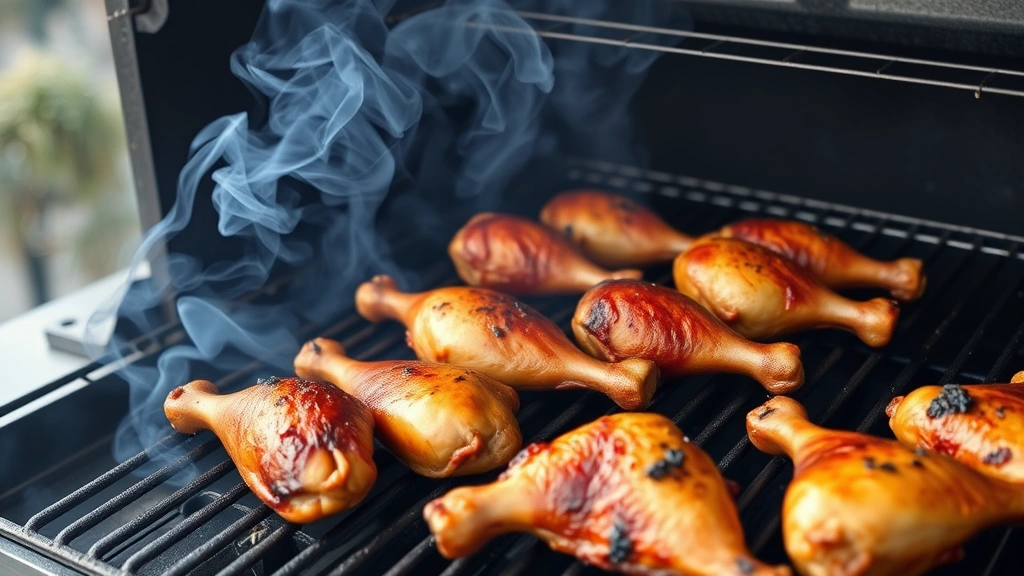
The standard smoking time for chicken drumsticks ranges from 1.5 to 2.5 hours at 225°F to 250°F. This timeframe assumes you’re smoking drumsticks that weigh approximately 3 to 4 ounces each. The exact duration depends on several critical factors: your smoker’s consistency, ambient temperature, drum size, and whether you’re using the 3-2-1 method or continuous low-and-slow smoking.
Most pitmasters find that drumsticks reach the safe internal temperature of 165°F in approximately 1.5 to 2 hours when smoking at 250°F. At 225°F, expect closer to 2 to 2.5 hours. The lower the temperature, the longer the cook—but you’ll develop deeper smoke penetration and more complex flavors. Higher temperatures between 275°F and 300°F can reduce cooking time to just 1 to 1.5 hours, though you sacrifice some of that authentic smoky character.
The beauty of drumsticks compared to larger cuts like a brisket smoked at 225 is their consistency. Because they’re relatively uniform in size, you won’t encounter the dramatic temperature plateaus that plague larger meats. This makes drumsticks an excellent entry point for beginners learning the fundamentals of low-and-slow smoking.
Temperature Control and Timing Charts
Maintaining consistent smoker temperature is non-negotiable for predictable results. Here’s what you need to know about different temperature ranges:
- 225°F: 2 to 2.5 hours | Maximum smoke flavor | Most traditional approach
- 240°F: 1.75 to 2.25 hours | Balanced flavor and speed | Recommended for most cooks
- 250°F: 1.5 to 2 hours | Good smoke penetration | Faster without sacrificing quality
- 275°F: 1 to 1.5 hours | Light smoke ring | Better for time-constrained cooks
- 300°F+: 45 minutes to 1 hour | Minimal smoke flavor | Only if you’re in a hurry
Professional barbecue competitors often advocate for 250°F as the sweet spot. At this temperature, your smoker is easier to maintain, you’ll still develop excellent smoke flavor, and the cook time remains reasonable. If you’re smoking multiple racks simultaneously—similar to how you’d manage a pork shoulder smoke session—maintaining 250°F provides better consistency across all pieces.
Wind, humidity, and outside temperature significantly impact your smoker’s performance. On cold days, add 15-30 minutes to your cooking time. On hot days, you might save 15-20 minutes. Always use a reliable thermometer positioned at grate level to monitor actual cooking temperature, not just your smoker’s dial reading.
Preparation and Seasoning Strategy
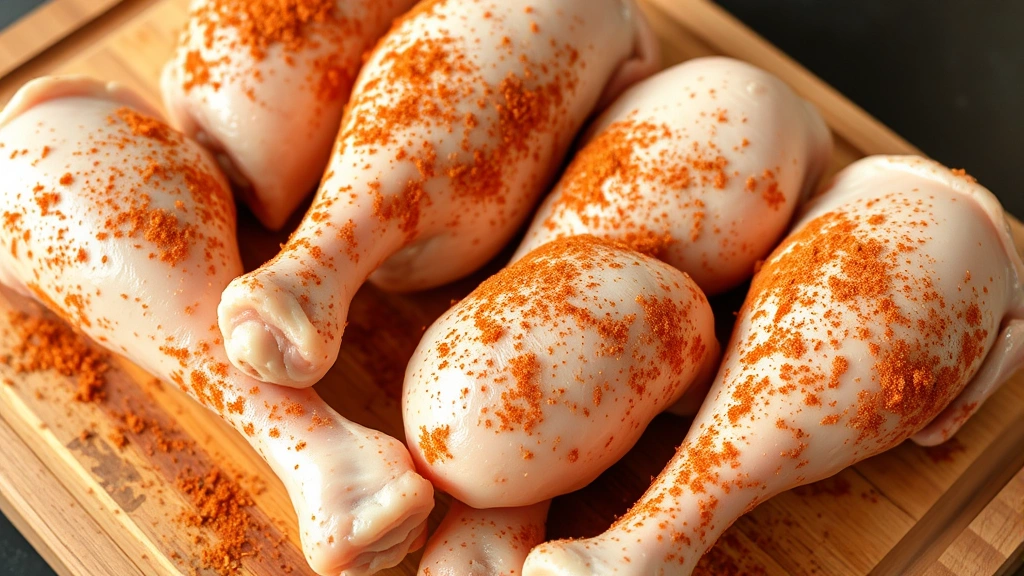
Proper preparation determines whether your drumsticks will be merely good or absolutely exceptional. Start by patting your drumsticks dry with paper towels. Moisture on the surface inhibits smoke adhesion and prevents proper bark formation. Don’t skip this step—it takes 30 seconds but dramatically improves your final product.Remove the thin membrane on the underside of each drumstick if you prefer more direct seasoning contact with the meat. Many pitmasters leave it intact because it helps retain moisture during the long cook. Either approach works; it’s a matter of personal preference and technique.
Apply your dry rub generously, at least 12 hours before smoking, ideally overnight. This extended curing time allows salt to penetrate the meat and improve moisture retention through osmosis. A basic competition-style rub includes brown sugar, paprika, garlic powder, onion powder, black pepper, and kosher salt in roughly equal proportions. Some cooks add cayenne for heat, coffee powder for depth, or brown mustard powder for complexity.
If you’re smoking a large batch, consider using an injection. A simple injection of apple juice, butter, and a touch of Worcestershire sauce adds moisture and flavor to the interior. Inject at multiple points across each drumstick, approximately 1 hour before placing them on the smoker grates.
Wood Selection for Optimal Flavor
Your wood choice dramatically influences the final flavor profile. Unlike beef smoking where strong woods like hickory dominate, chicken pairs beautifully with milder, fruitier woods that complement rather than overpower the delicate poultry flavor.
- Apple: Mild, slightly sweet, creates a golden smoke ring | Best overall choice for chicken
- Cherry: Fruity, slightly tart, produces beautiful color | Excellent for drumsticks
- Pecan: Medium strength, nutty undertones | Works well in blends
- Hickory: Strong, bacon-like | Use sparingly, only 25% of total wood
- Oak: Clean, medium strength | Good base wood for blending
The best approach combines two or three wood types. Try 50% apple with 30% cherry and 20% pecan for a complex, balanced smoke flavor. Avoid softwoods like pine or spruce—these contain resins that create acrid, unpleasant smoke. Purchase wood from reputable sources that guarantee proper seasoning. Wet or green wood produces thick, white smoke that tastes bitter rather than smoky.
Use a USDA poultry smoking guide to understand how different woods interact with chicken’s delicate flavor profile. Most pitmasters agree that less smoke is better than too much when cooking poultry.
Establish a consistent smoke production schedule: add a small handful of wood chips every 30-45 minutes during the cook. Thin, blue smoke is your goal. Thick, billowing white smoke indicates incomplete combustion and will leave bitter deposits on your meat.
Achieving the Perfect Bark and Texture
The bark—that flavorful, textured exterior layer—develops through the Maillard reaction between proteins and heat. Unlike larger cuts requiring 8+ hours, drumsticks develop their bark relatively quickly, usually within the first 45 minutes to 1 hour.
To enhance bark development, consider the “naked cook” method: smoke without sauce or butter for the first 75% of the cooking time, then apply a glaze during the final 30 minutes. Popular glazes include honey-butter combinations, barbecue sauce, or a simple mixture of maple syrup and mustard.
Some competition cooks employ the reverse sear technique with drumsticks: smoke at 225°F for the majority of the cook, then increase temperature to 300°F+ for the final 15-20 minutes to develop a crispy, caramelized exterior while maintaining juicy meat inside. This technique works exceptionally well for drumsticks because the small size allows rapid temperature adjustment without overcooking the interior.
Spritz your drumsticks every 45 minutes with apple juice, cider vinegar, or a butter-based spray. This keeps the surface moist, prevents excessive drying, and actually helps the bark adhere better. Many pitmasters swear by spritzing for the first 1.5 hours, then stopping to allow the exterior to firm up and develop texture.
Testing for Doneness and Food Safety
Never rely on color alone to determine doneness. Smoked chicken often appears pink due to smoke ring formation, which is completely safe and actually a sign of proper smoking technique. Always use an accurate meat thermometer to verify internal temperature.
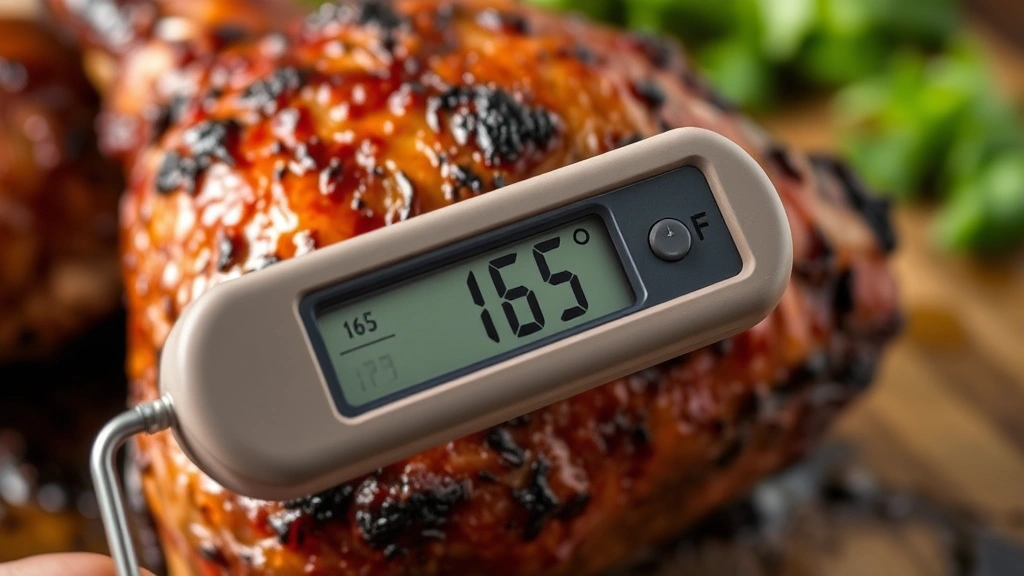
The safe internal temperature for chicken is 165°F according to USDA guidelines. For drumsticks specifically, insert your thermometer into the thickest part of the meat without touching bone. The bone itself conducts heat differently than meat, potentially giving false high readings.
Invest in a quality instant-read thermometer for accuracy. Cheap thermometers often have a ±5-10°F variance, which is unacceptable for food safety. Wireless meat thermometers with alarm functions let you monitor temperature without opening the smoker door repeatedly—each door opening adds 5-10 minutes to your total cook time.
Once drumsticks reach 160°F, they’re technically safe, but waiting until 165°F ensures any potential bacteria is definitively eliminated. At 165-170°F, the meat remains incredibly juicy. Beyond 175°F, you’ll notice the meat becoming drier and less tender, though still safe and delicious.
A useful secondary test: the drumstick should pull away easily from the thigh bone, and the juices should run clear with no pink tint. However, these visual cues are less reliable than thermometer verification, so always prioritize temperature readings.
Common Mistakes and How to Avoid Them
Even experienced cooks make errors when smoking drumsticks. Understanding these pitfalls helps you achieve consistent excellence:
Overcrowding the grates: Drumsticks need air circulation for even cooking and proper smoke absorption. Leave at least 1 inch between pieces. If necessary, use multiple racks or smoke in batches. Think of this similarly to how you’d arrange larger cuts like a tri-tip on smoking grates—spacing matters for consistent results.
Unstable temperature control: Fluctuating smoker temperatures cause uneven cooking and extend total time unpredictably. Invest time in learning your smoker’s quirks. Many offset smokers require adjustments to firebox dampers every 30 minutes. Pellet smokers offer better consistency but require regular maintenance. Keep detailed notes about weather conditions and temperature adjustments for future reference.
Starting with cold meat: Remove drumsticks from the refrigerator 30-45 minutes before smoking. Cold meat requires extra time to reach target temperature, extending your cook unnecessarily. Room-temperature meat cooks more predictably and evenly throughout.
Opening the smoker door excessively: Each door opening drops internal temperature significantly and adds 5-10 minutes to your total cook time. Use a meat thermometer with a wireless probe so you can monitor progress without opening the door. If you must peek, open quickly and close immediately.
Using too much wood: This creates bitter, acrid smoke that overpowers chicken’s delicate flavor. Remember: thin, blue smoke is better than thick, white smoke. Less is more with poultry smoking.
Skipping the dry rub cure: Applying seasoning immediately before smoking means it won’t penetrate the meat effectively. Plan ahead and apply your rub at least 12 hours in advance. The salt will cure the meat, improving texture and moisture retention.
Troubleshooting Tips for Better Results
If your drumsticks consistently turn out dry, your smoker temperature is likely too high or your cook time is too long. Reduce temperature by 25°F and check for doneness more frequently. Alternatively, try injecting marinade into the meat before smoking to ensure interior moisture.
Pale, rubbery skin indicates insufficient heat or too much moisture. Try the reverse sear technique: finish at higher temperature for 15-20 minutes to crisp the exterior. Ensure your smoker maintains steady temperature; inconsistent heat prevents proper skin rendering.
Bitter taste usually means too much smoke or inferior wood quality. Switch to milder woods like apple or cherry, reduce wood consumption, and ensure you’re using seasoned wood from reputable suppliers. Check your smoker for creosote buildup—excessive black deposits inside indicate poor combustion and stale smoke production.
Uneven cooking across multiple drumsticks suggests temperature hot spots. Rotate drumsticks to different grate positions halfway through the cook. Some smokers have significantly hotter zones near the firebox; understanding your specific smoker’s heat distribution helps you position meat strategically.
If drumsticks finish cooking faster than expected, your actual grate temperature is likely higher than your thermometer indicates. Verify temperature accuracy using a secondary thermometer or boiling water test. Offset smokers particularly suffer from temperature variance between the thermometer location and actual cooking zones.
Looking to expand your smoking skills beyond drumsticks? Check out our guide on resting meat after smoking to understand carry-over cooking and proper resting techniques that apply across all smoked meats. You might also explore different cooking methods for premium cuts to round out your outdoor cooking repertoire. For more comprehensive smoking knowledge, visit our complete DIY smoking guides.
FAQ
How long does it take to smoke drumsticks at 250°F?
At 250°F, drumsticks typically smoke for 1.5 to 2 hours until reaching the safe internal temperature of 165°F. Exact timing depends on drumstick size, smoker consistency, and ambient conditions. Always verify temperature with a meat thermometer rather than relying solely on time estimates.
Can you smoke drumsticks at 300°F?
Yes, you can smoke drumsticks at 300°F, reducing cooking time to approximately 1 to 1.25 hours. However, higher temperatures produce less smoke penetration and a lighter smoke ring. Many pitmasters prefer 250°F as the optimal balance between speed and flavor development.
Should I remove the skin from drumsticks before smoking?
No, keep the skin on. The skin protects the meat during smoking and renders during cooking, adding flavor and helping retain moisture. Removing skin results in drier meat and less appealing texture. The skin also helps develop that desirable bark.
What’s the best wood for smoking drumsticks?
Apple and cherry woods are ideal for drumsticks because they produce mild, fruity smoke that complements poultry without overpowering it. Avoid strong woods like hickory or mesquite, which can create an unpleasant, acrid taste on delicate chicken meat.
How do I know when drumsticks are done without a thermometer?
Use a thermometer—it’s the most reliable method. If you must avoid one, ensure the drumstick pulls away easily from the thigh bone, juices run completely clear, and the meat is not pink. However, smoked chicken often appears pink due to smoke ring formation, so thermometer verification is essential for food safety.
Can I smoke drumsticks and breasts together?
Yes, but drumsticks cook faster than breasts. Start drumsticks 15-20 minutes after breasts, or position breasts closer to heat sources while drumsticks sit in cooler zones. Alternatively, smoke them separately for optimal control and consistency.
What’s the minimum safe internal temperature for chicken?
According to USDA food safety standards, chicken must reach 165°F in the thickest part to eliminate harmful bacteria. Use an accurate meat thermometer to verify temperature in the thickest part of the drumstick without touching bone.
How long can smoked drumsticks sit at room temperature?
Never leave smoked drumsticks at room temperature longer than 2 hours. If the ambient temperature exceeds 90°F, reduce this to 1 hour. Refrigerate leftovers within 2 hours of completion. Properly stored smoked drumsticks last 3-4 days in the refrigerator or up to 3 months frozen.
Should I use a water pan while smoking drumsticks?
Water pans help maintain stable smoker temperature and add humidity, which can prevent excessive drying. Many pitmasters use water pans for all smoking sessions. However, some argue that water pans inhibit bark development. Experiment with and without to determine your preference.
Can I smoke drumsticks ahead of time and reheat them?
Yes, smoked drumsticks reheat beautifully. Store cooled drumsticks in the refrigerator for up to 4 days. Reheat in a 350°F oven until warmed through (approximately 15-20 minutes), or wrap in foil and heat on a low smoker. Avoid microwaving, which dries out the meat.


