How Much Baking Soda to Raise pH in Pool: Expert Tips Inside
Maintaining proper pool chemistry is one of the most critical aspects of pool ownership, yet many DIY pool managers struggle with pH balance. If your pool water has become too acidic, baking soda—sodium bicarbonate—is one of the safest and most cost-effective solutions available. This comprehensive guide walks you through the science behind pH adjustment, precise dosing calculations, and proven methods to restore your pool’s chemical balance using common household baking soda.
Whether you’re dealing with a residential backyard pool or preparing for the swimming season, understanding how to properly raise pH levels will save you money on professional treatments and extend your pool equipment’s lifespan. Low pH water can corrode metal components, damage pool surfaces, and create an uncomfortable swimming environment. By learning the fundamentals of baking soda application, you’ll gain confidence in managing your own pool maintenance routine.
Understanding Pool pH Basics
Pool pH measures how acidic or alkaline your water is on a scale of 0 to 14, with 7 being neutral. The ideal pH range for swimming pools is between 7.2 and 7.6 according to CDC swimming water standards. When pH drops below 7.0, the water becomes increasingly acidic, which poses several problems for both swimmers and pool infrastructure.
Acidic pool water causes discomfort to swimmers through eye and skin irritation, damages pool equipment including pumps and filters, and corrodes metal ladder rails and fittings. Additionally, low pH reduces the effectiveness of chlorine sanitizers, meaning you’ll need to use more chemicals to maintain proper sanitation. This creates a costly cycle of chemical imbalance. Understanding that maintaining your pool requires systematic knowledge, much like any home maintenance project, helps you approach water chemistry with the right mindset.
Several factors contribute to pH decline in pools. Rain, which is naturally slightly acidic, dilutes the pool’s buffering capacity. Decomposing organic matter, swimmer waste, and certain fertilizers can also lower pH. In regions with naturally acidic water supplies, pH management becomes even more critical from the first fill.
Why Baking Soda Works for pH Adjustment
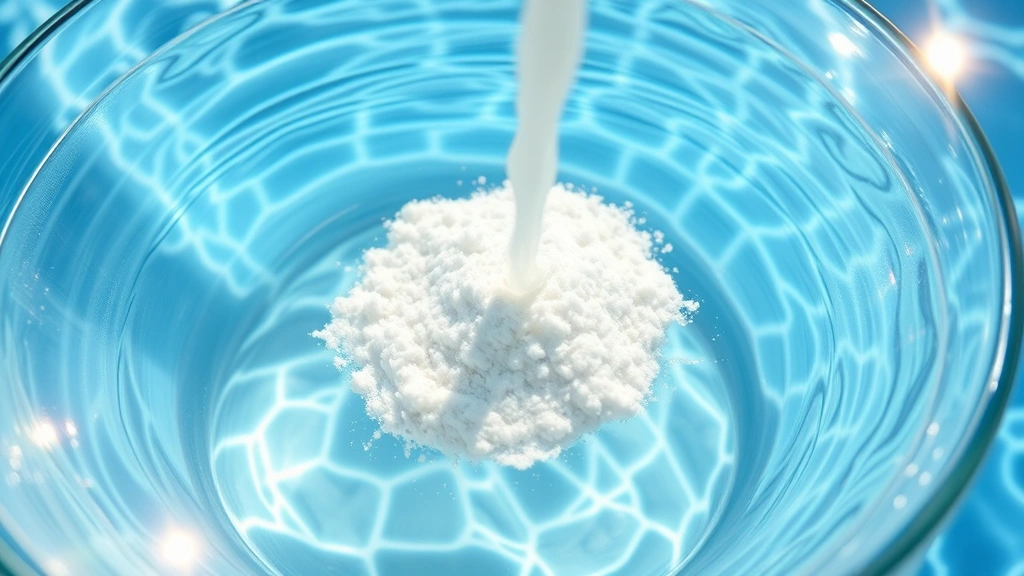
Baking soda, chemically known as sodium bicarbonate (NaHCO₃), is an alkaline compound that effectively raises pH without introducing harsh chemicals into your pool. Unlike pool-specific pH increasers that may cost significantly more, baking soda delivers the same active ingredient at a fraction of the price. The compound works by neutralizing the acids in your water, gradually shifting the pH upward toward the ideal range.
When baking soda dissolves in pool water, it creates a buffering system that helps stabilize pH levels against future fluctuations. This buffering action is particularly valuable because it prevents dramatic pH swings that can occur when you add chemicals without proper alkalinity. The relationship between pH and alkalinity is crucial—alkalinity acts as a pH buffer, so raising alkalinity with baking soda provides dual benefits.
The safety profile of baking soda makes it an excellent choice for residential pool owners. It’s non-toxic, widely available in grocery stores, and poses minimal risk if accidentally ingested in small quantities. This makes it safer to handle than many commercial pool chemicals, reducing liability concerns for families with children. Many professional pool technicians recommend baking soda as the first line of treatment for pH adjustment because of its gentle, predictable action.
Calculating the Right Amount of Baking Soda
The fundamental formula for calculating baking soda dosage depends on your pool volume and current pH level. For every 10,000 gallons of pool water, you need approximately 1.3 pounds of baking soda to raise pH by 0.2 units. However, this is a general guideline; precise calculations require knowing your pool’s exact volume and current pH reading.
Step 1: Determine Your Pool Volume
Calculate your pool volume using these formulas: For rectangular pools, multiply length × width × average depth × 7.5. For circular pools, multiply diameter × diameter × average depth × 5.9. For oval pools, multiply length × width × average depth × 6.7. All measurements should be in feet, and the result will be in gallons. If you’re unsure of exact dimensions, measure with a tape measure or consult your pool documentation.
Step 2: Test Current pH Level
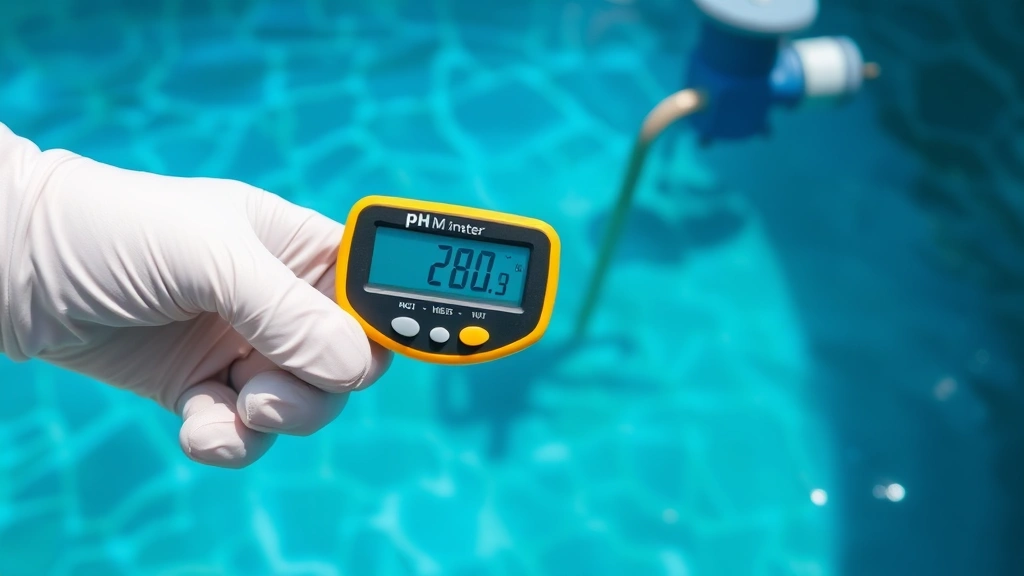
Use a reliable pool test kit or digital pH meter to establish your baseline. Strip tests are affordable but less accurate than liquid test kits or electronic meters. Test water from at least 18 inches below the surface, away from the pool walls, for the most representative sample. Record this reading as your starting point.
Step 3: Calculate Required Baking Soda
Use this calculation: (Desired pH – Current pH) × Pool Volume in gallons ÷ 10,000 × 1.3 pounds = Baking Soda Needed. For example, if you have a 20,000-gallon pool at pH 6.8 and want to reach pH 7.4, the calculation is: (7.4 – 6.8) × 20,000 ÷ 10,000 × 1.3 = 1.56 pounds of baking soda.
Most pool experts recommend raising pH gradually rather than attempting to reach target levels in a single application. Adding baking soda in multiple doses over several days allows the water chemistry to stabilize naturally and prevents overshooting your target pH. This approach also helps you observe how your specific pool water responds to treatment, valuable information for future adjustments.
Step-by-Step Application Process
Gathering Your Materials
Before beginning, assemble everything you’ll need: food-grade baking soda (verify the label states it’s safe for pools), your calculated amount measured in a clean bucket, a pool test kit, a soft-bristled brush, and a pool skimmer net. Wear gloves and eye protection, though baking soda is gentler than many pool chemicals. Choose a time to apply baking soda when you can monitor the pool for several hours afterward, ideally in the late afternoon or early evening.
Pre-Application Testing
Perform a complete water test before adding any baking soda. Test pH, alkalinity, and chlorine levels. This baseline data helps you evaluate whether pH adjustment alone will solve your problem or if you need to address alkalinity separately. Sometimes low pH indicates low alkalinity, which requires a different treatment approach. Understanding your water’s complete chemical profile prevents wasted effort and chemical imbalance.
Dissolving the Baking Soda
Pour your calculated amount of baking soda into a clean plastic bucket and add warm pool water, stirring thoroughly until the powder completely dissolves. This pre-dissolution step ensures even distribution and prevents pockets of undissolved powder that could create localized high pH areas. Stir for at least two minutes until the mixture becomes a clear or slightly cloudy solution.
Distributing Throughout the Pool
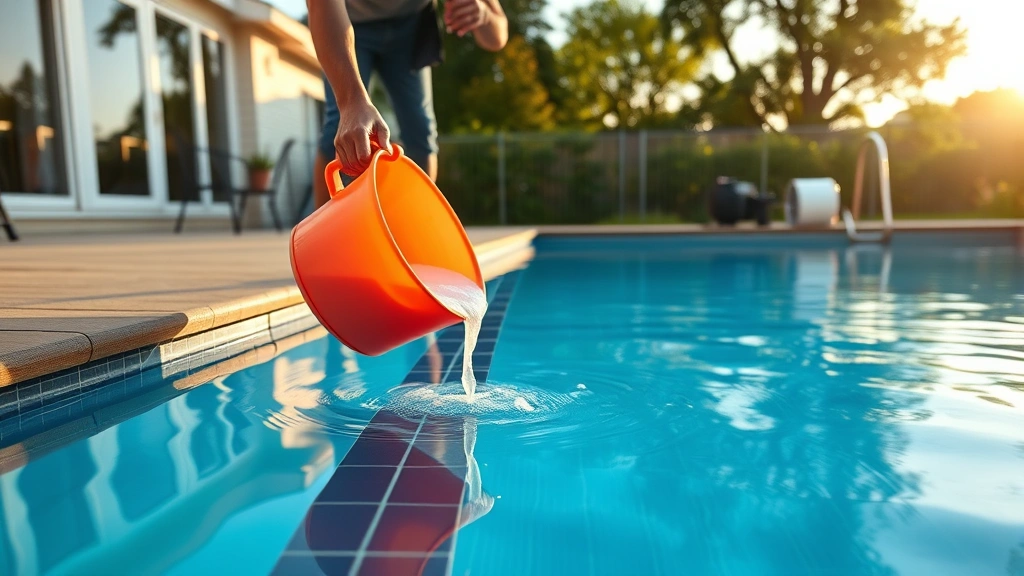
With the pool pump running on circulation mode, slowly pour the dissolved baking soda solution along the pool perimeter while walking around the deck. Don’t dump it all in one spot—distributed application ensures the chemical disperses evenly throughout the water. Pour the solution into the deep end if your pool has varying depths, as this promotes better circulation and mixing. Allow the pump to run for at least 4 hours after application before retesting.
Testing and Monitoring Results
Retest your pool water 4-6 hours after baking soda application to assess results. The pH should have risen, but likely not reached your target level yet. Record this new reading and compare it to your pre-treatment baseline. Most pools will show a pH increase of 0.1 to 0.3 units per application, depending on alkalinity levels and water volume.
If you haven’t reached your target pH after the first application, wait 24 hours and repeat the testing process. Many pool owners prefer adding baking soda in smaller doses spaced over 2-3 days rather than one large application. This conservative approach prevents overshooting your target pH, which requires adding acid to correct—an unnecessary complication. Patience with gradual adjustment leads to more stable, longer-lasting results.
Continue monitoring pH daily for the first week after treatment, then reduce testing to twice weekly once you’ve achieved stable levels. This monitoring reveals whether your pool’s pH naturally drifts after adjustment, helping you understand your specific water’s characteristics. Some pools maintain pH stability for weeks, while others drift within days depending on usage, weather, and surrounding vegetation.
Common Mistakes to Avoid
One frequent error is adding too much baking soda at once, overshooting the target pH and then needing to add muriatic acid to correct it. This creates unnecessary chemical cycling and instability. The philosophy of thoughtful DIY project management applies equally to pool chemistry—measured, documented steps produce better outcomes than rushed adjustments.
Another mistake is failing to test alkalinity alongside pH. Alkalinity and pH are intimately connected; you cannot maintain stable pH without adequate alkalinity. If your alkalinity is extremely low (below 80 ppm), raising pH becomes difficult because there’s insufficient buffering capacity. In this situation, add alkalinity increaser before attempting pH adjustment.
Neglecting to run the pump during and after baking soda application prevents proper chemical distribution. The circulation system must actively mix the baking soda throughout the entire pool volume. Running the pump only at night or for brief periods leaves portions of the pool untreated, resulting in inconsistent pH readings and ineffective treatment.
Many owners also fail to account for seasonal changes in pH. Pools typically experience pH drift during heavy use periods, after rain, or during seasonal transitions. Planning regular testing and maintenance throughout the year prevents emergency situations requiring large chemical doses.
Safety Considerations
While baking soda is considerably safer than commercial pool chemicals, proper handling prevents accidents. Store baking soda in a cool, dry location away from moisture and direct sunlight. Keep it separate from other pool chemicals, particularly acids and chlorine products, as accidental mixing can create hazardous reactions. Label your baking soda clearly and store it where children and pets cannot access it unsupervised.
When handling baking soda, wear safety glasses and gloves to protect against eye and skin contact. Although baking soda is mild, large quantities can irritate eyes. If baking soda contacts your eyes, rinse immediately with clean water for at least 15 minutes and seek medical attention if irritation persists. For skin contact, wash the affected area thoroughly with soap and water.
Never mix baking soda with pool acid or other chemicals in concentrated form. The chemical reactions can generate heat and potentially harmful fumes. Always add chemicals to water, never water to chemicals. This principle applies universally to pool chemistry and prevents dangerous reactions. If you’re unfamiliar with specific chemical compatibility, consult the CDC’s pool chemistry guidelines before proceeding.
Ensure adequate ventilation if treating an indoor pool with baking soda. While baking soda itself produces no dangerous fumes, it may interact with existing pool chemicals. Maintain air circulation and never seal the pool area during or immediately after treatment. Follow all local building codes regarding pool chemical storage and handling to ensure compliance with safety regulations.
FAQ
How often should I add baking soda to my pool?
The frequency depends on your pool’s pH stability. Most residential pools require pH adjustment every 2-4 weeks during regular use. Pools with heavy bather loads, significant rainfall, or low alkalinity may need adjustment weekly. Establish a testing routine to identify your pool’s specific needs rather than following a generic schedule.
Can I use regular baking soda from my kitchen?
Yes, food-grade baking soda from your kitchen is perfectly suitable for pools. Verify the package label confirms it’s food-grade or pool-safe. Avoid industrial-grade baking soda intended for cleaning, as it may contain additives unsuitable for swimming water. The chemical composition is identical; the difference lies in purity and processing.
What’s the difference between baking soda and pool alkalinity increaser?
Pool alkalinity increaser is typically sodium bicarbonate—the same chemical as baking soda—packaged and marketed for pools at premium prices. Purchasing baking soda from grocery stores delivers identical chemistry at substantially lower cost. Some commercial products include additional buffering compounds, but baking soda alone effectively raises both pH and alkalinity.
How long does it take for baking soda to work?
Baking soda begins raising pH within 1-2 hours of application but takes 4-6 hours to fully distribute and stabilize throughout the pool. Some sources recommend waiting 24 hours before retesting to allow complete circulation and chemical equilibration. Patience during this waiting period prevents premature adjustment decisions based on incomplete mixing.
Will baking soda affect my chlorine levels?
Baking soda doesn’t directly affect chlorine concentration, but raising pH can reduce chlorine’s sanitizing effectiveness. Higher pH water requires more chlorine to maintain equivalent disinfection. After raising pH with baking soda, monitor chlorine levels closely and adjust as needed to maintain the 1-3 ppm range recommended for residential pools.
Can I raise pH too much with baking soda?
Yes, excessive baking soda application can raise pH above the ideal 7.2-7.6 range, creating high pH water that causes scaling, cloudy water, and reduced chlorine effectiveness. If you overshoot your target pH, you’ll need to add pH decreaser (muriatic acid) to correct it. This is why gradual, measured applications are preferable to large single doses.


