
Can You Code BlockBlast? Expert Tips Inside
BlockBlast has captivated millions of players worldwide, but behind the addictive gameplay lies a surprisingly complex coding architecture. Whether you’re a seasoned developer curious about game mechanics or an aspiring programmer wondering if you can replicate this puzzle phenomenon, understanding the technical requirements is essential. The answer isn’t simply yes or no—it depends entirely on your skill level, available time, and the scope of your project.
Creating a BlockBlast clone or original puzzle game requires proficiency in game development frameworks, understanding of physics engines, and solid grasp of user interface design. This comprehensive guide breaks down exactly what you need to know, from fundamental coding concepts to advanced optimization techniques that make modern mobile games run smoothly on millions of devices.
Understanding BlockBlast Game Architecture
BlockBlast operates on a deceptively simple premise: players arrange falling blocks on a grid to complete horizontal and vertical lines. However, the underlying architecture involves multiple interconnected systems working in perfect harmony. The core game loop processes player input, updates game state, renders graphics, and handles collision detection hundreds of times per second.
The game’s architecture typically consists of several essential components. The game board system manages the grid structure, tracking which cells are occupied and which are empty. The piece system handles block creation, rotation, and movement mechanics. The scoring system calculates points based on completed lines and combo multipliers. The physics engine determines how blocks fall and interact with obstacles. Finally, the UI layer manages menus, buttons, score displays, and player feedback.
Understanding this architecture before writing a single line of code is crucial. Many aspiring developers jump directly into coding without planning these systems, resulting in spaghetti code that becomes unmaintainable as complexity increases. Proper architecture separates concerns, making each system independently testable and upgradeable.
Programming Languages and Frameworks
Your choice of programming language dramatically impacts development speed and final product quality. For mobile puzzle games like BlockBlast, several frameworks dominate the industry landscape. Unity remains the most popular choice, supporting C# programming and providing extensive documentation for puzzle game development. Unreal Engine offers powerful graphics capabilities but comes with a steeper learning curve. Godot provides an open-source alternative with surprising flexibility and a growing community.
For web-based implementations, JavaScript frameworks like Phaser or Babylon.js enable browser-based gameplay. Python with Pygame works well for prototyping and educational purposes, though it lacks the performance optimization needed for production mobile games. If you’re pursuing serious mobile development, Swift for iOS and Kotlin for Android enable native performance but require platform-specific development.
Most professional studios choose Unity because it allows single codebase deployment across iOS, Android, PC, and web platforms. This cross-platform capability significantly reduces development time and cost. However, if you’re learning to code, starting with web technologies or Python provides immediate visual feedback without complex setup requirements.
When selecting your tech stack, consider your existing knowledge. If you already understand C# programming fundamentals, Unity becomes immediately productive. If you prefer web development, JavaScript frameworks provide faster iteration cycles. The best framework is ultimately the one matching your skill level and project requirements.
Core Coding Challenges
Creating a functional BlockBlast game presents several significant technical challenges that separate amateur attempts from polished products. The first challenge involves collision detection and grid alignment. Blocks must snap perfectly to grid cells, and the system must accurately detect when lines are completed. Floating-point precision errors can cause blocks to misalign, frustrating players.
The second major challenge is piece rotation mechanics. Rotating blocks sounds simple but becomes complex when considering wall-kicks (allowing rotations near boundaries), collision checking during rotation, and preventing pieces from rotating into occupied spaces. Professional implementations use rotation matrices and sophisticated collision checking algorithms.
The third challenge involves combo detection and cascade mechanics. When a line completes, blocks above must fall to fill the gap. Detecting multiple simultaneous line completions and calculating correct scoring requires careful state management. Chain reactions can occur when falling blocks complete additional lines, requiring recursive detection logic.
Performance optimization represents another critical challenge. Puzzle games must maintain consistent frame rates even with complex animations and particle effects. Memory management becomes crucial on mobile devices with limited RAM. Inefficient code that allocates excessive memory will cause frame rate drops and battery drain.
The fourth challenge involves random piece generation with player fairness considerations. Pure randomness sometimes generates unfair sequences of pieces. Professional implementations use algorithms ensuring balanced piece distributions over time, improving player experience without feeling artificial.
Finally, responsive touch input handling requires careful implementation. Mobile players expect immediate visual feedback when touching the screen. Lag between touch and response feels unresponsive and damages gameplay perception. This requires efficient input processing and predictive rendering.
Building the Game Engine
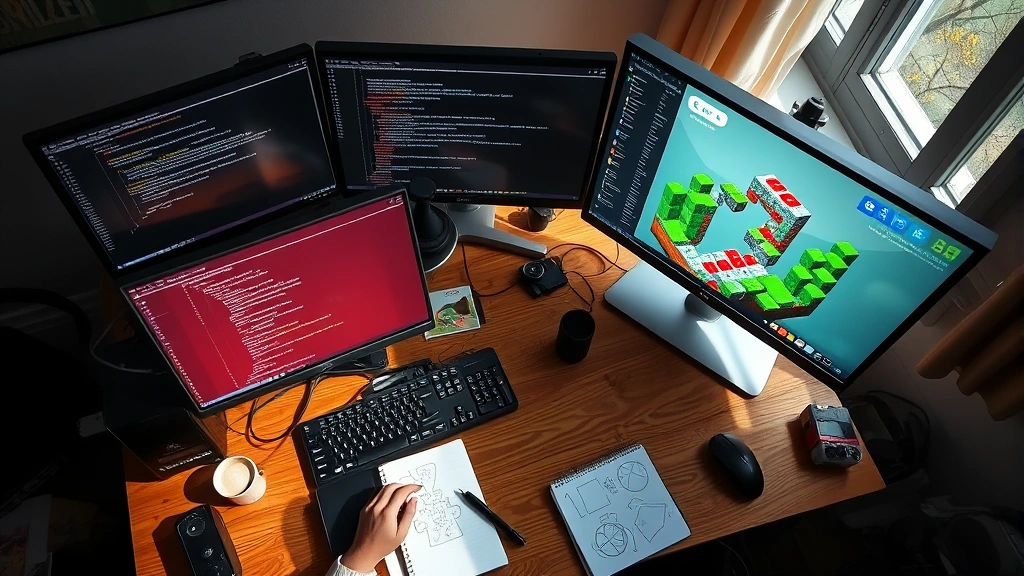
Constructing your game engine begins with establishing the core game loop. This loop runs continuously, typically 60 times per second on modern devices. Each iteration follows a predictable sequence: process input, update game state, render graphics, and handle collisions. Separating these concerns prevents timing issues and makes debugging significantly easier.
The grid system forms the foundation of BlockBlast gameplay. Representing the grid efficiently impacts performance significantly. A simple 2D array works for small grids, but larger grids benefit from more sophisticated data structures. Some implementations use bitfields to represent occupied cells, dramatically reducing memory consumption and improving cache efficiency.
Block piece management requires careful consideration. Each piece needs properties including current position, rotation state, type identifier, and collision data. Implementing pieces as objects with clear interfaces makes rotation and collision detection straightforward. Many implementations precompute rotation states for all piece types, eliminating expensive calculations during gameplay.
Physics implementation in BlockBlast is relatively simple compared to other genres. Blocks fall at constant speed until hitting obstacles, then stop. However, smooth animation requires interpolating between discrete grid positions. This visual smoothing improves perceived quality without increasing computational complexity.
The scoring system should track multiple metrics: lines completed, blocks cleared, combo multipliers, and consecutive actions. Implementing scoring as a separate system prevents entanglement with core gameplay logic. This separation enables easy adjustments to scoring values without affecting game mechanics.
Sound and music systems require asynchronous handling to prevent audio playback from blocking game logic. Most frameworks handle this automatically, but understanding the underlying concepts helps troubleshoot audio issues. Implementing sound pools (reusing sound effect instances) improves memory efficiency.
Save system implementation should use persistent storage appropriate to your platform. Mobile games typically use device storage APIs, web games use localStorage or backend databases. Implementing saves as a separate system enables feature-complete games without risking data loss when code changes occur.
UI and User Experience Implementation
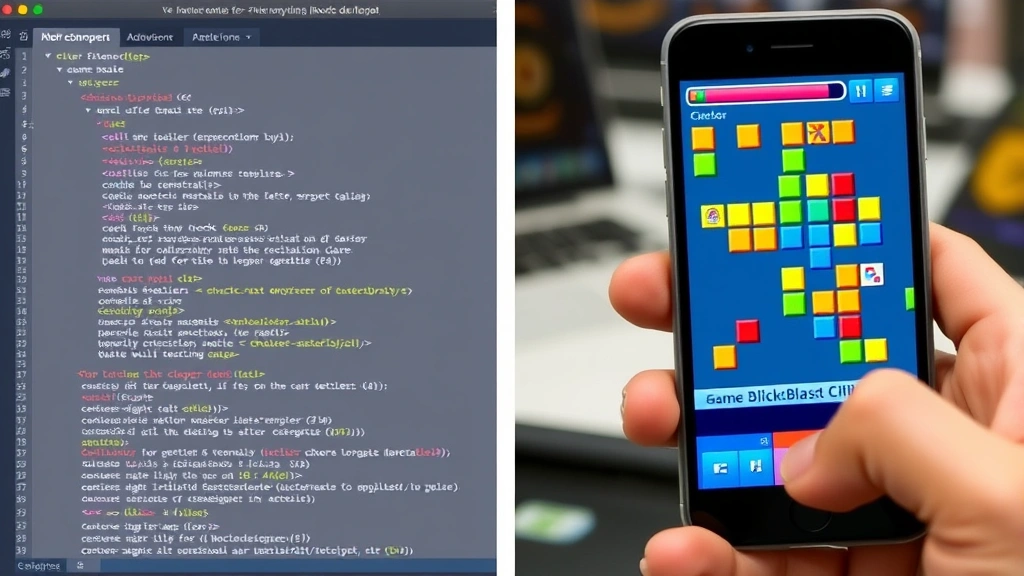
User interface implementation significantly impacts how players perceive game quality. Responsive buttons, smooth animations, and clear feedback create professional-feeling experiences. Implementing UI in a separate system from core gameplay simplifies maintenance and testing.
Menu systems typically follow a state machine pattern: main menu, game running, paused, game over, settings. Each state handles different input and displays appropriate UI elements. This pattern prevents complexity spiraling as your game grows beyond initial scope.
Visual feedback mechanisms are crucial for player engagement. Completing lines should trigger satisfying animations: blocks disappearing with effects, scores floating upward, particle systems celebrating achievements. These effects require minimal computational overhead but dramatically improve perceived quality.
Touch input handling needs careful implementation to feel responsive. Detecting swipes, taps, and long-presses requires tracking finger position changes and timing. Implementing gesture recognition systems enables intuitive controls matching player expectations from other mobile games.
Text rendering and font management affect both aesthetics and performance. Prerendering common text (scores, menu items) as textures improves performance compared to rendering text dynamically each frame. However, dynamic text (real-time score updates) requires runtime rendering.
Implementing accessibility features like colorblind modes and adjustable text sizes demonstrates professional development practices. These features require minimal additional coding but significantly expand your potential audience.
Performance Optimization Techniques
Optimization should follow profiling, not intuition. Premature optimization wastes time on non-bottlenecks. Use your framework’s built-in profilers to identify actual performance problems before implementing optimizations.
Graphics optimization techniques include object pooling (reusing instances instead of creating new ones), batch rendering (combining multiple draw calls into single operations), and reducing draw call counts. Disabling rendering for off-screen elements prevents wasted GPU work.
Memory optimization involves monitoring heap allocations and garbage collection. Languages like C# generate garbage that requires collection, causing frame rate hitches. Allocating commonly-used objects once and reusing them prevents excessive garbage generation.
Physics optimization typically involves spatial partitioning structures like quadtrees. Instead of checking every object against every other object, these structures efficiently identify nearby objects requiring collision checking. For BlockBlast’s relatively small game boards, this optimization provides diminishing returns, but it’s valuable knowledge for scaling to larger games.
CPU optimization includes algorithmic improvements: sorting data efficiently, using appropriate data structures, and avoiding unnecessary calculations. Code profiling reveals expensive operations suitable for optimization.
Network optimization becomes relevant if implementing multiplayer features. Sending unnecessary data wastes bandwidth and increases latency. Compression and delta encoding (sending only changed values) reduce network overhead.
Testing and Deployment
Comprehensive testing prevents embarrassing bugs reaching players. Unit testing individual systems (grid system, scoring, collision detection) catches logic errors early. Integration testing verifies systems work correctly together. Playtesting with external testers reveals unintuitive mechanics or balance issues.
Automated testing frameworks enable running hundreds of test cases automatically, catching regressions when code changes occur. For puzzle games, this includes testing all piece types, rotations, and board states.
Beta testing with real players provides invaluable feedback before public release. Beta testers discover unexpected edge cases and balance issues that internal testing misses. Gathering feedback systematically enables prioritizing improvements.
Deployment processes vary by platform. Mobile app store submission requires following each store’s guidelines, submitting builds through their developer interfaces, and waiting for review. Web deployment is simpler: update your server and users immediately see changes.
Monitoring post-launch is crucial. Analytics reveal which features players use, where they abandon the game, and what devices experience performance issues. This data guides prioritizing post-launch improvements.
Version control throughout development prevents code disasters. Using Git or similar systems enables reverting problematic changes and collaborating with other developers. Committing frequently with clear messages creates navigable project history.
FAQ
How long does it take to code BlockBlast from scratch?
Timeline varies dramatically based on experience. Experienced game developers might complete a functional clone in 2-4 weeks. Intermediate developers typically need 2-3 months. Beginners should expect 6+ months, especially if learning programming simultaneously. This assumes working part-time; full-time development compresses timelines significantly.
Do I need advanced math skills to code puzzle games?
Basic math suffices for most puzzle game features. Understanding grid coordinates, simple geometry for collision detection, and basic algebra for physics calculations covers most requirements. Advanced mathematics becomes relevant only for specialized features like advanced physics or procedural generation.
What’s the minimum coding experience required?
You should understand basic programming concepts: variables, loops, conditionals, functions, and object-oriented programming. You don’t need enterprise-level architecture experience, but understanding separation of concerns helps tremendously. If you’re completely new to programming, consider learning programming fundamentals before attempting game development.
Can I code BlockBlast without using a game engine?
Technically yes, but practically no. Building game engines from scratch requires substantial graphics programming knowledge (shaders, rendering pipelines, texture management). Modern game engines provide these systems, letting you focus on game logic. Only attempt engine-from-scratch if you specifically want graphics programming experience.
Which platform should I target first?
Web (HTML5/JavaScript) offers fastest iteration and broadest accessibility. Mobile (iOS/Android) reaches more players but requires learning platform-specific deployment. PC provides powerful hardware but smaller audience. Most developers start with web, then port to mobile using frameworks like Unity or React Native.
How do I monetize a BlockBlast game?
Common monetization methods include ads (non-intrusive banner ads or rewarded video ads), in-app purchases (cosmetics, power-ups, premium currency), and subscription passes (ad-free experience, exclusive content). Balancing monetization without damaging player experience requires careful design.
Should I use free or paid game engines?
Unity, Godot, and Unreal Engine are free to use; you pay only if your game generates substantial revenue. Paid engines like GameMaker provide different workflows. For BlockBlast, free engines like Unity and Godot offer everything needed without licensing costs. Choose based on which workflow matches your thinking style.


