
Build a Deck? Pro Tips from Expert Builders
Deck construction stands as one of the most rewarding DIY projects homeowners can undertake, transforming outdoor spaces into functional entertainment areas. Whether you’re planning a modest ground-level platform or an elevated structure with multiple levels, understanding fundamental building principles ensures safety, durability, and aesthetic appeal. Expert builders consistently emphasize that proper planning, material selection, and adherence to local building codes form the foundation of successful deck projects.
This comprehensive guide draws insights from professional deck builders, structural engineers, and construction specialists to provide you with actionable advice. From initial design considerations through final finishing touches, you’ll discover proven techniques that separate amateur attempts from professional-quality results. Whether you’re a seasoned DIY enthusiast or tackling your first major outdoor project, these expert tips will help you navigate common challenges and achieve outstanding outcomes.

Understanding Local Building Codes and Permits
Before breaking ground on your deck project, consulting local building codes and obtaining necessary permits represents non-negotiable first steps. Building departments enforce codes that protect homeowners, neighbors, and future property owners from structural failures and safety hazards. Many DIYers skip this step, risking fines, failed inspections, and potential liability issues.
Your local International Code Council (ICC) maintains standardized building codes that most municipalities adopt and modify. These codes specify requirements for deck height, railing specifications, footing depths, joist spacing, and load-bearing capacities. Contacting your municipal building department provides essential information about your specific jurisdiction’s requirements, permit fees, and inspection schedules.
Building permits serve multiple purposes: they ensure your deck meets safety standards, create an official record for property records and insurance purposes, and protect you legally. When selling your home, undocumented deck construction can create title issues and complicate transactions. Professional builders always recommend budgeting time and money for proper permitting processes rather than attempting to avoid them.
Site Preparation and Foundation Design
Expert deck builders emphasize that improper foundation work represents the leading cause of deck failure and deterioration. Frost heave, settling, and moisture damage compromise structural integrity when footings aren’t installed correctly. Your deck’s foundation must extend below your local frost line—the depth where soil doesn’t freeze seasonally—typically ranging from 12 inches in warm climates to 48 inches in northern regions.
Begin site preparation by clearing vegetation, rocks, and debris from the deck area. Mark footing locations using string lines and batterboards, ensuring accurate spacing according to your plans. Most residential decks require footings every 4 to 6 feet along beams, though heavier loads or longer spans may require closer spacing. Dig holes to frost-line depth, adding 6 to 12 inches of gravel for drainage.
Concrete footings should extend above grade to prevent wood-to-soil contact, which promotes rot and insect damage. Frost-protected shallow foundations (FPSF) offer alternatives in certain climates, but most standard applications use concrete piers or posts set 12 inches above grade. Some builders use adjustable post bases that allow for future leveling, accommodating inevitable settling that occurs over time.
Proper grading around your deck prevents water accumulation beneath the structure. Slope the ground away from the deck at least 2 percent grade (approximately 1/4 inch per foot) to direct water away from footings and the underside of the deck. This seemingly minor detail significantly extends deck lifespan by preventing moisture-related deterioration.
Choosing the Right Materials
Material selection dramatically impacts your deck’s longevity, maintenance requirements, and aesthetic qualities. Professional builders weigh factors including climate exposure, budget constraints, aesthetic preferences, and maintenance tolerance when recommending materials. Understanding material characteristics helps you make informed decisions aligned with your specific circumstances.
Pressure-Treated Lumber: The most economical option, pressure-treated wood resists rot and insect damage through chemical preservation. Modern treatments use copper-based preservatives rather than older arsenic formulations, making them safer for residential use. Pressure-treated lumber requires regular maintenance, including periodic staining and sealing, to maintain appearance and extend lifespan. It remains the most popular choice for budget-conscious builders and structural components like joists and beams.
Composite Materials: Engineered from wood fibers and plastic polymers, composite decking offers superior durability and minimal maintenance compared to solid wood. These materials resist fading, staining, and mold growth while eliminating the need for annual sealing. Premium composites cost two to three times more than pressure-treated lumber but provide long-term value through reduced maintenance. Many homeowners consider the convenience worth the initial investment.
Tropical Hardwoods: Species like Ipe and Cumaru offer exceptional durability and natural rot resistance without chemical treatment. These dense materials resist insects, decay, and weathering remarkably well, often lasting 25+ years with minimal maintenance. However, tropical hardwoods cost significantly more than other options and require specialized cutting tools due to their hardness. Environmental concerns about rainforest harvesting also motivate some builders toward sustainable alternatives.
For structural components like beams and joists, pressure-treated lumber remains standard practice. Many building codes require structural members to use pressure-treated material rated for ground contact. Decking surface material can be selected based on aesthetic preferences and maintenance tolerance, but structural integrity demands appropriate material specifications.
Framing and Structural Integrity
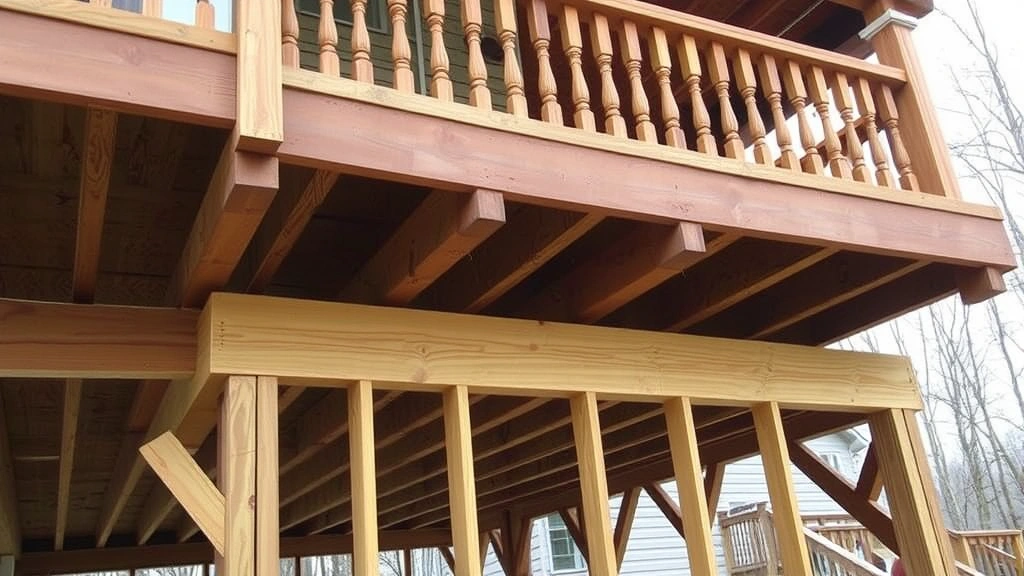
Proper framing creates the structural skeleton supporting your deck’s weight and ensuring safe operation under load. Expert builders follow specific spacing and sizing guidelines that correlate to local building codes and load requirements. Understanding these fundamentals helps you recognize quality work and avoid common mistakes that compromise safety.
Beam sizing depends on span length, post spacing, and expected load. Most residential decks accommodate 40 pounds per square foot live load (people and furniture) plus 10 pounds per square foot dead load (deck materials). Consulting load tables from reputable sources ensures your beams and joists meet these requirements. Undersized members deflect excessively, creating springy, unsafe decks that feel unstable underfoot.
Joist spacing typically ranges from 12 to 24 inches on-center, depending on joist size and decking material. Closer spacing (12 inches) provides stiffer decks with less deflection, particularly important for composite or softer wood species. Proper joist connection to beams requires galvanized or stainless steel hangers rated for the load, not simply nailed connections that can fail under stress.
Ledger board attachment represents a critical connection point where many deck failures occur. The ledger must connect to your house’s rim joist using flashing and bolts spaced 16 inches apart. Improper ledger installation allows water intrusion, causing rot in your home’s framing and structural failure of the deck connection. Building science research emphasizes that flashing must direct water away from the house, with the top edge of flashing tucked under siding.
Bracing and blocking provide lateral support, preventing racking (parallelogram distortion) under wind or seismic loads. Cross-bracing between posts or diagonal blocking between joists resists these forces. While not always visible, this internal bracing proves essential in areas with significant wind exposure or seismic activity.
Decking Installation Techniques
Proper decking installation ensures safe, attractive surfaces that resist movement and deterioration. Expert builders follow specific spacing and fastening protocols that accommodate wood movement while maintaining safety and appearance.
Spacing between deck boards allows for expansion and contraction as wood absorbs and releases moisture. Professional builders typically maintain 1/8 inch gaps between boards using spacers, though composite materials may require different spacing per manufacturer specifications. Insufficient spacing causes cupping, buckling, and fastener popping as wood swells. Excessive spacing creates trip hazards and allows debris accumulation.
Fastener selection significantly impacts longevity and appearance. Galvanized, stainless steel, or coated fasteners resist corrosion far better than standard steel fasteners, which rust and bleed stains onto wood surfaces. Deck screws provide superior holding power compared to nails, which gradually work loose under foot traffic and freeze-thaw cycles. Professional builders prefer screws for nearly all deck applications, reserving nails for temporary bracing only.
Fastener spacing should follow manufacturer recommendations, typically 12 inches along beams and 16 inches along intermediate supports. Countersinking screws slightly below the surface prevents tripping hazards and allows for wood filler in visible areas. However, fasteners shouldn’t be driven so deep that wood fibers compress excessively, reducing holding power.
Staggering fastener placement along board edges prevents splitting. Driving fasteners too close to edges or ends can cause wood to split, particularly with denser species or thinner materials. Maintaining at least 1.5 inches from board ends and 1 inch from edges minimizes splitting risk. For wider boards, some builders use two fasteners per joist to prevent cupping and movement.
Safety Railings and Code Compliance
Deck railings serve critical safety functions, preventing falls that cause serious injuries and deaths. Building codes establish specific requirements for railing height, spacing, and load capacity that vary by jurisdiction and deck height. Understanding these requirements ensures your deck meets safety standards and passes inspection.
Standard railing height measures 36 to 42 inches from deck surface to top rail, though some jurisdictions specify exactly 42 inches. This height prevents most adults from accidentally falling while remaining low enough to avoid obstruction of views and aesthetics. Railings must withstand 200 pounds of force applied horizontally without deflecting more than 1 inch, ensuring they prevent falls under realistic impact scenarios.
Baluster spacing—the vertical elements comprising railing panels—must not exceed 4 inches on-center. This restriction prevents a 4-inch sphere from passing through, preventing children from squeezing through and falling. Many builders use the “4-inch rule” as a practical guide, though specific codes may vary. Horizontal cables or pickets should be spaced to meet this requirement throughout the railing height.
Stair railings require different specifications than deck railings. Stair railings must extend from the top step landing to the bottom step, with handrails on at least one side (preferably both). Handrail diameter should accommodate gripping, typically 1.25 to 2 inches, and must withstand 200 pounds of force. Stair tread depth, riser height, and nosing projection all follow strict code requirements ensuring safe stair negotiation.
Open stairs—stairs without solid risers—require special attention to prevent objects from falling through. Codes typically require that a 6-inch sphere cannot pass through the opening, restricting stair tread nosing and riser spacing. Some jurisdictions prohibit open stairs on elevated decks, requiring enclosed risers instead.
Finishing and Maintenance
Finishing protects your deck from weathering while enhancing appearance. Expert builders recognize that proper finishing extends deck lifespan significantly, particularly for solid wood materials. Understanding finish options and maintenance requirements helps you select products matching your expectations and commitment level.
Clear Sealers: These transparent finishes protect wood from moisture and UV damage while preserving natural wood grain appearance. Sealers require reapplication every 1 to 3 years depending on climate exposure and product quality. Premium sealers with UV inhibitors provide longer protection intervals, reducing maintenance frequency. However, sealers don’t provide color protection, allowing wood to gray over time.
Semi-Transparent Stains: Combining pigment with sealer, semi-transparent stains provide color while allowing wood grain visibility. These finishes typically last 2 to 4 years before requiring recoating. The pigment provides UV protection, slowing wood graying and weathering. Many homeowners prefer semi-transparent stains for their aesthetic appeal and moderate maintenance requirements.
Solid Stains: Opaque finishes that completely hide wood grain, solid stains provide maximum UV protection and color retention. These finishes last longer than semi-transparent options, often 4 to 6 years between applications. However, solid stains create a painted appearance that some find less attractive than natural wood aesthetics.
Regardless of finish type, proper surface preparation ensures excellent results. Cleaning removes dirt, mold, and weathered wood fibers, providing a clean surface for finish adhesion. Pressure washing should use moderate pressure (1500-2000 PSI) to avoid damaging wood fibers. Many professionals recommend waiting 48 to 72 hours after cleaning before applying finish, allowing wood to dry adequately.
Annual maintenance extends deck lifespan and maintains appearance. Sweeping removes debris, reducing mold and mildew growth. Periodic cleaning prevents staining and discoloration. Inspecting for loose fasteners, rotted wood, and damaged railings identifies problems before they become serious. Addressing minor issues promptly prevents expensive repairs later.
For woodworking projects and structural components, understanding material science helps you make informed maintenance decisions. Water intrusion represents the primary enemy of wood longevity, so maintaining finishes and addressing water damage immediately protects your investment.
FAQ
How deep should deck footings be?
Deck footings must extend below your local frost line, which varies geographically. Contact your building department for specific requirements in your area. Footings typically range from 12 inches in warm climates to 48 inches in northern regions. Posts should extend at least 12 inches above grade to prevent wood-to-soil contact.
Can I attach a deck to my house without a ledger board?
While freestanding decks avoid ledger board complications, attaching to your house provides superior structural performance and aesthetics. If you attach a ledger, proper flashing and bolting are essential to prevent water damage and structural failure. Many deck collapses result from improper ledger installation, so this connection demands careful attention.
What’s the best decking material for my climate?
Material selection depends on your climate, maintenance tolerance, and budget. Pressure-treated lumber works well in most climates but requires regular maintenance. Composite materials offer superior durability and minimal maintenance, justifying higher initial costs for many homeowners. Tropical hardwoods provide exceptional longevity but cost significantly more. Consult local builders about materials performing well in your specific climate.
How often should I seal my deck?
Sealing frequency depends on climate exposure, product quality, and finish type. Clear sealers typically require reapplication every 1 to 3 years. Semi-transparent stains last 2 to 4 years. Solid stains provide 4 to 6 years protection. Professional assessment of your deck’s condition helps determine when resealing is necessary rather than following rigid schedules.
What size posts do I need for my deck?
Post sizing depends on load, height, and lateral support. Most residential decks use 4×4 posts, though taller decks or heavier loads may require 6×6 posts. Consulting local building codes and load tables ensures proper sizing. Your building department can provide specific requirements for your jurisdiction and deck design.
Do I need a permit for my deck project?
Almost all jurisdictions require building permits for deck construction. Permits ensure compliance with safety codes and create official records for property documentation. Skipping permits risks fines, failed inspections, and complications when selling your home. Contact your local building department before starting construction to understand permit requirements and fees.
How can I prevent deck rot and insect damage?
Preventing moisture contact with soil protects against rot and insect damage. Use pressure-treated lumber for structural components and below-grade materials. Maintain proper grading directing water away from the deck. Install flashing at ledger boards and other water-vulnerable connections. Apply appropriate finishes and maintain them regularly. Inspect periodically for signs of damage, addressing problems immediately.
Understanding these expert tips from professional builders equips you to tackle deck construction confidently. Whether you’re building your first deck or your tenth, proper planning, material selection, and execution ensure safe, durable results. When challenges arise, consulting local building professionals and code officials provides guidance ensuring your project meets all requirements. For additional home improvement resources, explore our comprehensive guides covering various DIY projects. Remember that investing time in proper planning and execution prevents costly mistakes and ensures your deck provides years of enjoyment.


