
How to Build a Deck: Expert-Approved Guide
Building a deck transforms your outdoor space into a functional entertainment area while adding significant value to your home. Whether you’re a seasoned DIYer or tackling your first major project, this comprehensive guide walks you through every step of deck construction—from initial planning and material selection to finishing touches and safety considerations.
A well-built deck requires careful attention to local building codes, proper structural support, and quality materials. This guide incorporates industry best practices and expert recommendations to help you construct a deck that’s both beautiful and built to last. Before breaking ground, you’ll need to understand your local requirements, assess your site conditions, and gather the right tools and materials.
Planning and Permits
Before you purchase a single board, invest time in proper planning. Check your local International Building Code (IBC) requirements, which govern deck construction standards across most of North America. Your municipality may have specific setback requirements, height restrictions, and snow load calculations based on your geographic location.
Most jurisdictions require deck permits for structures elevated more than 24-30 inches above grade. Contact your local building department to understand what documentation they require—typically including a site plan, deck design drawings, and material specifications. This step protects you legally and ensures your deck meets safety standards. Budget 2-4 weeks for permit approval in most areas.
When designing your deck, consider how it relates to your home’s architecture and your lifestyle needs. Measure your available space carefully and sketch multiple layout options. Think about sun exposure, views, traffic flow, and how you’ll use the space. A well-planned 12×16 foot deck serves most family entertainment needs, though your requirements may differ.
Consult the American Wood Council for load requirements and span tables specific to your lumber grade and species. If you’re building larger than 200 square feet or at significant height, consider hiring a structural engineer to review your plans—this investment prevents costly mistakes.
Site Preparation and Layout
Proper site preparation ensures your deck remains level and stable for decades. Start by clearing the area of vegetation, debris, and obstacles. Mark the exact footprint using string lines and batter boards, which are temporary structures that help establish precise corners and lines. Use the 3-4-5 triangle method to verify that corners are square: measure 3 feet along one line, 4 feet along the adjacent line, and the diagonal should measure exactly 5 feet.
Next, identify where your posts will sit. Post holes must extend below the frost line—typically 36-48 inches in northern climates, but check your local requirements. In areas without frost concerns, holes should still be 12-18 inches deep. Mark each post location with spray paint or flour, then use a power auger or hand auger to dig holes.
For post footings, you have several options: concrete piers with post bases, adjustable concrete piers, or traditional concrete-filled holes. Many experts recommend National Frame Builders Association standards for frost-protected footings. Use concrete that’s rated for your climate zone and fill holes to grade level, sloping slightly for drainage. Allow concrete to cure for 48 hours before proceeding.
If you’re planning a larger structure, review our guide on DIY basement finishing for insights on working with structural foundations and proper site preparation techniques that apply to outdoor projects.
Foundation and Posts
Posts are the backbone of your deck, transferring all weight to the ground. Use pressure-treated lumber rated for ground contact—typically 4×4 or 6×6 posts depending on your deck size and load requirements. Posts must be set into concrete footings using approved post bases or brackets that prevent wood-to-soil contact, which causes rot.
Install post bases before placing posts. These metal connectors sit in the concrete and hold the post elevated, allowing air circulation underneath. Secure the post base with fasteners specified by the manufacturer—typically galvanized or stainless steel bolts. Never skip this step, as direct wood-to-concrete contact wicks moisture and leads to premature failure.
Set each post carefully, checking that it’s perfectly plumb using a 4-foot level. Have a helper hold the post while you verify plumb in two directions. Once satisfied, temporarily brace the post with 2×4 lumber nailed at an angle, then permanently secure it to the base. Posts should extend above your rim joist by 6-8 inches if you’re installing a railing—this provides mounting surface and structural continuity.
For elevated decks, calculate post spacing based on joist span tables and your lumber grade. Most residential decks use 4-foot post spacing, but this varies with load and material. Never exceed the spacing recommended for your specific lumber species and grade.
Framing the Deck
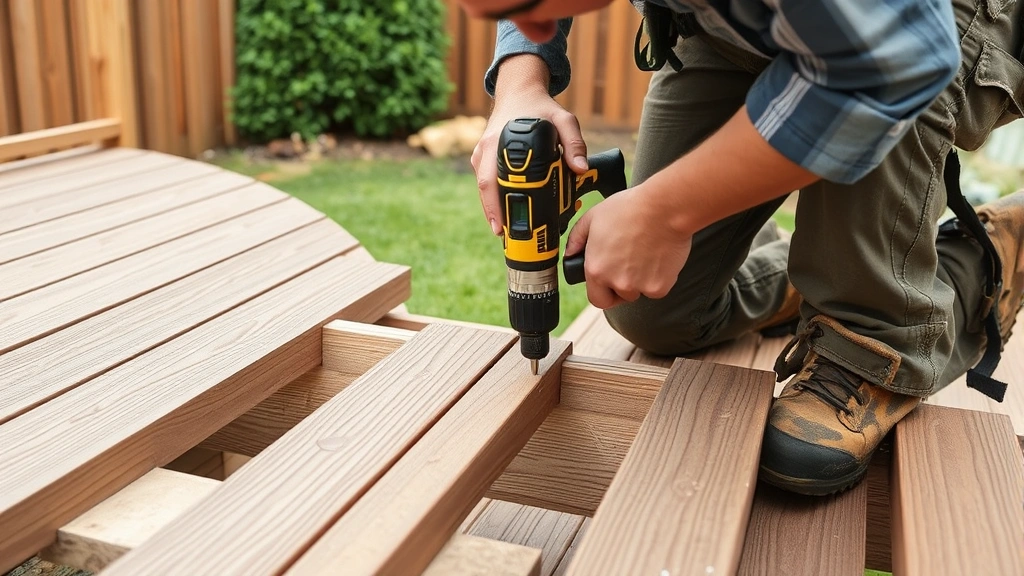
The frame consists of rim joists (outer perimeter), band joists (connecting to the house), and internal joists that support decking boards. Use pressure-treated lumber rated for ground contact for all framing members, as these elements contact moisture and require superior rot resistance.
Begin by attaching the ledger board to your house, which is critical for safety and structural integrity. The ledger must be secured to the house’s rim joist or band board with flashing and bolts rated for exterior use. Install flashing first—a metal or rubber barrier that directs water away from your house—then attach the ledger with bolts spaced 16 inches apart. This connection prevents water infiltration and ensures the deck doesn’t separate from your home.
Install joists perpendicular to the ledger, spacing them 12, 16, or 24 inches apart depending on your decking material and joist size. Use joist hangers—metal brackets that support joists at the ledger and rim joist—ensuring proper fastening with the manufacturer’s specified fasteners. Never toe-nail joists, as this connection fails under load.
Span tables vary by lumber species and grade, so consult resources like the AWC Design Values before finalizing joist spacing and sizing. Common residential decks use 2×8 or 2×10 joists spaced 16 inches apart, but your specific application may differ.
Install blocking between joists at mid-span for joists longer than 12 feet, which prevents lateral movement and improves performance. Blocking also provides attachment points for stair stringers and additional support for high-traffic areas.
Installing Decking Boards
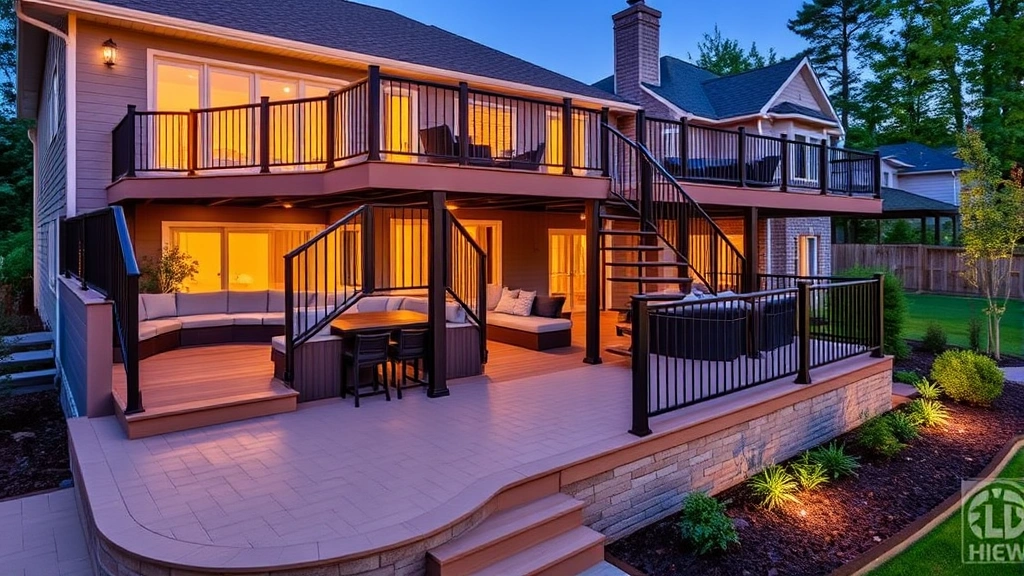
Decking boards are the surface you’ll walk on, so material selection significantly impacts durability and maintenance. Options include pressure-treated lumber, cedar, composite materials, and tropical hardwoods. Each offers different aesthetics, maintenance requirements, and longevity. Pressure-treated lumber is affordable and durable; composite materials require less maintenance but cost more; hardwoods offer beauty but demand regular sealing.
Begin installation at the house, running decking perpendicular to joists. Leave a 1/8-inch gap between boards for expansion and contraction—use a penny or nail as a spacer. Fasten each board with two corrosion-resistant fasteners (typically stainless steel screws or hot-dipped galvanized nails) at each joist. Screws hold better than nails and resist pulling out over time.
Pre-drill holes for screws to prevent splitting, especially near board ends. Stagger end joints so they don’t align over the same joist, which weakens the structure. Some builders install decking perpendicular to the house for visual interest, while others run it parallel—choose based on your aesthetic preference and structural requirements.
As you progress, check that boards remain straight and parallel. Sight along each board before fastening to catch any bowing early. If a board is severely warped, replace it rather than forcing it into place, which stresses fasteners and joists.
For stairs, calculate rise and run based on your deck height and desired stair proportions. Treads should be 10-11 inches deep, and risers 7-8 inches tall. Build stair stringers (the angled support members) from pressure-treated 2×12 lumber, cutting notches for treads. Secure stringers to the deck frame with bolts, never nails, and ensure proper handrail installation per code.
Railings and Safety
Deck railings serve critical safety functions and are mandatory in most jurisdictions for decks elevated more than 24-30 inches. Building codes require railings to be 36-42 inches high and capable of withstanding 200 pounds of horizontal force without failure. This means railings aren’t merely aesthetic—they’re structural elements that prevent falls.
Balusters (vertical members) must be spaced so a 4-inch sphere cannot pass between them, preventing children from getting stuck or falling. This typically means spacing balusters 4 inches apart. Horizontal cable railings offer a modern look while meeting code requirements—cables are typically spaced 4 inches apart and rated for lateral loads.
Install railing posts at maximum 6-foot intervals, securing them to the deck frame with bolts, never nails. Posts must extend at least 36 inches above the deck surface and be solidly attached through the rim joist into the framing. Use pressure-treated or rot-resistant lumber for all railing components.
For additional safety insights and comprehensive home protection strategies, explore our DIY home security guide, which covers outdoor safety considerations complementary to deck design.
Handrails are required on stairs and are typically 34-38 inches high with a diameter of 1.25-2 inches. Handrails must be continuous and graspable, with returns at each end to prevent clothing from snagging. Code requirements vary by jurisdiction, so verify local standards before construction.
Finishing and Maintenance
After structural completion, finishing enhances appearance and protects your investment. For pressure-treated lumber, wait 3-6 months before sealing, as the wood needs time to weather and dry. This allows stain or sealer to penetrate properly and adhere well.
Choose between transparent sealers (which show wood grain), semi-transparent stains (which add color while showing grain), or solid stains (which hide grain but provide maximum UV protection). Apply finishes with a brush, roller, or sprayer, following manufacturer instructions for drying time and recoat intervals. Quality sealers require reapplication every 2-3 years for optimal protection.
Composite decking requires minimal maintenance—typically just occasional cleaning with a soft brush and mild soap. However, composites can be more expensive upfront and may show scratches more readily than wood. Hardwood decks demand regular sealing and maintenance but offer unmatched natural beauty.
Establish a maintenance routine: inspect fasteners annually and re-tighten any that have loosened, check for rot or damage, clear debris from between boards, and reapply sealer as needed. Regular maintenance extends deck life dramatically, potentially doubling or tripling its functional lifespan.
For those interested in broader DIY construction skills, our DIY woodworking plans guide covers advanced techniques applicable to custom deck features and built-in seating.
Consider adding features like built-in benches, planters, or pergolas after the basic structure is complete. These elements enhance functionality and aesthetics while providing excellent opportunities to refine your building skills. Always ensure any additions don’t compromise structural integrity or exceed your deck’s load capacity.
FAQ
How deep should deck post holes be?
Post holes must extend below your local frost line to prevent frost heave, which occurs when ground freezes and expands. In northern climates, this typically means 36-48 inches deep. Check with your local building department for specific requirements in your area. In frost-free zones, holes should still be 12-18 inches deep for stability.
Can I attach a deck to my house without a ledger board?
Never build a deck attached to your house without a properly installed ledger board with flashing and bolts. This is the most common cause of deck failure and collapse. The ledger must be bolted to your house’s rim joist with flashing to prevent water infiltration. This connection is non-negotiable for safety.
What’s the best decking material for low maintenance?
Composite decking requires the least maintenance—no staining, sealing, or painting needed. Pressure-treated lumber requires sealing every 2-3 years. Cedar is beautiful but demands regular maintenance. Tropical hardwoods are durable but expensive. Choose based on your budget and willingness to maintain the deck.
How much weight can my deck support?
Residential decks are typically designed for 40 pounds per square foot of live load, plus 10 pounds per square foot of dead load (the deck’s own weight). This allows safe use for gatherings and furniture. Calculate your deck’s total weight capacity by multiplying square footage by 40 pounds. Never exceed this limit with concentrated loads like hot tubs.
Do I need a permit for a small deck?
Most jurisdictions require permits for decks elevated more than 24-30 inches above grade or exceeding 200 square feet. Some areas require permits for ground-level decks as well. Contact your local building department before starting—skipping permits can result in fines, forced removal, or liability issues if someone is injured.
How often should I reseal my deck?
Pressure-treated lumber typically needs resealing every 2-3 years, depending on climate and sun exposure. Cedar and other softwoods may need annual sealing. Composite decking generally requires no sealing. Check your sealer’s manufacturer recommendations and inspect your deck annually for signs that protection is wearing.


