
Grill Boneless Chicken Thighs: Chef’s Time Tips
Boneless chicken thighs are a backyard grilling champion that many home cooks overlook in favor of breasts. These cuts offer superior flavor, incredible juiciness, and forgiving cooking characteristics that make them ideal for both beginners and experienced grill masters. Understanding how long to barbecue boneless chicken thighs is essential to achieving perfectly cooked results every time—tender, succulent meat with a beautiful caramelized exterior.
Grilling boneless chicken thighs requires different timing and techniques than other poultry cuts. Their higher fat content means they stay moist even if slightly overdone, yet they still demand respect and proper attention. This comprehensive guide breaks down everything you need to know about timing, temperature management, preparation methods, and pro tips that will elevate your grilling game.
Optimal Grilling Time for Boneless Chicken Thighs
The fundamental answer to how long to barbecue boneless chicken thighs is 12 to 16 minutes total over medium-high heat, depending on thickness and grill setup. Most boneless thighs measure between half-inch and three-quarter-inch thick, which falls into this reliable timeframe. This duration assumes consistent heat around 375-400°F and proper positioning on the grill grate.
For thicker cuts approaching one inch, extend cooking time to 18-20 minutes. Thinner cuts, trimmed to half-inch thickness, may finish in 10-12 minutes. The key is understanding that boneless thighs cook faster than bone-in varieties because heat penetrates the meat more efficiently without the bone acting as an insulating barrier. Timing also varies based on whether you’re using a gas grill, charcoal grill, or pellet smoker—each delivers heat differently and affects cooking duration.
Split your total cooking time roughly in half. Spend the first 6-8 minutes developing a golden-brown crust with good grill marks, then move thighs to a slightly cooler zone or reduce heat for the final 6-8 minutes to finish cooking through without charring the exterior. This two-stage approach prevents burning while ensuring the meat reaches safe internal temperatures.

Temperature Control and Heat Management
Achieving the right grill temperature is non-negotiable for consistent results. Boneless chicken thighs thrive at medium-high heat between 375-400°F. This temperature range is hot enough to create Maillard reaction browning—the chemical process that develops flavor and creates appetizing crust—while remaining cool enough to cook the interior without excessive exterior charring.
Use a reliable instant-read thermometer to monitor grill surface temperature. Position the thermometer probe at grate level where the chicken will sit. If your grill doesn’t maintain this temperature naturally, adjust burners or add/remove charcoal accordingly. Gas grills offer easier temperature adjustment; simply turn burners to medium-high. Charcoal grills require more finesse—spread coals to create zones of varying heat intensity, allowing you to move thighs as needed.
Temperature stability matters more than exact precision. Fluctuations between 350-425°F are acceptable, but swings beyond that range compromise results. A grill cover or dome helps maintain consistent heat by reflecting warmth back toward the meat. On windy days, position your grill strategically or create barriers to prevent heat loss. Cold weather requires slightly longer cooking times and more attentive heat management.
Invest in a quality grill thermometer—either a dial model mounted on the grill hood or a digital probe thermometer you insert directly into the cooking chamber. This single tool eliminates guesswork and dramatically improves consistency across multiple grilling sessions.
Preparation and Seasoning Strategy
Proper preparation before grilling sets the foundation for excellence. Start by patting boneless chicken thighs completely dry with paper towels. Moisture on the surface creates steam that inhibits browning, so this step is surprisingly critical. Remove any excess skin or ragged edges that might burn. If thighs seem particularly thick or uneven, gently pound them to uniform three-quarter-inch thickness using a meat mallet—this ensures even cooking throughout.
Seasoning should happen at least 30 minutes before grilling, ideally overnight. Dry rubs work beautifully on thighs because the meat’s fat content prevents drying. Combine salt, pepper, paprika, garlic powder, onion powder, and cayenne for a versatile base. Kosher salt is superior to table salt because its larger crystals distribute more evenly and don’t create overly salty pockets. For wet marinades, acidic components like lemon juice, vinegar, or yogurt tenderize the meat and add flavor depth.
Oil the grill grates thoroughly before cooking. Use a folded paper towel dipped in high-heat oil (vegetable, canola, or avocado oil) and rub it across hot grates. This prevents sticking and promotes even browning. Some cooks prefer brushing a light oil layer directly on the chicken thighs before grilling—this accelerates browning and prevents surface drying. However, avoid excessive oil, which causes flare-ups and uneven cooking.
Direct vs. Indirect Heat Methods
Two primary grilling methods work for boneless chicken thighs: direct heat and indirect heat. Direct heat grilling places chicken directly over the heat source, ideal for creating browning and crust development. This method suits boneless thighs perfectly because their shorter cooking time prevents interior undercooking while the exterior develops color.
Start with direct medium-high heat for 6-8 minutes, creating beautiful grill marks by resisting the urge to move thighs constantly. Flip once—only once—halfway through. This approach creates professional-looking presentation with distinct crosshatch marks that indicate proper heat contact and caramelization. The high heat seals juices inside while the exterior browns.
For larger batches or thicker cuts, indirect heat methods offer insurance against burning. Light only one side of a gas grill or push charcoal to one side of a charcoal grill, creating a cooler zone opposite the heat source. Sear thighs over direct heat for 3-4 minutes per side to develop crust, then move them to the indirect zone for 6-8 minutes of gentle finishing cooking. This technique provides more forgiving timing and prevents charring on thinner pieces.
Reverse sear method—starting in the indirect zone at lower temperature and finishing over direct heat—works exceptionally well for thicker boneless thighs. Begin at 300°F in the indirect zone for 8-10 minutes until internal temperature reaches 155-160°F, then sear 1-2 minutes per side over direct heat to develop crust and raise temperature to 165°F. This method delivers incredibly even doneness from edge to center.
Testing for Doneness Without Guessing
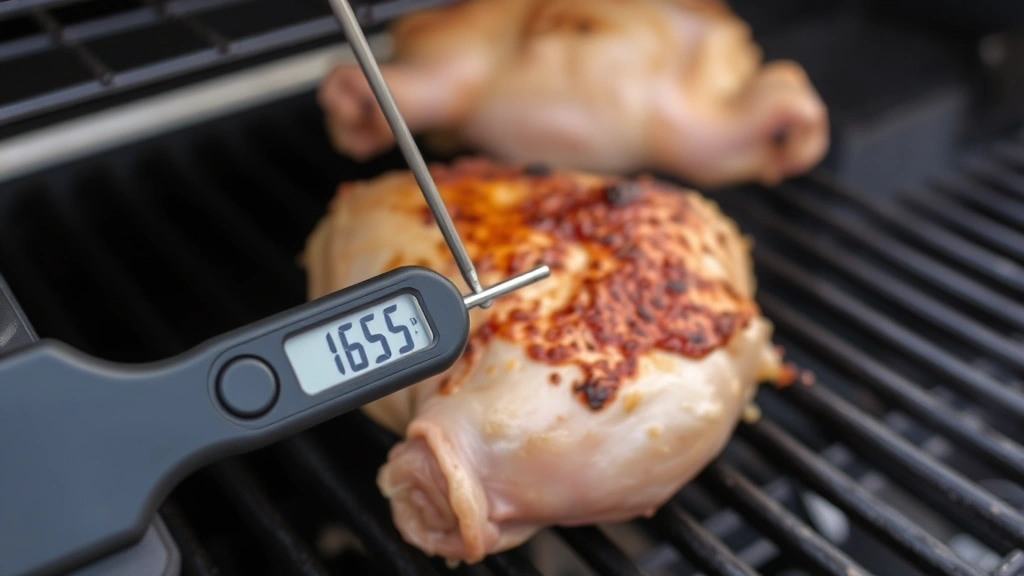
The most reliable doneness indicator is internal temperature, period. Boneless chicken thighs are safely cooked at 165°F (74°C) throughout, according to USDA food safety guidelines. Use an instant-read thermometer to verify, inserting the probe into the thickest part of the thigh without touching bone (though these are boneless, avoid touching the grill grate or hot metal).
Insert the thermometer probe at a slight angle into the thickest section, waiting 3-5 seconds for an accurate reading. For boneless thighs, check at least two locations—the center and the thinnest edge—to ensure uniform cooking. If one area reads below 165°F, return to the grill for another 2-3 minutes and recheck. Many cooks pull thighs at 160-162°F, allowing carryover cooking (residual heat continuing to cook the meat after removal from heat) to reach 165°F safely while maintaining juiciness.
The touch test—pressing the meat with your finger to gauge firmness—is unreliable and subjective. Visual cues like juices running clear provide some guidance but aren’t foolproof. Cutting into the thickest part to check color is accurate but sacrifices presentation and allows juices to escape. Thermometer use eliminates all doubt and takes just seconds.
Invest in a quality instant-read thermometer with a thin probe for quick insertion and accurate readings. Digital models with backlighting and audible alerts offer convenience and consistency. This single tool prevents both undercooked poultry and overdone, dried-out results.
Common Mistakes and How to Avoid Them
Mistake #1: Overcrowding the grill. Placing thighs too close together creates steam pockets that inhibit browning. Leave at least one inch between pieces, allowing heat and air circulation around all surfaces. This requires patience but yields significantly better results.
Mistake #2: Flipping too frequently. Constantly turning the meat interrupts crust development and causes uneven cooking. Flip boneless thighs exactly once at the midpoint of cooking. Resist the temptation to move them around; let them sit and develop that golden exterior.
Mistake #3: Starting with insufficient heat. Many home cooks use medium heat (325-350°F) thinking it’s safer. This temperature zone actually encourages drying because the meat cooks slowly, allowing moisture to evaporate. Higher heat (375-400°F) cooks faster, sealing in juices before evaporation occurs.
Mistake #4: Neglecting carryover cooking. Chicken continues cooking 5°F internally after removal from heat. Pulling at exactly 165°F often results in slightly overcooked, drier meat. Target 160-162°F on the thermometer, then let residual heat finish the job while the meat rests.
Mistake #5: Skipping the rest period. Removing chicken straight from heat and cutting into it immediately forces accumulated juices out onto the plate instead of remaining in the meat. Rest boneless thighs for 3-5 minutes loosely tented with foil. This allows muscle fibers to relax and reabsorb moisture, dramatically improving tenderness and juiciness.
Mistake #6: Using old or misaligned thighs. Thighs stored beyond a certain date or trimmed irregularly cook unevenly. Check expiration dates and trim thighs to roughly uniform thickness before grilling. This simple step ensures consistent cooking across your entire batch.
Complementary Side Dishes
Boneless chicken thighs pair beautifully with numerous side dishes that complement their rich, savory flavor. Consider how long to air fry sweet potatoes for a nutritious, slightly sweet counterpoint. Grilled vegetables—zucchini, bell peppers, asparagus, and corn—can cook alongside your thighs, absorbing smoky flavors from the grill.
Fresh salads with acidic vinaigrettes cut through the richness beautifully. Coleslaw with a tangy dressing provides textural contrast and aids digestion. Grain-based sides like rice pilaf, quinoa, or couscous absorb pan juices if you’re serving chicken with sauce. Grilled bread brushed with garlic butter rounds out the meal.
If you’re exploring other grilled proteins, learn about how long to air fry chicken drumsticks or how long to air fry brats for alternative cooking methods and timing. These resources help you expand your grilling repertoire and understand how different cuts require different approaches.
Sauce applications work wonderfully with boneless thighs. Brush with barbecue sauce during the final 2-3 minutes of cooking, allowing the sauce to caramelize without burning. Teriyaki, honey-soy, chimichurri, or pesto all complement the meat’s natural flavors. Apply sauces toward the end of cooking to prevent excessive charring from sugars in the sauce.
FAQ
How long do boneless chicken thighs take on a gas grill versus charcoal?
Cooking time is essentially identical—12-16 minutes total—because both methods reach similar temperatures. Gas grills offer easier temperature control and consistency, while charcoal grills impart subtle smoke flavor. The real difference is in heat stability; gas maintains temperature more steadily, while charcoal requires monitoring and adjustment as coals burn down.
Can I grill boneless chicken thighs from frozen?
Not recommended. Frozen thighs require significantly longer cooking (25-30+ minutes) and cook unevenly, with exterior overdone and interior undercooked. Thaw in the refrigerator overnight for best results, or use cold water thawing if you’re short on time. Never use hot water, which promotes bacterial growth.
Why are my boneless thighs drying out despite hitting 165°F?
Overcooking beyond 165°F causes drying. Pull thighs at 160-162°F and let carryover cooking finish the job. Also check whether you’re cooking at sufficient heat; low-temperature cooking allows excess moisture evaporation. Finally, ensure thighs are uniform thickness; thin spots overcook while thick areas finish cooking.
Should I use a marinade or dry rub for boneless chicken thighs?
Both work excellently. Dry rubs are quicker and create crispier exterior texture. Marinades add moisture and flavor depth, particularly with acidic components. For maximum flavor, use both: marinate for 2-4 hours, then pat dry and apply a complementary dry rub before grilling. The combination creates incredible complexity.
What’s the best way to prevent flare-ups when grilling boneless thighs?
Flare-ups occur when fat drips onto coals or burner flames. Trim excess fat from thighs before grilling, though some fat is desirable for flavor. Keep a spray bottle of water nearby to quickly extinguish flames without cooling the grill excessively. Use indirect heat for thighs with significant fat content, moving them away from direct flames if flare-ups occur.
Can boneless chicken thighs be cooked on a pellet grill?
Absolutely. Set pellet grills to 375-400°F and follow the same 12-16 minute timeline. Pellet grills excel at maintaining consistent temperature, making them ideal for beginners. The added smoke flavor from pellets enhances boneless thighs beautifully. Experiment with different wood pellets—apple, cherry, and hickory all pair well with chicken.
How do I store leftover grilled boneless chicken thighs?
Cool completely, then refrigerate in airtight containers for up to 4 days. Shred or dice leftover thighs for salads, grain bowls, sandwiches, or wraps. Boneless thighs hold moisture better than breasts when refrigerated, remaining tender even after several days. Reheat gently in a 325°F oven with a little broth to restore juiciness.


