Tattoo Removal Sessions: Dermatologist Insights on How Many Sessions You’ll Need
Deciding to remove a tattoo is a significant personal choice, and understanding the realistic timeline is essential before committing to treatment. Whether you’re regretting an impulsive design, outgrowing a meaningful piece, or preparing for a fresh start, the number of sessions required varies dramatically based on multiple factors. Modern laser technology has revolutionized tattoo removal, making it safer and more effective than ever before, yet patience remains a critical component of successful outcomes.
Dermatologists consistently report that most clients underestimate both the number of sessions needed and the time investment required for complete removal. This comprehensive guide draws from medical expertise to help you understand exactly what determines your personal removal timeline and what to expect throughout the process.

How Many Sessions Does Tattoo Removal Actually Take
The straightforward answer that dermatologists give is: it depends, but most professional tattoos require 6 to 12 sessions for substantial fading or complete removal. Amateur and homemade tattoos often need fewer sessions—typically 3 to 6—because the ink is applied less precisely and sits shallower in the skin. Conversely, large, densely colored, or multi-colored tattoos frequently require 15 to 20 sessions or more.
The American Academy of Dermatology notes that complete removal is sometimes impossible, and the goal often shifts toward significant fading that allows for cover-up work. Professional tattoos created with quality inks and proper technique present the greatest challenge because the pigment is embedded deeper and more uniformly in the dermis layer of skin.
Black and dark blue inks respond most favorably to laser treatment, requiring fewer sessions than lighter colors. Red, orange, and yellow pigments demand specialized wavelengths and frequently need additional sessions. Green and purple inks present intermediate challenges. This color-based variation is why a single tattoo with multiple colors might need 12 sessions for the black outline but 18 sessions for complete removal of the surrounding colored elements.
Age of the tattoo matters significantly. Older tattoos have already undergone natural fading as the body gradually eliminates ink particles through the lymphatic system. A 10-year-old tattoo might respond in 6 sessions, while an identical design applied last year could require 10 sessions because the ink concentration remains higher.
Factors That Determine Your Session Count
Dermatologists evaluate multiple variables during your initial consultation to estimate session requirements. Understanding these factors helps you set realistic expectations and commit to the full treatment course.
Tattoo Size and Density: Larger tattoos with densely packed ink require more sessions. A small, simple design might fade significantly in 4 sessions, while a full-sleeve piece could demand 20 or more. Treatment area also influences healing—areas with thinner skin or more movement (like joints) may need additional sessions because the body processes ink particles differently in these locations.
Ink Color and Composition: As mentioned, black responds fastest. Professional-grade inks are formulated differently than amateur inks and respond differently to laser wavelengths. Some specialty inks, particularly certain metallics or iron oxide-based pigments, prove exceptionally resistant. The National Institutes of Health has documented that ink composition varies widely, affecting removal predictability.
Skin Type and Tone: Lighter skin tones typically achieve better results with fewer sessions because the laser targets ink particles rather than melanin. Darker skin types require more cautious treatment with specialized laser settings to avoid hypopigmentation or scarring, sometimes extending the session count. Dermatologists experienced in treating diverse skin tones can minimize these risks.
Tattoo Age: Fresh tattoos have maximum ink saturation and may require more initial sessions. However, they also respond more dramatically because the ink hasn’t begun natural fading. A tattoo from five years ago has already lost pigment to natural processes, potentially reducing total session needs.
Scarring and Texture: Raised or scarred tattoos indicate deeper ink placement or previous removal attempts. These require specialized approaches and typically more sessions. Scar tissue itself responds poorly to laser treatment and may limit your dermatologist’s ability to safely target underlying ink.
Individual Healing Response: Your body’s lymphatic efficiency determines how quickly it eliminates fragmented ink particles between sessions. Some individuals naturally clear debris faster, reducing needed sessions. Immune system strength, overall health, and even lifestyle factors like hydration and exercise influence this biological process.
Previous Removal Attempts: If you’ve undergone prior removal with different methods, your skin may have altered healing patterns or scar tissue that complicates current treatment. This often necessitates additional sessions or modified approaches.
Laser Technology and Treatment Methods
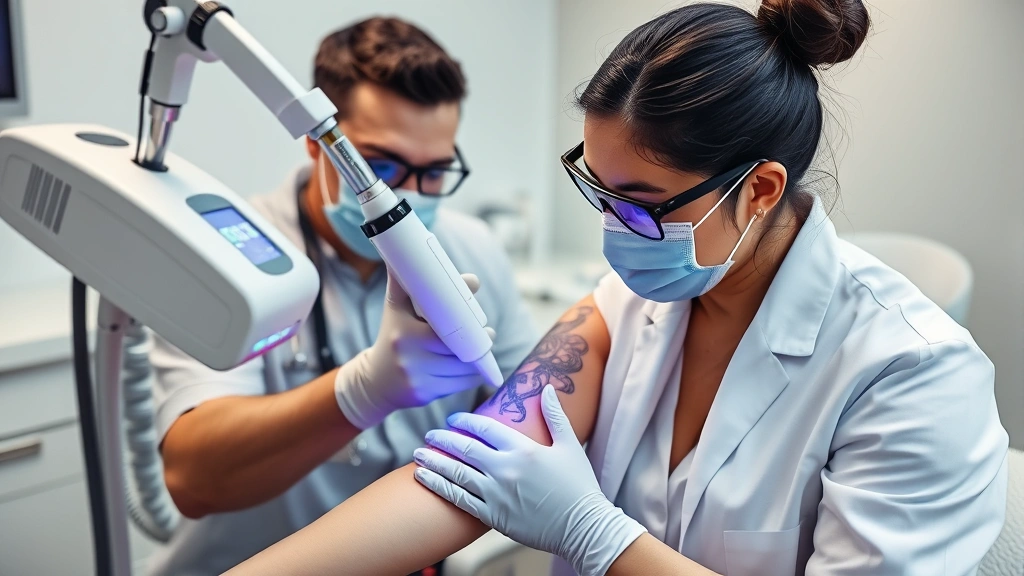
The specific technology your dermatologist uses significantly impacts session requirements. Modern Q-switched lasers remain the gold standard for professional tattoo removal. These devices emit extremely short pulses that shatter ink particles without damaging surrounding tissue.
Different laser wavelengths target different colors. Nd:YAG lasers (1064 nm) excel at black and dark inks. Ruby lasers (694 nm) work well on green and red pigments. Alexandrite lasers (755 nm) handle blue and black inks effectively. Many dermatology practices invest in multi-wavelength systems that can adjust to your specific tattoo’s color composition, potentially reducing total sessions needed.
Picosecond lasers represent newer technology that delivers pulses in trillionths of a second, fragmenting ink more effectively than traditional nanosecond systems. Studies indicate picosecond technology can reduce session requirements by 20-40%, though the difference varies by individual factors. The American Society of Dermatologic Surgeons continues evaluating these newer technologies.
Some dermatologists combine laser treatment with other modalities. Topical anesthetics, cooling systems, and post-treatment care protocols all influence healing speed and ultimate results. Combination approaches might include laser plus specialized skincare or even chemical peels between sessions to enhance ink particle elimination.
The power settings your dermatologist uses also affect session count. Higher settings remove more ink per session but increase risk of scarring or skin damage, particularly in sensitive areas. Conservative settings protect your skin but may extend your total treatment timeline. Your dermatologist customizes settings based on your skin type, tattoo characteristics, and healing response from previous sessions.
Timeline Between Sessions
Spacing between sessions is crucial for optimal results. Dermatologists typically recommend 6 to 8 weeks between treatments, though some cases require longer intervals. This spacing allows your body’s lymphatic system adequate time to eliminate fragmented ink particles and your skin to fully heal from laser treatment.
Rushing sessions—attempting treatment every 4 weeks—doesn’t accelerate removal and actually increases scarring risk and skin damage. The body simply cannot clear ink particles faster than the 6-8 week window allows. Conversely, spacing sessions 12 weeks apart doesn’t improve results but extends your overall timeline unnecessarily.
During the interval between sessions, your skin undergoes significant biological activity. The laser creates controlled inflammation that triggers your immune system to recognize ink particles as foreign material. Specialized cells called macrophages engulf fragmented ink and transport it through lymphatic vessels for elimination. This process requires time—rushing prevents complete clearance.
Many dermatologists recommend maintaining consistent intervals for predictable results. A patient receiving treatments every 6 weeks will see more consistent fading than someone with irregular spacing. Some practices schedule all sessions upfront to ensure consistent timing and help patients commit to the full treatment course.
During intervals, protecting your skin from sun exposure is essential. UV rays can darken remaining tattoo pigment and complicate treatment. Sunscreen (SPF 30+) should be applied to treated areas for at least 4 weeks after each session. Some dermatologists recommend avoiding sun exposure entirely during treatment series, which influences your overall timeline planning.
Cost Considerations for Multiple Sessions
Understanding the financial commitment helps with treatment planning. Session costs typically range from $200 to $500 per treatment, depending on geographic location, tattoo size, and facility. A complete removal series costing $1,500 to $6,000 or more represents significant investment over 12-18 months.
Some dermatology practices offer package discounts for committing to multiple sessions upfront. A 10-session package might cost less per session than individual bookings. However, this financial commitment requires confidence that you’ll complete the series—abandoning treatment midway wastes resources and leaves visible tattoo remnants.
Insurance typically doesn’t cover tattoo removal, classifying it as elective cosmetic or personal choice procedure. However, if removal is medically necessary—for example, removing a tattoo with problematic ink causing allergic reactions—some policies may provide coverage. Discussing this with your insurance provider and dermatologist is worthwhile.
Cost varies by facility type. Hospital-based dermatology departments often cost more than private practices, though quality may be comparable. Board-certified dermatologists command higher fees than non-physician providers operating laser equipment, but credentials matter for safety and results. Extremely low prices should raise concerns about provider qualifications or equipment quality.
If cost is a barrier, discussing payment plans with your dermatologist’s office is reasonable. Many practices offer financing options or work with medical credit companies to make treatment accessible. Spreading costs across 12-18 months makes removal more manageable financially while maintaining consistent treatment intervals.
Preparing for Your Removal Journey
Successful tattoo removal requires active participation beyond simply showing up for appointments. Preparation significantly influences both the number of sessions needed and the quality of final results.
Pre-Treatment Preparation: Avoid sun exposure for 4 weeks before your first session. Sunburned or darkened skin increases risk of complications and reduces treatment effectiveness. If you’ve recently had other skin treatments (chemical peels, microdermabrasion, etc.), inform your dermatologist—these may need to pause during your removal series.
Stop taking blood thinners like aspirin if medically safe, under your physician’s guidance. These increase bleeding and bruising during treatment. Arrive to appointments well-hydrated and with clean skin free of makeup or lotions in the treatment area.
Post-Treatment Care: Immediately after each session, your skin will be red, swollen, and sensitive. Ice packs reduce inflammation. Avoid hot showers, strenuous exercise, and direct sun exposure for several days. Most dermatologists provide detailed aftercare instructions—following these precisely influences healing speed and ink clearance efficiency.
Keeping your skin healthy between sessions supports the lymphatic system’s ability to eliminate ink particles. Stay hydrated, eat nutrient-rich foods, and maintain consistent sleep. Some dermatologists recommend supplements supporting lymphatic function, though evidence for specific products remains limited.
Realistic Expectations: Accept that complete removal might not be possible, particularly for large or multi-colored tattoos. Many patients achieve excellent fading suitable for cover-up work rather than 100% removal. Discussing your actual goals with your dermatologist—complete removal versus significant fading—helps set appropriate expectations and potentially reduces needed sessions.
Consider whether you want a fresh start with a new design or genuine removal. If cover-up is acceptable, you might stop treatment before complete removal, saving time and money. Some dermatologists specialize in fade-to-cover approaches that optimize results for subsequent tattoo work.
Commitment to Completion: Most people who abandon treatment midway do so due to cost or scheduling challenges, not ineffectiveness. Committing to the full series—even when results seem slow—produces dramatically better outcomes than partial treatment. The final sessions often deliver the most noticeable fading because initial ink concentration has been substantially reduced.
Keep a treatment journal documenting your tattoo’s appearance after each session. Progress is often subtle—comparing photos from session 1 versus session 8 reveals changes that individual sessions don’t show clearly. This documentation motivates continued treatment during the slower middle sessions.
FAQ
Can I remove a tattoo in just 1 or 2 sessions?
No. Even small, simple tattoos with favorable ink colors rarely fade completely in 1-2 sessions. Professional-grade ink is specifically formulated to be permanent. Complete removal requires your body’s lymphatic system time to clear fragmented particles between sessions. Dermatologists offering single-session removal either have unrealistic marketing or are using ineffective methods. Expect minimum 3-4 sessions for very small, simple tattoos.
Does tattoo removal work on all skin types?
Modern laser technology works on all skin types, but treatment requires customization. Darker skin tones need specialized laser settings and sometimes longer intervals between sessions to prevent complications like hypopigmentation. Experienced dermatologists trained in treating diverse skin types can achieve excellent results across the spectrum. If your dermatologist lacks this experience, seek a second opinion from someone with documented expertise in your specific skin tone.
Will my skin look normal after removal?
In most cases, yes. Skin typically returns to normal appearance within weeks of final session. However, scarring is possible, particularly if your dermatologist uses overly aggressive settings or if your skin tends toward keloid formation. Some patients experience slight hypopigmentation (lighter patches) or hyperpigmentation (darker patches) in treated areas, though this usually fades over months. Discussing scarring risk during your consultation is important.
Can I get a new tattoo over the removal area?
Yes, but timing matters. Most dermatologists recommend waiting at least 3-6 months after your final removal session before getting new tattoo work. This allows your skin to completely heal and any residual ink particles to clear. If you’re planning a complete transformation of an area, discuss timing with both your dermatologist and your new tattoo artist. Some artists actually prefer treating partially faded areas, as the faded ink can influence new design placement.
What if my tattoo isn’t responding after several sessions?
Some tattoos respond slower than expected due to unusual ink composition, scarring, or individual healing factors. If you’ve completed 6-8 sessions without significant progress, discuss changing laser wavelengths, adjusting power settings, or trying picosecond technology with your dermatologist. Occasionally, switching to a different provider using different equipment produces better results. Patience is warranted—even stubborn tattoos typically show improvement with continued treatment.
Is tattoo removal painful?
Most patients describe the sensation as uncomfortable rather than severely painful—often compared to rubber bands snapping against skin. Pain varies based on location (areas with thinner skin hurt more), your pain tolerance, and the laser power used. Topical anesthetics, cooling systems, and numbing creams significantly reduce discomfort. If pain is a concern, discuss pain management options with your dermatologist before treatment.


