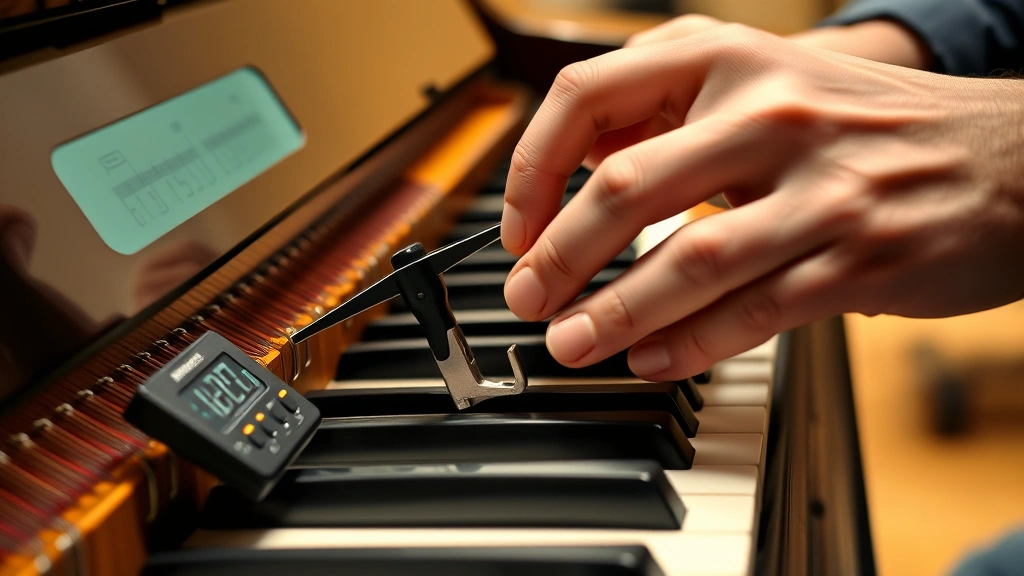
DIY Piano Tuning: Cost Breakdown & Expert Tips
Piano tuning is one of those home maintenance tasks that seems intimidating at first, but understanding the costs and basics can help you make informed decisions about your instrument’s care. Whether you own a grand piano, upright, or digital model, knowing how much it costs to tune a piano and exploring DIY options can save you significant money over time. Professional piano tuning typically ranges from $100 to $300 per session, but several factors influence the final price, and some piano owners are discovering ways to reduce these expenses.
The piano is a precision instrument with over 10,000 moving parts, and maintaining proper tension on its strings directly impacts sound quality, playability, and longevity. Regular tuning keeps your piano performing at its best and prevents damage that could result in costlier repairs. This comprehensive guide explores piano tuning costs, what affects pricing, DIY approaches, and professional considerations to help you protect your investment wisely.
Understanding Piano Tuning Costs
When asking how much it would cost to tune a piano, you’re looking at a range that depends on multiple variables. The average professional piano tuning service costs between $100 and $300, with most technicians charging around $150 to $200 for a standard upright piano. Grand pianos often cost more—typically $200 to $400—because they require additional time and expertise due to their complex mechanisms.
Regional differences significantly impact pricing. Urban areas with higher cost of living and more demand for specialized services tend to charge premium rates, while rural locations may offer lower prices due to reduced overhead. A piano technician in New York City might charge $250-$350, whereas the same service in a smaller Midwestern town could cost $80-$150. Travel fees also apply if the technician must visit your home, sometimes adding $25-$75 to the total bill depending on distance.
Service frequency affects your annual piano maintenance budget. Most piano experts recommend tuning every 1-2 months for professional musicians, every 3-6 months for serious amateurs, and every 6-12 months for casual players. If you play your piano daily in a climate-controlled environment, you might need fewer tunings than someone whose instrument experiences temperature and humidity fluctuations. This means annual costs could range from $200 for occasional players to over $2,000 for professionals.
Factors That Affect Tuning Prices
Several elements determine the final cost when you take your piano to a technician or have one visit your home. Understanding these factors helps you anticipate expenses and potentially reduce costs through preventive care.
Piano Type and Size: Upright pianos are the most affordable to tune, typically costing $100-$200. Baby grand pianos (5-6 feet) range from $150-$300, while concert grands (9+ feet) can exceed $400. Spinet pianos, the smallest uprights, may cost slightly less due to their compact size. Digital pianos, interestingly, require no tuning since they use electronic sound generation rather than acoustic strings.
Condition and Neglect: A piano that hasn’t been tuned in years requires more extensive work. When strings drift significantly from proper pitch, technicians spend extra time making micro-adjustments. A piano neglected for 5+ years might cost $300-$500 to fully restore to proper tuning. Fresh maintenance pianos typically cost less because the strings are already close to target pitch.
Humidity and Environmental Factors: Pianos in stable, climate-controlled environments need less frequent tuning. Conversely, pianos exposed to temperature swings and humidity changes require more regular service. If your home lacks consistent climate control, plan for increased tuning frequency and costs. This is why many piano owners invest in proper home environmental management to protect valuable instruments.
Additional Services: Beyond basic tuning, technicians often recommend voicing (adjusting hammer hardness), regulation (fine-tuning mechanical responsiveness), or repairs. These add $50-$200+ to your bill. A complete piano service including tuning, voicing, and regulation might cost $400-$600.
Technician Experience and Certification: Certified Piano Technicians Guild (PTG) members typically charge more than uncertified technicians, but their expertise justifies the premium. Experienced technicians can often complete work faster and identify potential problems before they become expensive repairs.
Professional vs. DIY Tuning
The question of whether to tune your piano yourself versus hiring a professional requires honest assessment of your skills, tools, and comfort level. While professional tuning remains the safest option for most people, some dedicated DIY enthusiasts successfully maintain their instruments.
Professional Advantages: Certified technicians bring years of training, specialized equipment worth thousands of dollars, and insurance coverage. They can diagnose underlying mechanical problems, perform repairs, and guarantee their work. Professional tuning takes 1-2 hours and produces consistent, reliable results. For valuable pianos or professional musicians, professional service is essentially non-negotiable.
DIY Advantages: Learning to tune your own piano eliminates service call costs entirely—potentially saving $1,500-$3,000 annually. You can tune more frequently without expense concerns, which actually improves piano longevity. DIY tuning becomes rewarding as a skill and deepens your understanding of how your instrument works.
DIY Limitations: Piano tuning requires an ear trained to detect pitch differences of mere cents (1/100th of a semitone). Most people cannot develop this sensitivity without extensive practice. Initial tool investment runs $300-$1,000 for quality equipment. Mistakes can damage strings, pins, or the soundboard, resulting in repair costs exceeding $500. Insurance won’t cover DIY-caused damage.
The realistic middle ground: many piano owners learn basic tuning maintenance for personal pianos while still hiring professionals annually for thorough service. This hybrid approach reduces costs while maintaining instrument quality.
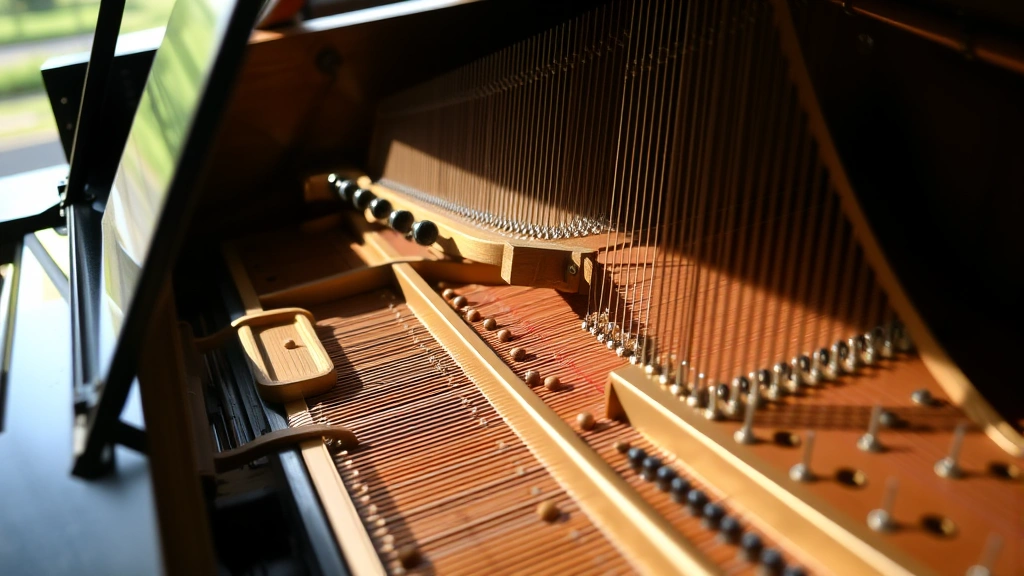
” alt=”Professional piano technician using tuning lever on piano strings with precision tools and stroboscopic tuner visible”/>
DIY Piano Tuning Basics
If you decide to attempt DIY piano tuning, start with understanding the fundamental mechanics. A piano’s pitch depends on string tension, which is adjusted by turning tuning pins located in the pinblock (a wooden block above the strings). Each pin controls one or more strings, and rotating it slightly changes tension and therefore pitch.
The goal is matching each string’s frequency to a standard pitch reference. Middle C vibrates at 261.63 Hz, and every other note has a mathematically precise frequency. Professional tuners use electronic tuners that measure frequency, but they also rely on their ear to detect beats—the wavering sound created when two nearly-identical frequencies play simultaneously. When beats disappear, the strings are in tune.
Piano tuning follows a specific sequence called “octave tuning.” You don’t tune randomly; instead, you establish a reference pitch (usually A440), then tune other notes relative to it using interval relationships. This requires understanding music theory and interval recognition. Most successful DIY tuners have musical backgrounds or extensive training.
The challenge intensifies because pianos use “stretch tuning” or “inharmonicity compensation.” This means higher and lower octaves are intentionally tuned slightly sharp or flat from mathematically perfect intervals to account for string stiffness and soundboard resonance. Getting this right without years of experience is nearly impossible.
Tools and Equipment Needed
Serious DIY piano tuning requires investment in proper tools. Attempting tuning with improvised equipment risks damaging your instrument and produces poor results.
Essential Tools:
- Tuning Lever (Wrench): This specialized tool fits over tuning pins and provides the leverage needed to adjust tension. Quality levers cost $150-$400 and must fit your specific piano’s pin size (typically 0.5 to 0.65 inches). Never substitute with regular wrenches, which can strip pins.
- Electronic Tuner: Chromatic tuners designed for pianos cost $150-$600. Basic models detect pitch; advanced models show cent deviation and store tuning data. Brands like Tune Lab and Sonic Tuner are industry standards.
- Mutes and Dampers: Specialized wedges isolate individual strings or string groups so you can tune them without interference. A basic muting kit costs $50-$150.
- Temperament Strips: These visual aids help establish proper interval relationships during the initial tuning process. They’re inexpensive ($20-$40) but invaluable for beginners.
- Stroboscopic Tuner: Advanced tuners use strobe technology for extreme precision, costing $300-$1,000. Professionals swear by them, but they’re overkill for casual DIY work.
Total startup cost for basic DIY tuning equipment: $400-$800. For comparison, this covers 2-5 professional tuning sessions, so the financial equation only favors DIY if you commit to regular, long-term tuning.
Step-by-Step Tuning Process
Here’s a simplified overview of the piano tuning process. Please note: this is educational information, not a complete how-to guide. Full tuning requires hands-on training.
Step 1: Preparation Remove the piano’s top lid and identify the tuning pins. These are located above the strings and connected to them through a complex mechanism. Insert the tuning lever onto the pin you’ll adjust first. Never force the lever; if it doesn’t fit smoothly, you have the wrong size and could damage the pin.
Step 2: Set Your Reference Pitch Use your electronic tuner to establish a baseline. Most tuners start with A440 (the A above middle C), which serves as the reference for the entire keyboard. Adjust this note until your tuner shows perfect pitch.
Step 3: Establish the Temperament Using interval relationships and your temperament strips, tune the remaining notes in the middle octave. This is where your ear training becomes critical. You’re listening for beat rates and adjusting until they disappear or match expected frequencies.
Step 4: Octave Tuning Once the middle octave is set, extend tuning upward and downward. Each octave is adjusted slightly sharper or flatter than perfect mathematical intervals to account for inharmonicity. This is where professional training really shows—getting the stretch right is an art form.
Step 5: Final Verification Play scales, chords, and full passages to listen for consistency. Professional tuners listen for any remaining beats or tonal inconsistencies. They may make fine adjustments to individual strings or groups.
The entire process typically takes 1-2 hours for professionals. DIY attempts often take 3-5 hours or longer, and success rates among untrained enthusiasts remain low.
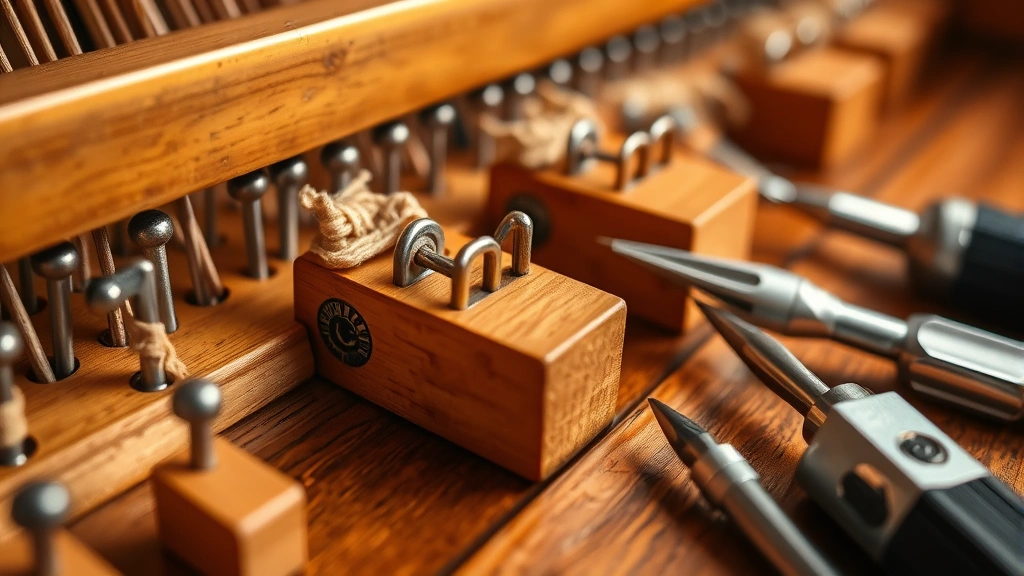
” alt=”Close-up of piano tuning pin mechanism showing wooden pinblock with metal tuning pins and wrapped strings in detailed view”/>
When to Call a Professional
Knowing when to abandon DIY attempts and hire professionals is crucial for protecting your piano investment. Several situations absolutely require professional intervention.
First-Time Tuning After Long Neglect: If your piano hasn’t been tuned in 2+ years, hire a professional. Strings that have drifted far from proper pitch need careful, gradual adjustment. Attempting aggressive tuning on severely out-of-tune pianos risks breaking strings.
Mechanical Problems: If your piano sounds muffled, keys stick, or hammers don’t strike strings evenly, these are regulation or repair issues requiring professional expertise. These problems often hide underlying mechanical damage that impacts tuning success.
Valuable or Professional Instruments: Grand pianos, concert instruments, or antique pianos warrant professional care exclusively. The cost of professional tuning is negligible compared to potential damage from amateur mistakes. This is similar to how you’d hire professionals for complex home projects rather than risking costly mistakes.
Performance Use: If you perform professionally or in competitions, professional tuning is non-negotiable. Your reputation depends on instrument quality, and professionals guarantee their work.
Persistent Tuning Issues: If you’ve attempted DIY tuning but the piano won’t stay in tune or sounds inconsistent, stop immediately. You may have inadvertently damaged something, and a professional needs to assess the situation.
Unusual Sounds or Resistance: If tuning pins feel stuck, grinding, or unusually loose, stop. These indicate pinblock damage or wear requiring professional repair. Forcing stuck pins causes irreversible damage.
Maintenance Tips Between Tunings
Reducing tuning frequency and costs requires proper piano maintenance between professional services. These practices extend the time between tunings and maintain sound quality.
Climate Control: Maintain consistent temperature (65-72°F) and humidity (40-50%) in your piano’s environment. Temperature swings and dry air cause wood expansion and contraction, which affects string tension. Investing in a humidifier or dehumidifier is far cheaper than frequent tunings. This connects to broader home environmental management principles.
Avoid Direct Sunlight: Position your piano away from windows where sunlight heats it. Uneven heating causes pinblock stress and accelerates tuning drift. Use curtains or blinds to control light exposure.
Minimize Vibration: Don’t place heavy equipment near your piano or allow it to experience vibrations from speakers, traffic, or machinery. Vibration loosens tuning pins and stresses the frame.
Regular Playing: Ironically, regular piano use helps maintain tuning. Playing keeps strings at consistent tension and helps you notice tuning drift early. Pianos that sit unused often drift more dramatically when finally played.
Dust and Debris Control: Keep the piano clean and dust-free. Debris inside the mechanism can affect hammer strike and string vibration. Use a soft brush to gently clean visible strings and mechanisms quarterly.
Professional Inspection: Even if you can’t afford frequent tuning, schedule annual professional inspections. Technicians identify emerging problems before they become expensive repairs. An inspection costs $50-$100 but might prevent thousands in damage.
Cover When Not in Use: Use a piano cover to protect against dust and temperature fluctuations. This simple step significantly reduces environmental stress on your instrument.
FAQ
How often should I tune my piano?
Professional musicians typically tune every 1-2 months. Serious amateurs should tune every 3-6 months, while casual players can get away with 6-12 month intervals. Pianos in unstable environments need more frequent tuning. Listen for pitch drift and schedule tuning when you notice the piano sounds noticeably flat.
Can I tune a digital piano?
No. Digital pianos use electronic sound generation rather than acoustic strings, so they never need tuning. Their pitch is electronically locked and doesn’t drift. This is one advantage digital pianos have over acoustic instruments, though many musicians prefer acoustic piano touch and tone.
Why is piano tuning so expensive?
Piano tuning requires years of training, specialized tools, and highly developed ear training. Technicians charge for expertise, not just time. Professional-grade tuning equipment alone costs $2,000-$5,000. Additionally, piano technicians carry liability insurance and often need to travel to your home. You’re paying for precision and reliability.
Can I learn piano tuning myself?
Yes, but it requires significant commitment. Most successful DIY tuners spend 100+ hours learning before attempting their own pianos. Consider taking a course from the Piano Technicians Guild or finding a local mentor. Start with practice pianos before attempting valuable instruments.
What’s the difference between tuning and regulation?
Tuning adjusts string pitch to proper frequencies. Regulation adjusts mechanical responsiveness—how quickly hammers return, how far keys travel, and how evenly they respond. Both are important; tuning alone won’t fix a sluggish or unresponsive piano. Many technicians recommend regulation every 1-2 years alongside tuning.
How long does piano tuning take?
Professional tuning typically takes 1-2 hours for standard upright pianos. Grand pianos may take 2-3 hours. Additional services like voicing or regulation add 1-2 hours. DIY attempts usually take 3-5 hours for beginners and may require multiple sessions.
Can I tune my piano with a smartphone app?
Smartphone tuner apps work reasonably well for basic pitch detection, but they’re less accurate than dedicated chromatic tuners. Apps typically have 2-3 cent accuracy versus 0.5 cent accuracy for professional tuners. For DIY practice, apps are helpful; for actual tuning, invest in proper equipment.
What happens if I don’t tune my piano regularly?
Neglected pianos develop increasingly poor sound quality, become harder to play, and may develop mechanical problems. String tension affects the soundboard and frame; when strings drift, they stress these components. Severe neglect can result in $1,000+ repairs. Regular tuning is preventive maintenance that protects your investment.
Conclusion: Understanding how much it costs to tune a piano—typically $100-$300 per session—helps you budget properly for this essential maintenance. While professional tuning remains the safest choice for most people, exploring DIY options can reduce long-term costs if you commit to proper training and equipment. Whether you choose professional service or learn basic tuning yourself, the key is consistency. Regular maintenance keeps your piano sounding beautiful, playing responsively, and protected from damage. For more DIY guidance on home projects, explore our DIY Nests Hub Blog for comprehensive how-to articles and cost-saving tips. Just as you’d approach painting projects systematically, piano maintenance requires planning and the right approach for best results.


