
How to Clean Electric Razor: Expert Tips & Steps
An electric razor is an investment in your grooming routine, and like any precision tool, it requires proper maintenance to function optimally. Whether you use a rotary shaver, foil shaver, or specialty trimmer, understanding how to clean an electric razor will extend its lifespan, improve cutting performance, and maintain hygiene standards. Most people overlook this essential step, which can lead to reduced efficiency, skin irritation, and premature equipment failure.
Regular cleaning removes whisker buildup, dead skin cells, and product residue that accumulate during each shave. This buildup doesn’t just affect performance—it can harbor bacteria and create an unsanitary grooming environment. The good news is that cleaning your electric razor takes only minutes and requires minimal supplies. With the right techniques and knowledge, you’ll keep your shaver in peak condition for years to come.
Why Regular Cleaning Matters
Understanding the importance of maintenance is the first step toward proper razor care. Your electric shaver operates by cutting whiskers at high speeds, typically between 4,000 and 10,000 strokes per minute depending on the model. During this process, cut hairs, skin oils, and moisture accumulate inside the shaving head and blade assembly.
When debris builds up, it creates several problems. First, the cutting efficiency diminishes because whiskers don’t make clean contact with the blades. You’ll notice you need multiple passes to achieve the same shave quality, which increases irritation and pulling sensations. Second, moisture trapped inside promotes bacterial and fungal growth, potentially causing skin infections or unpleasant odors. Third, dried-on residue acts like a grinding paste against moving parts, accelerating wear and tear on delicate components.
Professional barbers and dermatologists recommend cleaning your razor after every use, similar to how you’d maintain other personal grooming items. This preventive approach is far more cost-effective than replacing expensive shavers prematurely. Additionally, proper maintenance ensures your device remains hygienic, which is especially important if you have sensitive skin or are prone to ingrown hairs.

Tools and Materials You’ll Need
Fortunately, cleaning an electric razor doesn’t require specialized equipment. Most items are already in your bathroom or kitchen. Here’s what you should gather:
- Soft-bristled brush—The small brush often included with your shaver is ideal, but an old toothbrush works well too
- Distilled water—Tap water contains minerals that can leave deposits; distilled water prevents this
- Rubbing alcohol (70% isopropyl)—Kills bacteria and evaporates quickly without leaving residue
- Lint-free cloth or microfiber towel—Prevents fibers from getting stuck in blade assemblies
- Compressed air canister—Optional but excellent for dislodging stubborn debris from tight spaces
- Manufacturer-approved cleaning solution—Some premium shavers come with special solutions; check your manual
- Small container—For soaking if your model is waterproof
Before beginning any cleaning, consult your razor’s instruction manual. Different manufacturers have varying recommendations, and some models have specific requirements. Check whether your device is fully waterproof, water-resistant, or requires dry cleaning only. This information prevents accidental damage and ensures you follow the safest procedure for your particular model.
Daily Cleaning Steps
Establish a routine that takes just two to three minutes after each shave. This simple habit prevents the accumulation problems discussed earlier. Here’s the step-by-step process:
- Power off and unplug your razor—Always disconnect from power before cleaning to prevent electrical hazards and accidental activation
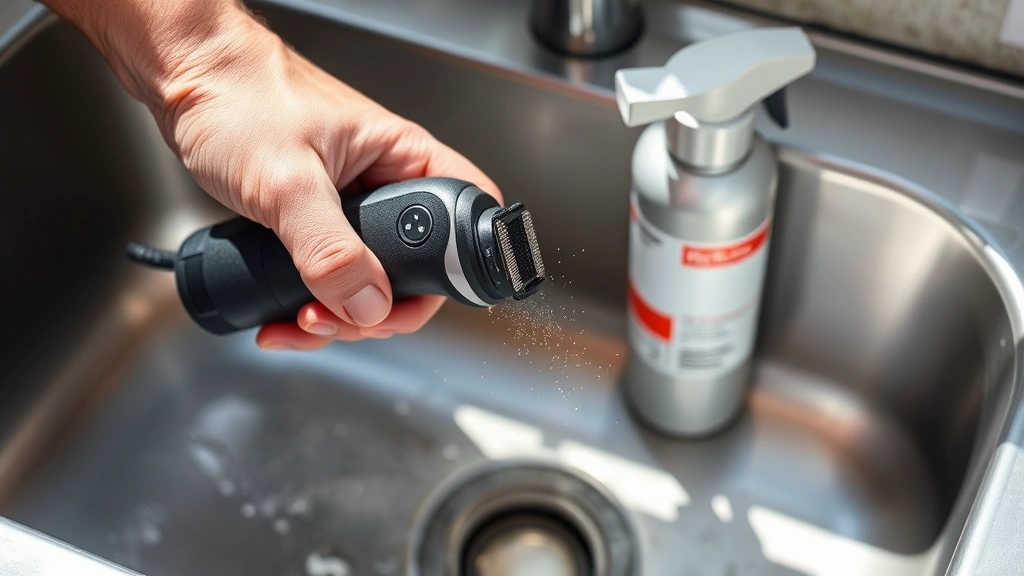
- Tap out loose whiskers—Gently tap the shaving head against the sink or waste basket to dislodge cut hairs. Hold the device with the head facing downward and let gravity assist
- Use the cleaning brush—If your razor includes a small brush, use gentle circular motions to brush around the blade area and shaving head. Work from the center outward to push debris away from openings
- Rinse if waterproof—For waterproof models, hold the head under lukewarm running water. Never submerge the entire unit unless the manual explicitly permits it. Use your finger to gently open any flip-out head covers while rinsing
- Pat dry immediately—Use a lint-free cloth to absorb moisture. Don’t let water sit on the device, as this promotes corrosion and electrical issues
- Air dry completely—Leave the shaver on a clean surface with the head exposed for at least 15 minutes before storing
This daily routine removes approximately 85-90% of accumulated debris. The remaining buildup requires deeper cleaning weekly or monthly, depending on usage frequency and beard density. If you notice performance declining despite daily cleaning, it’s time for a more thorough approach.
Deep Cleaning Your Electric Razor
Once weekly, perform a comprehensive cleaning that addresses stubborn residue and internal components. This process takes 10-15 minutes and should become part of your grooming maintenance schedule, similar to how you’d maintain other tools for DIY projects requiring precision equipment.
For waterproof models: Fill a small cup with distilled water and add a few drops of rubbing alcohol (roughly 1 part alcohol to 4 parts water). Remove any detachable parts like the head cover or foil. Soak these components for 5-10 minutes to loosen stubborn buildup. Use your soft brush to gently scrub all surfaces, paying special attention to crevices where whiskers hide. Rinse thoroughly under running water and pat dry.
For non-waterproof models: Use a damp cloth barely wrung out in the alcohol-water solution. Never submerge these devices. Dampen your brush in the solution and scrub the shaving head carefully. Focus on removing dried residue around blade edges. For inaccessible areas, use a cotton swab moistened in the solution.
Cleaning the blade assembly: Many electric shavers have removable blade assemblies. Check your manual to see if yours is designed for disassembly. If permitted, carefully remove the blade cartridge and clean it separately using the alcohol solution and soft brush. Never force components apart, as this risks damaging delicate springs and alignment mechanisms.
Addressing stubborn buildup: If debris remains stuck, try using compressed air. Hold the canister upright and use short bursts to dislodge particles. Keep the nozzle 3-4 inches from the razor head. This technique is particularly effective for rotary shavers, where hairs can wrap around the spinning heads.
After deep cleaning, allow all components to air dry completely before reassembling. If you’ve disassembled parts, lay them on a clean, dry surface for at least 30 minutes. This thorough process restores cutting performance and maintains optimal hygiene standards for your grooming routine.
Maintaining Different Shaver Types
Electric razors come in different designs, each with specific maintenance requirements. Understanding your particular type ensures you’re cleaning effectively without causing damage.
Foil shavers: These devices use thin, perforated metal screens that vibrate rapidly to cut whiskers. Whiskers accumulate underneath the foil, making thorough cleaning essential. After each use, brush the foil gently in one direction. During deep cleaning, if your model permits, remove the foil by pressing release buttons or sliding catches. Clean the foil separately with your soft brush and solution. Never use abrasive materials on the foil, as scratches compromise cutting efficiency and can cause skin irritation. The foil is typically the most delicate component requiring the gentlest touch.
Rotary shavers: Featuring three spinning heads with circular blades, rotary shavers require attention to each individual head. Whiskers tend to wrap around the outer blade ring, so brush each head separately. During deep cleaning, some rotary models allow you to remove the head covers completely. If your model supports this, clean both the external guard and internal blade rings thoroughly. The spinning mechanism is robust, so you can use slightly firmer brush pressure than with foil shavers.
Specialty trimmers and edgers: These devices often have smaller, more exposed blades designed for detail work. They typically accumulate less debris than full-face shavers but still benefit from regular cleaning. Pay special attention to the blade edges, where whiskers lodge most easily. If your trimmer has adjustable guards or combs, remove them during deep cleaning for complete access to the blade assembly.
Wet/dry shavers: These premium models are fully waterproof and often come with built-in cleaning systems. Even with automatic cleaning stations, perform manual cleaning weekly to ensure thorough maintenance. The manual process complements the automatic system and catches debris the station might miss. These devices are more forgiving with water exposure, but always follow your specific manual’s guidance.
Drying and Storage Best Practices
Proper drying and storage are crucial final steps that many people overlook. Moisture remaining on your razor leads to corrosion, electrical problems, and bacterial growth. Think of this step as important as proper cleaning and storage of delicate items.
Immediate drying: After cleaning, use your lint-free cloth to remove surface moisture. Pay special attention to seams, button areas, and the connection point between the handle and head. These areas trap water that can cause problems if left unaddressed.
Air drying location: Place your razor on a clean, dry surface in a well-ventilated area. Avoid enclosed spaces like drawers or cabinets immediately after cleaning. Ideally, leave it exposed for 30-45 minutes before storing. If you shave in the morning before work, this timing works perfectly—clean your razor, let it air dry while you shower and get ready, then store it before leaving.
Storage environment: Keep your razor in a cool, dry location away from direct sunlight and heat sources. Excessive heat can damage internal components and degrade the battery (for cordless models). Humidity promotes corrosion, so avoid storing in bathrooms with poor ventilation. A bedroom drawer or bedroom shelf is often ideal, away from moisture-heavy environments.
Battery maintenance: For cordless shavers, proper storage affects battery longevity. Most modern lithium-ion batteries benefit from being stored with a partial charge (30-50%) rather than fully charged or completely depleted. Check your manual for specific guidance. Some manufacturers recommend charging before extended storage periods to prevent the battery from fully discharging.
Protective cases: Many shavers come with protective cases or pouches. Use these when traveling or if you have limited storage space. Cases also protect your device from dust and accidental drops. If your shaver didn’t include a case, consider purchasing one—this is a small investment that protects a larger one.
Troubleshooting Common Issues
Even with proper maintenance, you may occasionally encounter problems. Understanding common issues helps you address them quickly and effectively.
Decreased cutting performance: If your razor pulls whiskers rather than cutting cleanly, buildup is likely the culprit. Perform a thorough deep cleaning as described above. If performance doesn’t improve, the blades may be dull and require replacement. Most manufacturers recommend replacing blade cartridges every 12-24 months, depending on usage frequency. Check your manual for your specific model’s replacement schedule.
Unpleasant odors: Bacterial growth causes odors, indicating insufficient cleaning or improper drying. Increase cleaning frequency to every other day and ensure complete air drying before storage. If the smell persists after several cleanings, soak the shaving head in a solution of equal parts water and white vinegar for 10 minutes, then proceed with normal cleaning. Vinegar’s acidity kills odor-causing bacteria.
Skin irritation after shaving: This can result from dirty blades, dull blades, or improper cleaning technique. Ensure you’re cleaning thoroughly and drying completely. If irritation continues, the blades likely need replacement. Additionally, verify you’re using light pressure while shaving—aggressive pressure with a dirty razor increases irritation risk significantly.
Water damage (for waterproof models): If your supposedly waterproof razor gets wet internally, stop using it immediately. Don’t charge or operate it. Place it in a dry location for 48 hours. If the device doesn’t function properly after drying, consult the manufacturer or a professional repair service. Never attempt to disassemble a water-damaged device without professional guidance.
Battery not holding charge: For cordless shavers, battery degradation is normal after 2-3 years. However, ensure you’re not leaving the battery completely drained for extended periods, as this accelerates degradation. If your razor is relatively new, try charging it for a full 24 hours and see if performance improves. If the problem persists, the battery likely needs replacement through the manufacturer.
Regular cleaning prevents most of these issues from developing. Think of maintenance as an investment in your shaver’s longevity and your grooming experience quality. Just as you’d maintain your vehicle with regular cleaning and servicing, your personal grooming tools deserve the same attention.
FAQ
How often should I clean my electric razor?
Clean your razor after every use with the daily cleaning method (2-3 minutes). Perform deep cleaning weekly or bi-weekly, depending on beard density and shaving frequency. If you shave daily, weekly deep cleaning is optimal. If you shave every other day, bi-weekly deep cleaning is sufficient.
Can I use tap water to clean my electric razor?
While tap water won’t immediately damage your razor, distilled water is preferable because it lacks minerals that leave deposits. These mineral deposits accumulate over time and can affect performance. If you only have tap water available, it’s acceptable for occasional cleaning, but switch to distilled water for regular maintenance.
Is it safe to fully submerge my electric razor in water?
Only if your manual explicitly states the device is fully waterproof. Most shavers are water-resistant (safe for rinsing under running water) but not fully submersible. Submerging non-waterproof models risks water damage to internal circuits and batteries. Always consult your specific model’s instructions before exposing your razor to water.
What should I do if my razor starts pulling hair instead of cutting?
First, perform a thorough deep cleaning to remove buildup. If pulling persists after cleaning, the blades are likely dull and need replacement. Most manufacturers recommend replacing blade cartridges every 12-24 months. Order replacement blades from the manufacturer’s website or authorized retailers to ensure compatibility.
Can I use soap or shaving cream residue on my razor?
Avoid using your electric razor with soap or shaving cream, as these products are designed for manual razors. If you accidentally apply these products, clean your razor immediately with distilled water and your soft brush to prevent residue buildup. Stick with electric shavers designed for dry shaving, or choose a wet/dry model if you prefer using products.
How do I know if my razor is truly waterproof?
Check the product manual or look for waterproof ratings on the packaging or manufacturer’s website. Ratings typically include IPX4 (splash-resistant), IPX5 (water-jet resistant), or IPX7 (fully submersible). Your manual will specify exactly what water exposure is safe. When in doubt, assume your razor is water-resistant only and avoid full submersion.
Should I clean my razor before or after using it?
Clean after using your razor while whisker debris is still loose and easy to remove. Cleaning before use is unnecessary and doesn’t improve performance. However, if your razor has been stored for several days, a quick brush-off before use removes any dust that accumulated during storage.
What’s the best way to clean a rotary shaver versus a foil shaver?
Foil shavers require gentle, directional brushing to avoid scratching the delicate foil screen. Brush in one direction along the foil’s length. Rotary shavers have more robust construction, so you can use firmer brush pressure and clean each circular head thoroughly. Both types benefit from the same cleaning solutions and overall maintenance schedule, but technique varies slightly based on blade design.


