How to Clean a Griddle: Chef-Tested Tips for Perfect Results
A well-maintained griddle is the foundation of any serious home cook’s kitchen arsenal. Whether you’re running a commercial operation or perfecting your weekend breakfast game, keeping your griddle clean directly impacts food quality, cooking performance, and equipment longevity. Griddles accumulate grease buildup, food residue, and carbon deposits that compromise heat distribution and create food safety hazards if left unaddressed.
This comprehensive guide walks you through professional-grade cleaning techniques that work on cast iron, stainless steel, and commercial griddle surfaces. We’ve compiled methods used by professional chefs and kitchen maintenance experts to help you restore your griddle to peak performance while extending its operational lifespan.
Why Regular Griddle Cleaning Matters
Neglecting griddle maintenance creates multiple operational problems. Carbonized food particles insulate the cooking surface, causing uneven heat distribution and hot spots that burn food. Grease accumulation becomes a fire hazard, particularly in commercial kitchens where NFPA fire codes mandate regular hood and equipment cleaning. Bacterial growth flourishes in grease-laden crevices, compromising food safety standards required by the FDA Food Safety Modernization Act.
Regular cleaning extends equipment life by preventing rust, corrosion, and metal degradation. A properly maintained griddle maintains consistent cooking temperatures, improves food texture and browning, and reduces cooking time. Professional kitchens follow strict cleaning protocols because dirty equipment directly impacts their reputation and bottom line—the same principle applies to home cooking.
Essential Cleaning Supplies and Tools
Before starting any cleaning procedure, gather the right tools. Using incorrect implements damages griddle surfaces and reduces effectiveness. Here’s what professionals recommend:
- Griddle scrapers: Stainless steel or brass scrapers work on all surfaces without scratching. Avoid steel wool on non-cast-iron griddles as it can leave marks.
- Degreasing agents: Commercial kitchen degreasers, vinegar solutions, or specialized griddle cleaning products designed for your surface type
- Cleaning cloths: Microfiber cloths, cotton towels, or disposable paper towels for different stages
- Brushes: Soft-bristled brushes for gentle scrubbing; brass brushes for heavier buildup on cast iron
- Protective equipment: Heat-resistant gloves, apron, and eye protection when using chemical cleaners
- Water access: Spray bottle, bucket, or hose depending on griddle location and size
- Seasoning oil: High smoke-point oil like canola or vegetable oil for cast iron maintenance
Similar to how you’d approach cleaning gold jewelry at home, griddle cleaning requires understanding your material and using appropriate techniques for that specific surface.
Daily Griddle Cleaning Routine
Establishing a consistent daily routine prevents heavy buildup and keeps your griddle in optimal condition. This process takes 10-15 minutes and should be performed after each cooking session.
Step 1: Cool-Down Period Allow the griddle to cool slightly—it should still be warm enough to loosen grease but cool enough to handle safely. Never clean a smoking-hot griddle as water can cause dangerous splattering and the heat prevents effective cleaning.
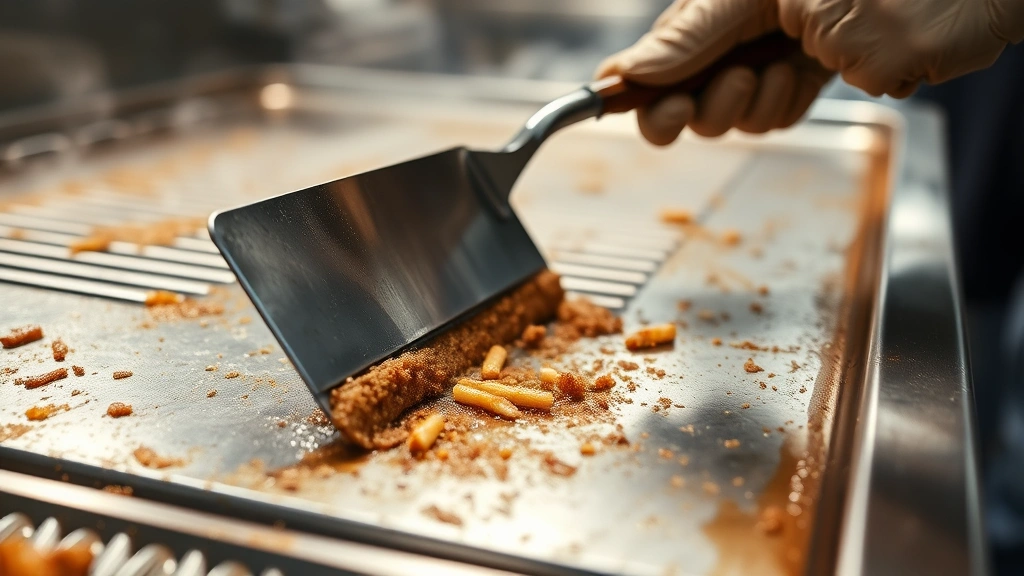
Step 2: Initial Scraping Using your griddle scraper at a 45-degree angle, push accumulated food and grease toward the drain or collection area. Work in sections, applying steady pressure without gouging the surface. For cast iron, you can use slightly more aggressive scraping; stainless steel requires a gentler touch.
Step 3: Water Rinse Spray or pour hot water across the entire cooking surface while scraping. The combination of heat, water, and mechanical action removes loosened debris. Focus on edges and corners where grease pools. Use a cloth to wipe away residue as you work.
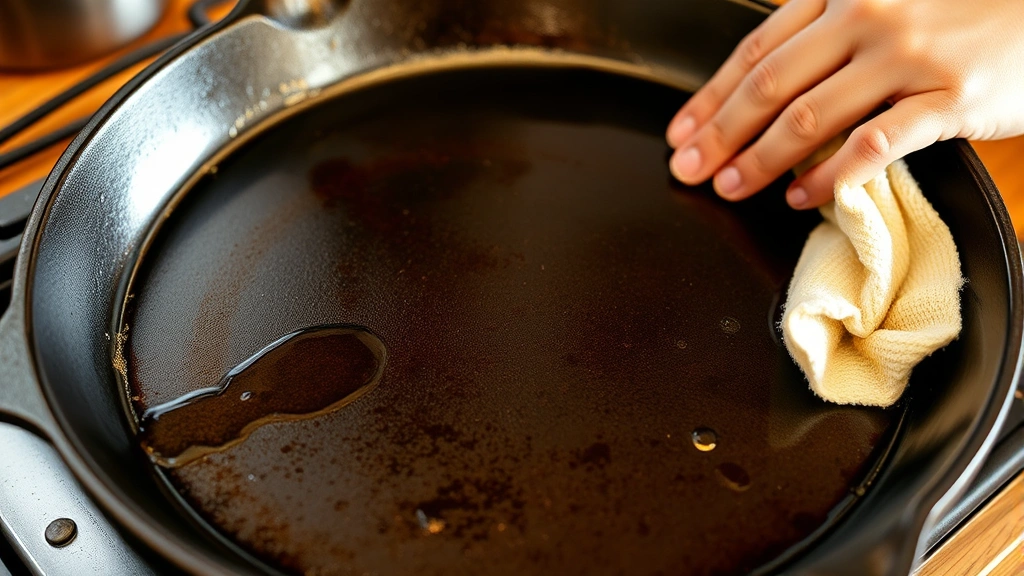
Step 4: Final Polish Dry the entire surface thoroughly with a clean cloth. Any remaining moisture promotes rust formation, especially on cast iron. For cast iron griddles, apply a thin layer of high smoke-point oil and buff to a shine—this maintains the seasoning layer.
Deep Cleaning Methods for Stubborn Buildup
When daily cleaning isn’t sufficient—perhaps due to extended use or previous neglect—deep cleaning removes stubborn carbon deposits and grease that’s bonded to the surface.
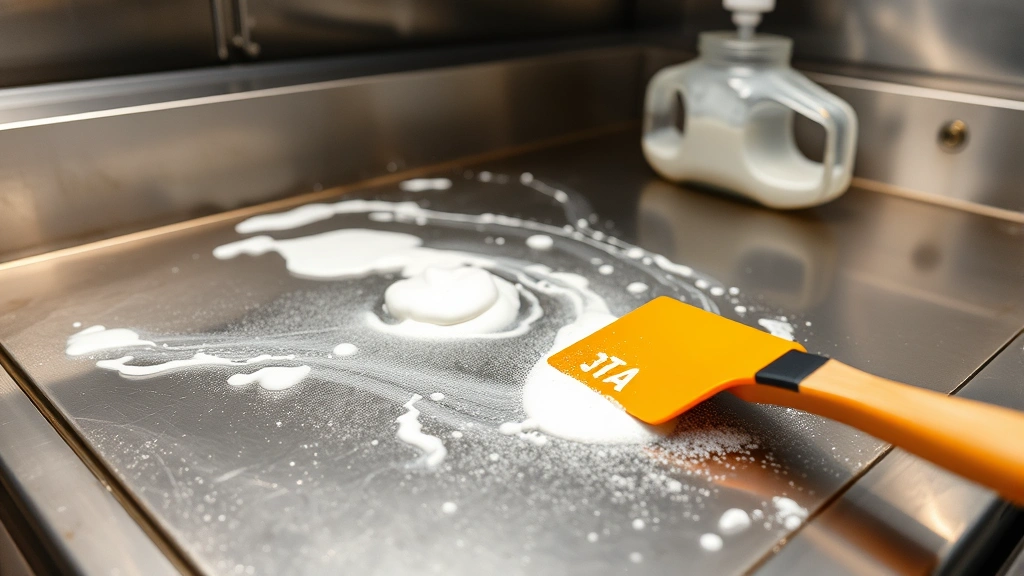
Vinegar and Baking Soda Method This natural approach works exceptionally well on stainless steel griddles. Sprinkle baking soda across the warm griddle surface, then spray white vinegar over it. The chemical reaction creates a paste that breaks down grease and carbon. Let it sit for 10-15 minutes, then scrape thoroughly and rinse. Repeat if necessary for heavily soiled areas. This method is food-safe and requires no harsh chemicals.
Commercial Griddle Cleaner Application Products specifically formulated for griddles contain degreasers that penetrate carbon buildup more effectively than general-purpose cleaners. Follow manufacturer instructions carefully—some require the griddle to be at specific temperatures. Apply the product, allow appropriate dwell time, then scrape and rinse thoroughly. Always ensure complete removal of cleaning agents before cooking, as chemical residue contaminates food.
Salt and Oil Paste Professional chefs frequently use this method on cast iron griddles. Mix kosher salt with a small amount of oil to create an abrasive paste. The salt acts as a gentle abrasive while oil protects the seasoning. Scrub the griddle with this mixture using circular motions, then wipe clean with a cloth. This technique removes buildup while maintaining the non-stick properties of seasoned cast iron.
Steam Cleaning for Grease Dissolution If your griddle allows it, using a commercial steam cleaner loosens grease effectively. The high-temperature steam penetrates grease deposits without requiring harsh chemicals. This method works particularly well for commercial griddles designed with drainage systems. Ensure the griddle is properly grounded if using electric steam equipment.
Seasoning and Maintenance After Cleaning
Cleaning removes protective layers, particularly on cast iron, so post-cleaning maintenance is crucial. Just as you’d care for an engagement ring after cleaning, griddles need proper aftercare to maintain their condition.
Cast Iron Seasoning Process After thorough cleaning and complete drying, apply a thin, even coat of high smoke-point oil (canola, vegetable, or grapeseed oil work well). Use a clean cloth to spread the oil in one direction, then buff away excess with another cloth. The griddle should look nearly dry—excess oil becomes sticky and attracts dust. Heat the griddle to around 350°F for 2-3 minutes to set the oil, then cool completely. This builds the non-stick patina that improves with use.
Stainless Steel Protection Stainless steel griddles benefit from specialized stainless steel polish applied after cleaning. This product creates a protective barrier that resists fingerprints, water spots, and future grease adhesion. Apply with a soft cloth following product directions, then buff to a shine. This extra step significantly extends the time between deep cleaning sessions.
Rust Prevention for All Metals Moisture is the primary rust culprit. Always ensure complete dryness before storage. For griddles in high-humidity environments, apply a very thin protective oil layer and store in a dry location. If rust spots appear, address them immediately using a stainless steel cleaner or specialized rust remover designed for your griddle material.
Griddle-Specific Cleaning by Material Type
Cast Iron Griddles Cast iron requires the gentlest approach to preserve seasoning. Avoid soaking in water, as prolonged moisture causes rust. Never use harsh scouring pads or abrasive cleaners that remove the protective oil layer. Stick with salt scrubs, soft brushes, and minimal water. The more you cook on cast iron, the better it seasons naturally—each cooking session adds protective layers. If seasoning becomes damaged, you can restore it through a process called seasoning restoration, which Lodge Cast Iron details extensively.
Stainless Steel Griddles Stainless steel is more forgiving than cast iron and tolerates aggressive cleaning. You can use scrubbing pads, degreasers, and even steel wool if necessary. Stainless steel resists rust naturally, though it’s not completely rust-proof—chlorides in salt and certain acids can cause pitting. Always dry thoroughly after cleaning. Clean in the direction of the grain when possible to maintain appearance. Stainless steel actually improves with regular use and cleaning, developing a natural patina.
Chrome-Plated Griddles Chrome plating requires careful handling since damage exposes underlying metal to rust. Use soft cloths and gentle cleaning methods. Avoid abrasive pads that scratch the chrome surface. Commercial chrome polish maintains shine and provides protective barriers. If chrome becomes pitted or damaged, professional replating may be necessary.
Non-Stick Coated Griddles These require the most delicate approach since aggressive scraping damages the coating. Use only soft brushes and silicone scrapers. Avoid metal utensils and steel wool entirely. Specialized non-stick griddle cleaners are formulated to clean without damaging the coating. Once non-stick coating deteriorates significantly, the griddle becomes difficult to cook on and replacement may be more practical than refinishing.
Common Mistakes to Avoid
Using Incorrect Scraping Tools Metal scrapers on non-cast-iron griddles, or plastic scrapers applied with excessive force, damage surfaces. Always match your tool to your griddle material. Brass and silicone scrapers are universally safe choices.
Cleaning While Too Hot Attempting to clean a smoking-hot griddle causes dangerous water splattering and prevents effective grease removal. Worse, you risk burns. Let the griddle cool to warm-to-touch before starting the cleaning process.
Leaving Water on the Surface This is the fastest path to rust, especially on cast iron. Always complete the drying process before moving on to other tasks. Microfiber cloths dry surfaces more efficiently than paper towels.
Neglecting Drain Systems Commercial griddles have drainage systems that collect grease. Failing to empty these traps allows grease to overflow and creates fire hazards. Check and clean drain systems daily.
Mixing Incompatible Cleaners Never combine vinegar with bleach or other chemical cleaners—this creates toxic fumes. Use one cleaning method at a time and rinse thoroughly between different products.
Over-Oiling Cast Iron While seasoning is important, excessive oil becomes sticky and attracts dust and debris. A thin, buffed layer is superior to heavy oil coating. The goal is an invisible, non-stick surface, not a visible sheen.
Ignoring Manufacturer Guidelines Commercial griddles often have specific cleaning requirements outlined in manuals. Following these guidelines prevents warranty violations and equipment damage. Reference your griddle’s documentation before attempting specialized cleaning methods.
For broader kitchen maintenance insights, explore our DIY home security guide and car detailing guide for similar systematic maintenance approaches.
FAQ
How often should I deep clean my griddle?
Professional kitchens deep clean griddles weekly or bi-weekly depending on usage volume. Home cooks using griddles 2-3 times weekly should deep clean monthly. Heavy use (4+ times weekly) warrants bi-weekly deep cleaning. Daily maintenance cleaning prevents the need for excessive deep cleaning.
Can I use oven cleaner on my griddle?
Oven cleaner is generally too harsh for griddle surfaces and can damage seasoning on cast iron or coatings on other materials. Stick with products specifically designed for griddles or the mild methods outlined above. If you must use oven cleaner, test on a small inconspicuous area first.
What’s the best oil for seasoning cast iron griddles?
High smoke-point oils work best: vegetable oil (450°F smoke point), canola oil (400°F), grapeseed oil (420°F), and avocado oil (520°F). Avoid olive oil and butter, which have low smoke points and burn easily. The oil should smoke slightly when applied to the hot griddle, creating a polymerized protective layer.
Is it safe to use vinegar on stainless steel?
Yes, vinegar is actually excellent for stainless steel. The acidity cuts through grease and mineral deposits without damaging the metal. However, avoid prolonged vinegar contact on cast iron, as acidity can damage the seasoning layer.
Why does my griddle have rust spots despite regular cleaning?
Rust indicates insufficient drying, exposure to moisture, or damage to the protective seasoning layer. Ensure complete drying after every cleaning session. Store in a dry location. For cast iron, apply protective oil regularly. If rust appears, remove it immediately with a rust remover or by scrubbing with salt and oil.
Can I clean my griddle while it’s still hot?
Warm griddles (not smoking hot) actually clean more easily since grease remains pliable. However, never clean a smoking-hot griddle as water causes dangerous splattering. The ideal temperature is warm enough that water sizzles slightly but doesn’t immediately evaporate.
What’s the difference between griddle and flat-top cleaning?
The terms are often used interchangeably, though flat-tops are typically larger commercial cooking surfaces. Cleaning methods remain identical—daily scraping and water rinsing, deep cleaning as needed, and appropriate seasoning for cast iron versions. The principles scale to any size griddle.
How do I remove stuck-on food from my griddle?
For fresh buildup, scrape while the griddle is still warm. For dried-on food, let the griddle cool slightly, then reapply water and scrape. If food remains stuck, apply vinegar or baking soda paste, wait 10-15 minutes, then scrape. Never use excessive force that damages the surface—patience and appropriate dwell time are more effective.


