Boiling Carrots: Chef-Approved Time Guide
Boiling carrots is one of the most fundamental cooking techniques, yet many home cooks struggle to achieve the perfect texture. Whether you’re preparing a weeknight dinner or hosting a special meal, understanding the precise timing and methods for boiling carrots will elevate your culinary results. This comprehensive guide breaks down everything you need to know about cooking carrots to tender perfection, from preparation through serving.
The cooking time for boiled carrots varies significantly based on size, cut, and desired tenderness. Small whole carrots may take 15-20 minutes, while larger chunks require 10-15 minutes, and thin slices need just 5-10 minutes. Temperature control and water quality also play crucial roles in achieving consistent results. By mastering these variables, you’ll develop the confidence to cook carrots precisely every time.

Carrot Preparation Essentials
Proper preparation is the foundation for successful carrot boiling. Start by selecting firm carrots without soft spots or blemishes. Rinse them thoroughly under cold running water to remove soil and debris. Use a vegetable brush to gently scrub the surface, paying special attention to crevices where dirt accumulates.
Peeling carrots is optional and depends on your preference and recipe requirements. Younger, thinner carrots have tender, edible skins and don’t require peeling. Mature carrots benefit from peeling to remove the tough outer layer and any pesticide residue. Use a vegetable peeler in downward strokes, or blanch carrots briefly in boiling water before cooling to slip the skin off easily.
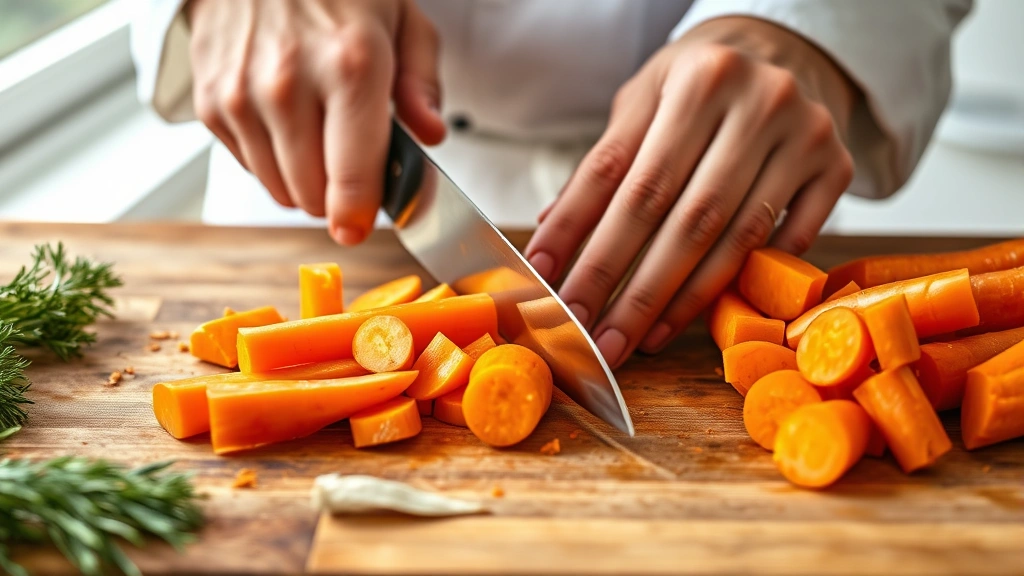
Cutting consistency is critical for even cooking. All carrot pieces should be roughly the same size to ensure uniform doneness. Cut whole carrots lengthwise first, then into appropriate-sized pieces based on your desired cooking time. Diagonal cuts expose more surface area, reducing cooking time by 2-3 minutes compared to straight cuts. Uniform thickness prevents some pieces from becoming mushy while others remain firm.
Consider soaking cut carrots in ice water for 15 minutes before cooking. This helps them retain their vibrant color and crispness during the boiling process. For home kitchens with limited equipment, this simple technique mimics professional preparation methods.

Boiling Times by Size and Cut
Whole Baby Carrots (1-2 inches): These delicate vegetables require 10-15 minutes of boiling from the time water returns to a rolling boil. Their small size allows heat to penetrate quickly. Check tenderness starting at the 10-minute mark with a fork.
Medium Whole Carrots (2-3 inches): Expect 15-20 minutes of cooking time. These are ideal for side dishes and maintain their shape well. Pierce the thickest section with a knife to test doneness; it should slide through with minimal resistance.
Large Whole Carrots (3+ inches): Plan for 20-30 minutes of boiling. Consider halving or quartering very large carrots to reduce cooking time and ensure even doneness. Thick cores in large carrots conduct heat slowly, requiring patience.
Half-inch Thick Slices: These require only 5-8 minutes of cooking time. The increased surface area allows rapid heat transfer. Watch carefully to prevent overcooking, which creates mushy texture unsuitable for most dishes.
Quarter-inch Thin Slices: Cook for just 3-5 minutes. These are excellent for soups and purees where texture is less critical. Test at the 3-minute mark to avoid mushiness.
One-inch Chunks or Sticks: Boil for 8-12 minutes depending on exact dimensions. This cut balances cooking speed with structural integrity, making it popular for mixed vegetable preparations.
Temperature impacts cooking time significantly. Water at a rolling boil (212°F at sea level) cooks carrots faster than simmering water (around 180°F). Boiling is the standard method for timing calculations. At higher altitudes where water boils at lower temperatures, add 5-10 minutes to these estimates.
When preparing carrots for family meal planning, batch cooking saves time. Multiple batches can share the same water, though you may need to add a few minutes to subsequent batches as water temperature drops.
Water Temperature and Cooking Method
The method you choose dramatically affects cooking outcomes. The boiling method involves bringing salted water to a rapid boil before adding carrots. This creates an immediate cooking environment that seals the exterior and preserves color. Add carrots only after water reaches a rolling boil to ensure accurate timing.
Salt your water generously—about 1 tablespoon per quart. This flavors the carrots throughout and raises water temperature slightly, reducing cooking time by 1-2 minutes. Professional chefs emphasize that salted cooking water is essential for proper seasoning.
The cold-start method involves placing carrots in cold water, then heating together. This technique takes 5-10 minutes longer but produces more tender results. It’s preferred when preparing carrots for mashing or pureeing.
Water quality affects cooking. Hard water with high mineral content can slow cooking by 2-3 minutes. If your water is notably hard, use filtered water for more predictable results. Soft water, conversely, may slightly accelerate cooking.
Keep water at a rolling boil throughout cooking. Reduce heat if water threatens to boil over, but maintain vigorous bubbling. Gentle simmering extends cooking time unpredictably and may result in uneven doneness.
Add carrots gradually to maintain boiling temperature. Introducing large quantities of cold carrots to boiling water causes temperature to drop significantly, requiring 2-3 minutes for water to return to boiling. This extends total cooking time.
Cover or uncover the pot based on your preference. Covered pots retain heat better and cook slightly faster (1-2 minutes advantage), while uncovered pots allow better monitoring. Professional kitchens often leave pots uncovered for visibility and heat management.
Testing for Perfect Doneness
Determining exact doneness requires understanding your desired texture. Firm-tender carrots (ideal for most dishes) should have slight resistance when pierced with a fork or sharp knife. The piece should bend slightly but not break easily. This texture works beautifully in salads, stir-fries, and vegetable medleys.
Tender carrots (suitable for side dishes and soups) should pierce easily with minimal resistance. The fork slides through with gentle pressure, but the carrot maintains its shape. This is the most common target for home cooking.
Very tender carrots (for purees, mashes, and baby food) should be almost falling apart. A fork cuts through completely with no resistance. This requires slightly longer cooking than standard timing.
Begin testing 2 minutes before your expected finish time. This prevents overcooking while ensuring you catch the carrot at peak texture. Test multiple pieces, especially the thickest sections, to ensure uniform doneness throughout your batch.
The knife test is most reliable: insert a sharp paring knife into the thickest piece. If it slides through with gentle pressure and you can easily lift the carrot piece, it’s done. Resistance indicates more cooking is needed.
Visual cues help experienced cooks. Fully cooked carrots should have a slightly translucent appearance, especially at cut edges. The color intensifies slightly as cooking progresses. Undercooked carrots appear more opaque.
Remove carrots immediately when done. Overcooking happens quickly, especially with smaller pieces. Transfer to a colander or ice bath to stop cooking instantly. Ice baths are essential if you’re not serving immediately, as residual heat continues cooking carrots in the pot.
Common Mistakes and Solutions
Uneven Sizing: The most common error is cutting carrots inconsistently. Solution: Use a cutting board and chef’s knife to create uniform pieces. Consider using a mandoline for perfectly consistent slices, though always use the hand guard for safety.
Overcrowding the Pot: Too many carrots in too little water drops temperature dramatically, extending cooking time unpredictably. Solution: Use a large pot with adequate water—at least 2 quarts per pound of carrots. Never fill the pot more than two-thirds full.
Insufficient Salt: Under-salted water produces bland carrots. Solution: Taste the cooking water before adding carrots; it should taste pleasantly salty, like seawater. Adjust salt to preference.
Starting with Cold Water: Timing becomes unreliable when starting with cold water. Solution: Always bring water to a rolling boil first, unless specifically using the cold-start method for texture reasons.
Skipping the Ice Bath: Residual heat overcooks carrots after removal from boiling water. Solution: Drain immediately and transfer to ice water if not serving within 2 minutes. This halts cooking instantly.
Inconsistent Boiling Temperature: Fluctuating heat creates uneven cooking. Solution: Use medium-high heat to maintain a steady rolling boil. Avoid constantly adjusting heat settings.
Not Testing for Doneness: Relying solely on timing without testing can result in under or overcooked carrots. Solution: Always test multiple pieces starting 2 minutes before expected finish time.
For detailed home preparation techniques, many professional cooking resources offer video demonstrations of proper carrot boiling methods that reinforce timing accuracy.
Storage and Reheating
Properly cooked boiled carrots can be stored for later use. Place cooled carrots in airtight containers and refrigerate for up to 5 days. Store them in a small amount of their cooking liquid to maintain moisture and flavor.
Freezing extends storage to 3 months. Cool carrots completely, then freeze in single layers on baking sheets before transferring to freezer bags. This prevents clumping and allows you to use portions without thawing the entire batch.
Reheating boiled carrots is straightforward. Microwave in a covered container for 1-2 minutes, stirring halfway through. Alternatively, reheat in a saucepan over medium heat with a small amount of water or butter for 2-3 minutes. Avoid boiling again, which can further soften texture.
Boiled carrots work wonderfully in numerous preparations. Add to meal planning menus as side dishes, incorporate into soups and stews, puree for sauces, or mash for baby food. Their versatility makes batch cooking economical.
Flavor enhancements transform simple boiled carrots. Toss warm carrots with butter and fresh herbs like parsley or dill. Add honey and mustard for sweet-savory combinations. Drizzle with olive oil and garlic for Mediterranean flavor. A squeeze of fresh lemon juice brightens the natural sweetness.
FAQ
How long does it take to boil carrots until soft?
Boiling time depends on carrot size and cut. Small whole carrots take 15-20 minutes, medium chunks need 10-15 minutes, and thin slices require just 5-10 minutes. Always test for doneness starting 2 minutes before the estimated finish time.
Can I boil carrots without peeling them?
Yes, absolutely. Young carrots and thin-skinned varieties don’t require peeling. Simply scrub them thoroughly under running water with a vegetable brush. Mature carrots benefit from peeling to remove tough outer layers.
Why are my boiled carrots mushy?
Overcooking is the primary cause. Reduce cooking time by 2-3 minutes and test earlier. Additionally, ensure carrots are cut uniformly so all pieces finish cooking simultaneously. Remove from heat immediately when done and transfer to ice water to stop cooking.
Should I salt the water when boiling carrots?
Yes, definitely. Salt water to taste—approximately 1 tablespoon per quart. This flavors carrots throughout and slightly raises water temperature. Unsalted water produces bland results.
Can I boil carrots ahead of time?
Yes, boil carrots up to 2 days ahead and refrigerate in airtight containers with a small amount of cooking liquid. Reheat gently in the microwave or on the stovetop before serving. This is excellent for meal preparation.
What’s the difference between boiling and steaming carrots?
Boiling submerges carrots in water, cooking them faster but leaching some nutrients and flavor. Steaming suspends carrots above boiling water, preserving more nutrients and flavor while requiring 5-10 minutes longer. Choose based on your recipe needs.
How do I know when boiled carrots are perfectly done?
Pierce the thickest piece with a fork or sharp knife. It should slide through with gentle pressure. The carrot should bend slightly without breaking. Taste a small piece to confirm texture meets your preference.
Can I reuse carrot boiling water?
Yes, if you’re boiling multiple batches, you can reuse the water. However, add 2-3 minutes to subsequent batches’ cooking time as water temperature drops with each addition. If using for soup stock, save and freeze the water—it’s rich in nutrients and flavor.
What temperature should boiling water be?
Water should be at a rolling boil, approximately 212°F at sea level. This provides consistent, fast cooking. At higher altitudes where water boils at lower temperatures, add 5-10 minutes to standard cooking times.
Are boiled carrots healthy?
Yes, boiled carrots retain most nutrients, though some water-soluble vitamins leach into cooking water. Save the cooking liquid for soups or drink it as a nutritious broth. Carrots’ beta-carotene (converted to vitamin A) is actually enhanced by cooking.
External Resources:


