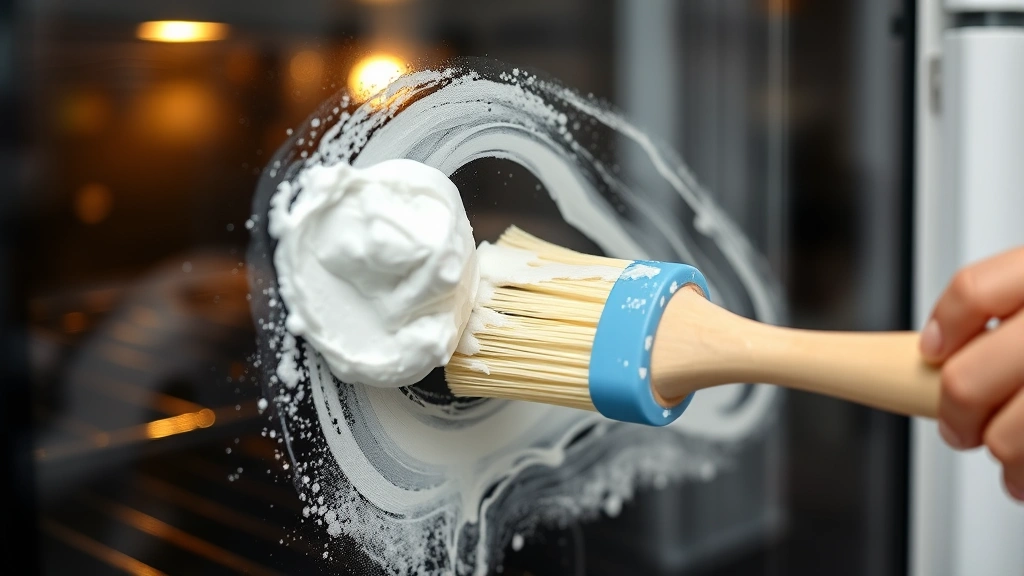
How to Clean Glass Oven Door: Expert-Recommended Methods
A clean glass oven door transforms your kitchen’s appearance and allows you to monitor cooking progress without opening the door—preserving heat and improving efficiency. However, baked-on food, grease splatters, and mineral deposits can make glass doors look cloudy and dingy over time. Whether you’re dealing with light surface dust or stubborn carbonized buildup, knowing the right cleaning methods prevents scratching and damage to the glass.
This comprehensive guide covers proven techniques from professional cleaners and appliance manufacturers, including safe chemical solutions, natural alternatives, and specialized tools that work without harming your oven’s glass interior or exterior surfaces. We’ll walk you through preparation steps, application methods, and maintenance strategies to keep your oven door sparkling between deep cleans.
Why Clean Your Oven Door Regularly
Regular oven door cleaning serves both practical and aesthetic purposes. Transparent glass allows you to observe cooking without heat loss—every time you open the door, your oven loses 25-30 degrees Fahrenheit, extending cooking times and increasing energy consumption. A clean door eliminates the need to open it for visibility checks.
From a maintenance perspective, accumulated grease and food particles can become harder to remove over time as heat cycles bake them onto the glass surface. Monthly light cleaning prevents heavy buildup that requires aggressive scrubbing and potentially damaging abrasives. Additionally, transparent glass improves kitchen aesthetics and makes it easier to spot any internal oven issues like damaged heating elements.
If you’re working on broader kitchen cleaning projects, you might also benefit from our guide on how to clean a gas grill, which uses similar cleaning principles for outdoor cooking surfaces.
Safety Precautions Before You Start
Before attempting any oven door cleaning, prioritize safety to prevent burns, chemical exposure, and appliance damage:
- Turn off the oven and allow it to cool completely for at least 2-3 hours. Never apply cleaning solutions to a hot glass surface, as thermal shock can crack the glass
- Ensure proper ventilation by opening windows and using exhaust fans, especially when using commercial cleaners or ammonia-based solutions
- Wear protective gloves to shield skin from caustic chemicals and hot surfaces. Nitrile or rubber gloves work well
- Use eye protection when spraying or applying solutions overhead to prevent accidental splashing into eyes
- Never use abrasive scrubbers directly on glass—steel wool, scouring pads, and hard-bristled brushes can scratch tempered glass permanently
- Read manufacturer instructions on your oven’s manual before using any cleaning products, as some may void warranties
- Test solutions on inconspicuous areas first to confirm they won’t damage the glass or surrounding materials
If you’re also tackling related kitchen cleaning tasks, our comprehensive DIY cleaning guide provides additional safety protocols for household maintenance.
Essential Tools and Materials
Gathering the right supplies before starting prevents mid-project trips and ensures you have safe, effective options:
- Non-abrasive scrubbing tools: soft-bristled brushes, microfiber cloths, non-woven scouring pads (avoid steel wool)
- Spray bottles for even solution application
- Squeegees or rubber scrapers for gentle removal of loosened debris
- Paper towels or lint-free cloths to prevent streaking
- Protective equipment: rubber gloves, eye protection, and an apron
- Natural cleaning agents: baking soda, white vinegar, lemon juice, cream of tartar
- Commercial options: Bar Keeper’s Friend, Zep Oven Cleaner, or similar Consumer Reports-rated products
- Degreaser spray for initial grease breakdown
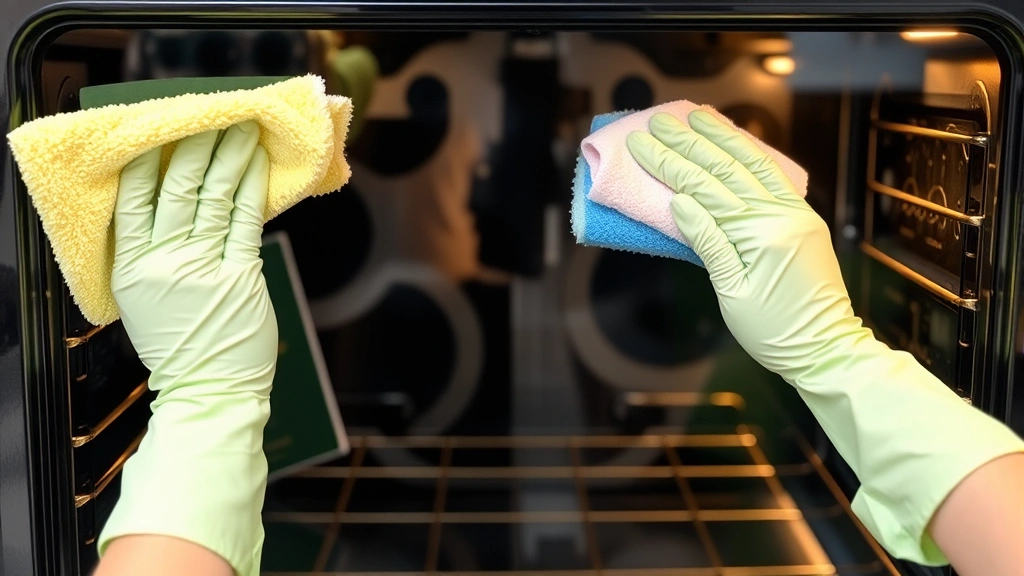
Method 1: Baking Soda and Vinegar Paste
This natural method combines two common household items into an effective, non-toxic cleaning paste. Baking soda acts as a gentle abrasive while vinegar’s acidity breaks down grease and mineral deposits.
Step-by-step process:
- Mix 1/2 cup baking soda with 3 tablespoons water to create a spreadable paste (adjust consistency as needed)
- Apply the paste directly onto the glass surface, focusing on heavily soiled areas
- Allow the paste to sit for 15-30 minutes, giving the baking soda time to penetrate buildup
- Spray white vinegar over the paste—the chemical reaction will create fizzing action that helps lift debris
- Use a soft-bristled brush or non-abrasive sponge to gently scrub in circular motions
- Wipe away residue with a damp cloth, repeating until the glass is clear
- Dry with a lint-free cloth to prevent water spots
Advantages: Non-toxic, budget-friendly, no harsh fumes, and safe for households with children or pets. This method works best for light to moderate buildup and requires minimal drying time.
Limitations: Very stubborn, baked-on deposits may require multiple applications or longer soaking times. The paste can be messy and requires thorough rinsing to remove all residue.
Method 2: Commercial Oven Cleaner
Heavy-duty commercial cleaners contain surfactants and solvents specifically formulated to dissolve stubborn grease and carbonized food deposits quickly.
Application instructions:
- Ensure the oven is completely cool and your workspace is well-ventilated
- Put on rubber gloves and eye protection before opening the product
- Spray the cleaner directly onto the glass, following the product’s specific instructions regarding coverage and wait time
- Most commercial cleaners require 30 minutes to several hours of sitting time for maximum effectiveness
- Use a soft brush or plastic scraper to gently remove loosened residue
- Wipe thoroughly with damp cloths multiple times to remove all chemical residue
- Finish with a dry cloth to eliminate streaks
Safety considerations: Commercial oven cleaners often contain sodium hydroxide or other alkaline compounds. Ensure adequate ventilation, avoid skin contact, and never mix with other cleaning products—particularly ammonia-based cleaners, which create toxic fumes. Keep products away from children and pets.
Effectiveness: These cleaners excel at removing heavy buildup and work faster than natural methods. They’re ideal for quarterly deep cleaning or when dealing with years of accumulated grime.
Method 3: Cream of Tartar Solution
Cream of tartar, a natural acidic byproduct of wine production, combines with lemon juice to create a gentle yet surprisingly effective cleaning paste.
Preparation and application:
- Mix 2 tablespoons cream of tartar with 1 tablespoon lemon juice to form a paste
- For stubborn spots, add a small amount of hydrogen peroxide instead of lemon juice
- Spread the paste over the glass and allow it to sit for 10-20 minutes
- Scrub gently with a soft brush, working in small sections
- Rinse thoroughly with water and dry immediately
Why it works: The acidic properties break down mineral deposits and grease while the mild abrasive action removes surface debris without scratching. This method is particularly effective on hard water stains and mineral buildup.
Best for: Light to moderate buildup, mineral deposits, and households preferring natural cleaning solutions. The pleasant citrus scent makes this option appealing compared to harsh chemical odors.
Method 4: Bar Keeper’s Friend Technique
Bar Keeper’s Friend is a powdered cleanser containing feldspar, oxalic acid, and surfactants—specifically praised by appliance manufacturers for safe oven cleaning.
How to use it:
- Dampen the glass surface with water
- Sprinkle Bar Keeper’s Friend powder directly onto the damp glass
- Use a damp cloth or soft brush to create a scrubbing motion, allowing the powder to work into deposits
- Work in small sections for better control and visibility
- Rinse thoroughly with clean water multiple times
- Dry with a lint-free cloth to prevent water spots and streaking
Why appliance experts recommend it: Unlike harsh lye-based cleaners, Bar Keeper’s Friend is gentler on glass while remaining highly effective. The oxalic acid targets mineral stains and grease without the strong fumes associated with commercial oven cleaners. Many National Kitchen and Bath Association members recommend this product for regular maintenance.
Pro tip: This method works exceptionally well on stainless steel oven frames and handles simultaneously, making it efficient for whole-appliance cleaning.
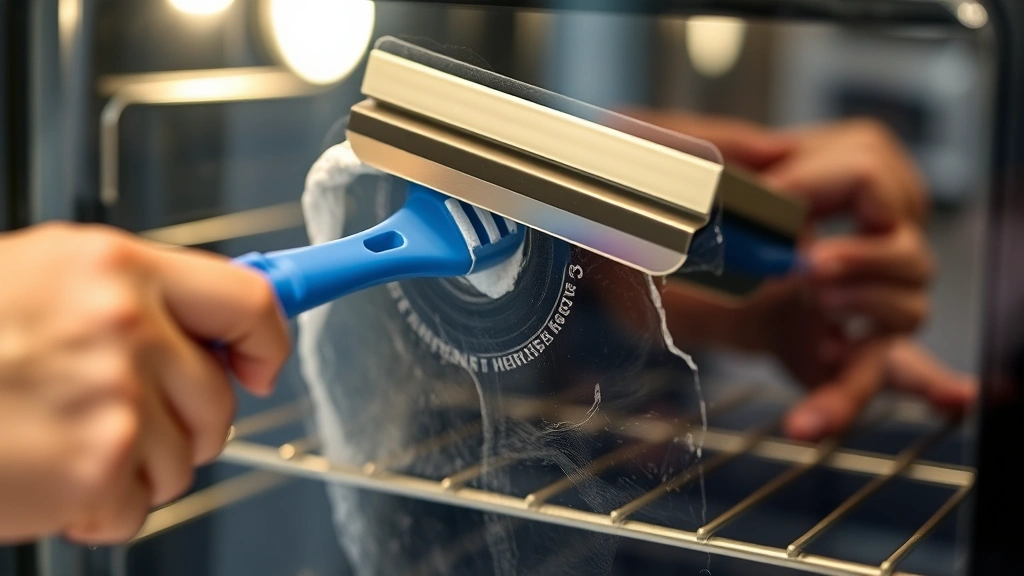
Removing Stubborn Buildup
When standard methods don’t penetrate years of baked-on deposits, a multi-step approach breaks through the toughest buildup:
The intensive cleaning process:
- Pre-soak: Apply your chosen solution and allow 2-4 hours of sitting time. For extremely stubborn buildup, overnight soaking may be necessary
- Initial breakdown: Use a plastic scraper or soft brush to gently remove any loosened material. Avoid metal scrapers that scratch glass
- Secondary application: Reapply the cleaning solution and repeat the soaking process
- Gentle scrubbing: Use a non-woven scouring pad with light pressure, maintaining circular motions to avoid streaking
- Strategic tools: A plastic credit card edge or wooden spatula can scrape stubborn spots without damaging glass
- Final rinse: Rinse multiple times with fresh water, ensuring no cleaning residue remains
For extremely heavy buildup that resists all methods, consider consulting professional appliance cleaning services, which use commercial-grade equipment and solutions not available to consumers.
If you’re also managing broader home maintenance, our grout cleaning guide shares similar persistent-stain removal techniques applicable to various surfaces.
Preventing Future Buildup
Establishing maintenance habits prevents heavy buildup and reduces the time required for future cleaning:
- Weekly wipe-downs: After the oven cools, quickly wipe the glass with a damp cloth to remove fresh splatters before they set
- Use oven liners: Place aluminum foil or commercial oven liners on the bottom rack to catch spills before they reach glass surfaces
- Cover dishes: Using lids or foil during cooking prevents splatters and steam from coating the glass
- Monthly light cleaning: Apply baking soda paste monthly to prevent heavy accumulation—this takes 15-20 minutes compared to hours for deep cleaning
- Immediate spill response: Wipe fresh spills immediately when safe to do so (after cooling), as fresh deposits are infinitely easier to remove
- Temperature management: Avoid sudden temperature changes that cause thermal stress to the glass—let ovens cool gradually before opening doors
- Proper ventilation: Use exhaust fans during cooking to reduce grease-laden steam that deposits on glass surfaces
When to Call a Professional
While most oven door cleaning is manageable as a DIY project, certain situations warrant professional assistance:
- Cracked or damaged glass: If the glass has visible cracks, chips, or damage, stop cleaning immediately and contact your appliance manufacturer or a certified repair technician
- Sealed glass doors: Some modern ovens have sealed double-glass doors with desiccant between panes. Moisture or debris between panes requires professional disassembly
- Safety concerns: If you’re unsure about appliance safety or suspect internal damage, professional inspection prevents potential hazards
- Warranty protection: For newer appliances under warranty, verify that DIY cleaning won’t void coverage by consulting the manufacturer
- Severe buildup: Years of neglect may require commercial-grade equipment and expertise beyond typical household tools
Professional appliance cleaning services typically cost $75-200 per visit depending on severity and your location, but preserve appliance integrity and warranty coverage.
FAQ
Can I use a razor blade to scrape the oven glass door?
Razor blades can scratch tempered glass permanently. Always use plastic scrapers, wooden spatulas, or soft-bristled brushes instead. The gentle approach takes slightly longer but prevents costly glass replacement.
Why does my oven glass keep streaking after cleaning?
Streaking typically results from residual cleaning solution, mineral-laden tap water, or insufficient drying. Always rinse thoroughly multiple times with fresh water and dry immediately with lint-free cloths or newspaper. For hard water areas, consider using distilled water for final rinses.
Is it safe to use ammonia-based window cleaners on oven glass?
While ammonia cleaners work on regular window glass, they’re not ideal for oven doors. The heat exposure and residue risks make specialized oven cleaners or natural methods safer choices. Never mix ammonia with other cleaners, as it creates toxic fumes.
How often should I deep clean my oven door?
Light cleaning weekly or biweekly, combined with monthly deeper cleaning using baking soda paste or Bar Keeper’s Friend, prevents heavy buildup. Quarterly intensive deep cleaning handles stubborn deposits. Heavy cooking or frequent oven use may require more frequent attention.
What’s the difference between oven cleaner and degreasers?
Degreasers specifically target grease and oil, while oven cleaners contain additional surfactants and sometimes abrasives to address carbonized food and mineral deposits. For oven doors, combination products or oven-specific cleaners work better than degreasers alone.
Can I clean the oven door while it’s still warm?
No. Applying cool cleaning solutions to warm glass can cause thermal shock and cracking. Always wait at least 2-3 hours after the oven cools completely before applying any cleaning products. This safety measure protects both the glass and your hands.
Are there commercial products specifically designed for glass oven doors?
Yes. EPA Safer Choice certified oven cleaners like Zep, Easy-Off, and specialized glass cleaners are formulated for oven safety. Always follow product instructions and ensure proper ventilation during use.


