
Learn to Drive: Expert Tips for Quick Mastery
Learning to drive is one of life’s most transformative skills, opening doors to independence, career opportunities, and personal freedom. Whether you’re a teenager preparing for your first road test or an adult finally tackling this milestone, understanding the timeline and proven strategies can dramatically accelerate your progress. The question “how long does it take to learn to drive” doesn’t have a one-size-fits-all answer, but research and professional instruction data reveal consistent patterns that can guide your learning journey.
This comprehensive guide draws from certified driving instructor methodologies, state licensing requirements, and real-world learner data to provide you with actionable strategies for mastering driving skills efficiently and safely. Just as you might approach DIY beginner woodworking projects with structured progression, learning to drive benefits from a systematic approach with clear milestones and deliberate practice.
Average Timeline for Learning to Drive
According to the Insurance Institute for Highway Safety (IIHS), most learners require between 24 to 40 hours of professional instruction combined with 50 to 100 hours of supervised practice driving to develop competent skills for independent operation. However, total learning time typically spans 3 to 6 months for regular practitioners, though this varies significantly based on individual circumstances and local requirements.
The National Highway Traffic Safety Administration (NHTSA) recommends a minimum of 50 hours of supervised driving for new drivers under 18, with at least 10 of those hours occurring in darkness. Most states enforce these guidelines through graduated licensing programs that phase in driving privileges over 6 to 12 months. If you’re curious about mastering other skills with similar dedication, you might explore how learning piano follows comparable progression patterns.
First 20 hours: Fundamental vehicle controls, basic steering, acceleration, and braking in low-traffic environments. Most learners achieve comfort with the vehicle’s response during this phase.
Hours 20-40: Intermediate skills including lane changes, turning, parking maneuvers, and navigation of moderately busy roads. Decision-making and hazard awareness begin developing.
Hours 40-60: Advanced techniques: highway driving, night driving, various weather conditions, and complex traffic scenarios. Muscle memory becomes more automatic.
Hours 60+: Refinement and confidence building through diverse real-world conditions. Test preparation and elimination of bad habits.
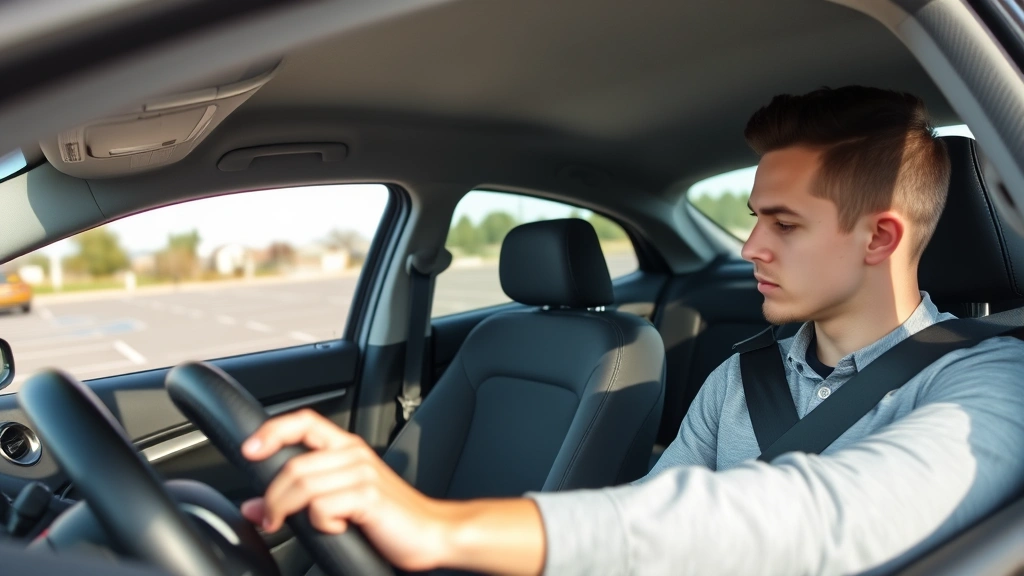
” alt=”Professional driving instructor providing guidance to young learner in vehicle during daytime practice session in parking lot”>
Factors That Influence Learning Speed
Your learning timeline depends on multiple interconnected variables. Age plays a significant role—teenagers often learn faster due to neuroplasticity and reaction time advantages, though they may struggle more with judgment and impulse control. Adults frequently learn more methodically and safely, compensating for slower initial skill acquisition with superior decision-making.
Prior experience with vehicles: Those who’ve operated ATVs, motorcycles, or heavy equipment typically progress 20-30% faster than complete novices. Muscle memory for steering and pedal coordination transfers effectively.
Natural coordination and spatial awareness: Individuals with strong hand-eye coordination, spatial reasoning, and proprioception advance more rapidly. These skills correlate strongly with video game experience and sports participation.
Quality of instruction: Professional instruction accelerates learning by 40-50% compared to informal family teaching. Certified instructors provide systematic skill progression, immediate feedback, and exposure to diverse road conditions.
Practice frequency and consistency: Practicing 3-4 times weekly for 1-2 hours yields better results than sporadic marathon sessions. Spaced repetition allows neural consolidation and habit formation.
Local driving conditions: Learning in complex urban environments requires longer timelines than rural settings, but produces more versatile drivers. Weather variability also impacts learning duration.
Psychological factors: Anxiety, confidence levels, and stress management significantly affect progress. Learners with higher baseline anxiety may need additional time to develop comfort and automaticity.
Vehicle familiarity: Using the same vehicle consistently accelerates learning by 15-25% as you develop precise muscle memory for that specific car’s handling and controls.
Professional Instruction Benefits
Investing in certified driving instruction produces measurable outcomes. The AAA Foundation for Traffic Safety reports that professional instruction reduces first-year accident rates by 35% compared to informal teaching. Beyond safety improvements, structured professional lessons typically reduce total learning time by 20-30%.
Certified instructors provide:
- Systematic skill progression following evidence-based curricula
- Immediate, specific feedback on technique and decision-making
- Exposure to diverse road types and traffic conditions within controlled timeframes
- Emotional regulation coaching and anxiety management strategies
- Test-specific preparation addressing common failure points
- Insurance and liability protection during practice sessions
When selecting an instructor, verify credentials through your state’s licensing board. Look for instructors with 5+ years experience, positive reviews mentioning specific skill improvements, and familiarity with your state’s driving test requirements. Many schools offer package deals combining classroom instruction with behind-the-wheel sessions.
The investment typically ranges from $200-$500 for a multi-hour package, which represents excellent value considering the safety improvements and accelerated learning timeline. Some insurance companies offer premium discounts for completing certified driver education courses.

” alt=”Learner driver confidently navigating busy urban intersection with traffic signals and multiple vehicles during daylight hours”>
Structured Practice Techniques
How you practice matters as much as how much you practice. Deliberate practice—focused, goal-oriented repetition with feedback—produces dramatically faster skill acquisition than passive driving time.
Progressive exposure model: Structure practice sessions to gradually increase complexity. Start with empty parking lots, progress to quiet residential streets, then busier roads, and finally highways and heavy traffic. This scaffolding approach builds confidence while preventing overwhelm.
Scenario-based practice: Rather than aimless driving, target specific challenges. Dedicate sessions to: parallel parking, merging on highways, night driving, right turns on red, three-point turns, and adverse weather conditions. This focused approach accelerates competency in weak areas.
Distributed practice schedule: Research in motor learning confirms that spacing practice sessions across time produces superior retention compared to massed practice. Three 90-minute sessions weekly outperforms one 4.5-hour marathon session.
Feedback loops: Always have an experienced observer provide specific, constructive feedback. Rather than “good job,” effective feedback sounds like: “Your lane centering improved; now focus on smoother steering inputs to reduce jerking.” This specificity accelerates improvement.
Mental rehearsal: Before driving sessions, spend 5-10 minutes visualizing successful execution of challenging maneuvers. Mental practice activates similar neural pathways as physical practice and reduces anxiety.
Video review: Recording practice sessions (with a dashboard camera or phone mount) allows you to identify technique issues invisible during driving. Reviewing footage reveals patterns in steering smoothness, braking timing, and mirror checking habits.
Much like planning a comprehensive home security system requires systematic planning and implementation, developing driving skills benefits from strategic organization and methodical progression.
Mental Preparation and Confidence Building
The psychological dimension of learning to drive often determines learning speed more than physical coordination. Anxiety and self-doubt create cognitive overload, consuming mental resources needed for skill development. Conversely, appropriate confidence enables focus and faster progress.
Anxiety management strategies:
- Graduated exposure: Systematically confront feared driving scenarios in increasingly challenging contexts. Start with quiet practice, then progress to busier environments as comfort increases.
- Breathing techniques: Box breathing (4-count inhale, hold, exhale, hold) activates parasympathetic nervous system responses, reducing physical anxiety symptoms before and during driving.
- Positive self-talk: Replace catastrophic thinking (“I’ll crash”) with realistic affirmations (“I’ve successfully navigated this scenario 47 times; I’ll handle it again”).
- Cognitive reframing: View mistakes as essential learning opportunities rather than failures. Professional drivers and instructors expect 100+ minor errors during the learning process.
Building genuine confidence: True confidence emerges from demonstrated competence, not false reassurance. Each successfully navigated challenge incrementally builds authentic self-assurance. Track specific improvements—”I parallel parked in three attempts versus six last week”—to reinforce progress.
Managing test anxiety: The driving test amplifies stress for many learners. Reduce test-specific anxiety through: extensive practice on actual test routes, mock tests with certified instructors simulating test conditions, and understanding that test failure isn’t permanent—most learners pass on second or third attempts with minimal additional practice.
Common Obstacles and Solutions
Nearly all learners encounter predictable challenges. Understanding these obstacles and their solutions accelerates progress and prevents discouragement.
Steering smoothness and jerky inputs: Novices often grip the wheel too tightly, creating abrupt steering corrections. Solution: Conscious relaxation of grip strength, practice smooth figure-eight patterns at very low speeds, and using fingertip steering rather than full-hand manipulation.
Brake and accelerator coordination: Difficulty modulating pressure on pedals leads to lurching. Solution: Practice smooth pedal transitions in parking lots, focus on gradual pressure application, and remember that brake and accelerator are mutually exclusive—never use both simultaneously.
Lane positioning and centering: Staying centered in lanes proves challenging for many learners. Solution: Use lane markings as reference points, practice in empty parking lots with painted lines, and remember that slight lane drift is normal—perfection isn’t required.
Highway merging anxiety: Merging into faster traffic creates significant stress. Solution: Practice on less-busy highways first, understand acceleration requirements before merging, and remember that highway drivers expect merging traffic and adjust accordingly.
Mirror checking and situational awareness: Developing the habit of frequent mirror checks takes conscious effort. Solution: Verbalize mirror checks during practice (“checking right mirror now”), practice exaggerated head movements initially, and review video footage to identify missed opportunities.
Night driving confidence: Reduced visibility and different depth perception challenges many learners. Solution: Start night practice on well-lit streets, gradually progress to darker roads, practice with an experienced driver multiple times before attempting alone.
Procrastination and motivation loss: Extended learning timelines sometimes lead to motivation decline. Solution: Set specific weekly milestones, track progress visually, celebrate small achievements, and remember the freedom and opportunity that driving unlocks.
Preparing for Your Driving Test
The final phase of learning focuses on test preparation. Most jurisdictions conduct practical driving tests lasting 20-40 minutes assessing basic vehicle control, hazard recognition, and safe decision-making. Success requires both technical skill and test-specific knowledge.
Test preparation essentials:
- Master test-specific maneuvers: Practice parallel parking, three-point turns, and other required maneuvers until execution is automatic. Test anxiety impairs complex skills, so overlearning creates buffer capacity.
- Study local traffic laws: Understand right-of-way rules, speed limit zones, traffic signal meanings, and pedestrian laws specific to your jurisdiction. Review your state’s AAMVA driver’s manual for state-specific regulations.
- Practice on test routes: If possible, drive actual test roads multiple times. Familiarity with intersections, traffic patterns, and challenging sections reduces cognitive load during testing.
- Schedule mock tests: Many driving schools offer mock tests replicating actual test conditions. This exposure dramatically reduces test-day anxiety and identifies remaining weak areas.
- Optimize test-day conditions: Schedule tests when you’re typically alert (morning for most people), avoid scheduling immediately after stressful events, and ensure adequate sleep the night before.
- Understand scoring criteria: Review your state’s scoring rubric. Most tests focus on safety (avoiding accidents and violations) rather than perfection. Minor errors are acceptable if they don’t create hazards.
Remember that test failure isn’t permanent. Most jurisdictions allow retesting within days or weeks, and second attempts have higher pass rates since learners now understand test expectations. Even professional drivers occasionally fail practical tests; the exam measures readiness, not permanent capability.
For additional comprehensive guidance, consult the NHTSA’s road safety resources and graduated licensing information.
” alt=”Confident driver navigating multi-lane highway with proper hand position on steering wheel during daytime conditions with clear visibility”>
Frequently Asked Questions
How long does it take to learn to drive from scratch?
Most complete novices require 3-6 months of regular practice (3-4 sessions weekly) combined with 24-40 hours of professional instruction to develop competent driving skills. Total time varies based on natural ability, instruction quality, and practice frequency. Accelerated learners may achieve proficiency in 2-3 months, while others may need 6-9 months.
Can you learn to drive in 2 weeks?
Learning basic vehicle operation in 2 weeks is theoretically possible with intensive daily practice, but developing the judgment, automaticity, and hazard recognition required for safe independent driving typically requires months. State licensing requirements exist specifically because research demonstrates that shorter timelines produce unsafe drivers. The 50-100 hour guideline reflects evidence-based safety standards, not arbitrary bureaucracy.
Is professional driving instruction necessary?
While family members can provide valuable practice opportunities, certified professional instruction accelerates learning by 20-30% and produces safer drivers long-term. Professional instructors provide systematic skill progression, immediate feedback, and exposure to diverse conditions more efficiently than informal teaching. Insurance companies often offer discounts for completing professional courses, offsetting instruction costs.
What’s the hardest part of learning to drive?
Most learners identify hazard recognition and decision-making as most challenging—technical skills like steering develop relatively quickly, but developing the judgment to anticipate hazards, predict other drivers’ behavior, and make safe decisions takes sustained practice. This is why graduated licensing programs extend over months rather than weeks.
Does age affect learning speed?
Age influences learning in complex ways. Teenagers typically develop physical skills faster but show poorer judgment and impulse control. Adults learn more slowly but with superior decision-making. Neither age group consistently learns faster overall; rather, they learn differently. Teens may need more judgment-focused instruction while adults need more confidence-building.
How many hours of driving practice is actually needed?
Research consistently supports the 50-100 hour guideline for developing competent drivers. The IIHS recommends minimum 50 hours supervised driving with at least 10 hours in darkness. However, quality of practice matters more than raw hours—deliberate, focused practice with feedback accelerates learning compared to passive driving time. Some learners need 120+ hours if practice is infrequent or unfocused.
Can you fail your driving test and retake it?
Yes, virtually all jurisdictions allow retesting after failure, typically within days or weeks. Most learners pass on second or third attempts, often after minimal additional practice since they now understand test expectations. First-time pass rates vary by jurisdiction (typically 45-60%), so test failure is extremely common and not indicative of permanent driving inability.
Is learning to drive harder than other skills?
Driving difficulty depends on comparison—it’s moderately challenging compared to sports or music but more complex than many household skills. The learning curve is relatively steep initially (first 20 hours feel overwhelming) but flattens significantly as automaticity develops. Most learners report that the hardest phase is the first 10-15 hours; subsequent practice feels progressively more comfortable.
What’s the best time of year to learn to drive?
Spring and fall offer ideal conditions—moderate temperatures, generally good visibility, and moderate traffic. Winter presents additional challenges (reduced traction, snow/ice) that extend learning timelines by 10-20%, while summer heat can create fatigue. However, learning in challenging seasons produces more versatile drivers. If possible, begin in favorable conditions, then practice in adverse weather as skills develop.
How does learning to drive compare to other skill acquisition?
Similar to the systematic approach required for learning comprehensive house painting techniques or planning basement finishing projects, driving mastery requires structured progression, deliberate practice, and accumulated experience. Like these complex DIY projects, rushing the learning process produces inferior results and safety risks. Respecting the timeline and following systematic approaches yields the best outcomes.
What should I practice most if I’m short on time?
Prioritize: highway merging, night driving, and hazard recognition—these represent the most common failure points and real-world safety challenges. If time is truly limited, professional instruction becomes even more valuable since instructors can target weaknesses efficiently. However, understand that compressed timelines reduce skill development; additional practice remains beneficial even after test passage.
Learning to drive is a significant undertaking that demands respect for the timeline and commitment to systematic skill development. While the question “how long does it take to learn to drive” lacks a simple answer, evidence consistently demonstrates that 3-6 months of regular practice combined with professional instruction produces safe, competent drivers. Attempting to compress this timeline creates unnecessary safety risks for yourself and others.
Focus on deliberate, distributed practice; invest in professional instruction; and view obstacles as normal parts of the learning process rather than indicators of failure. The independence, opportunity, and freedom that driving enables make this investment of time and effort profoundly worthwhile. By following the structured approaches outlined in this guide, you’ll progress efficiently while building the judgment and automaticity that distinguish safe drivers from merely licensed ones.


